
Today I visited Woltersdorf, Wartin and Blumberg — small villages that were home to my great-grandpa Frank Smith’s mother’s families — the Hahns and Sahrs. (For information about Grandpa Frank’s father’s family, see this post.)
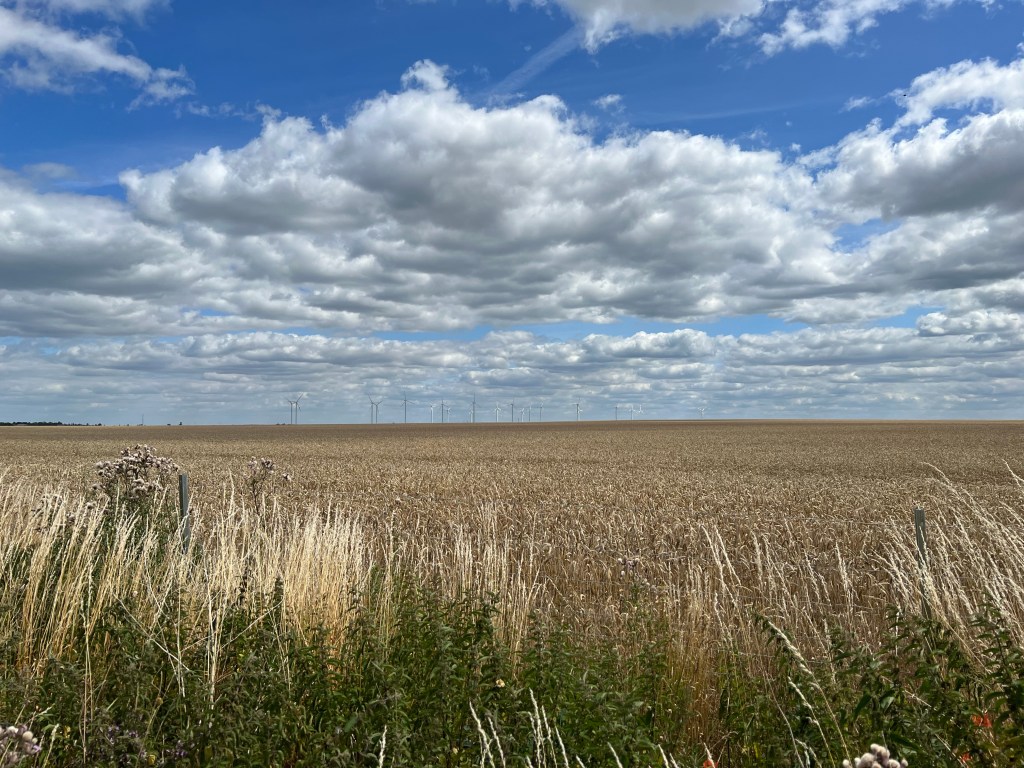

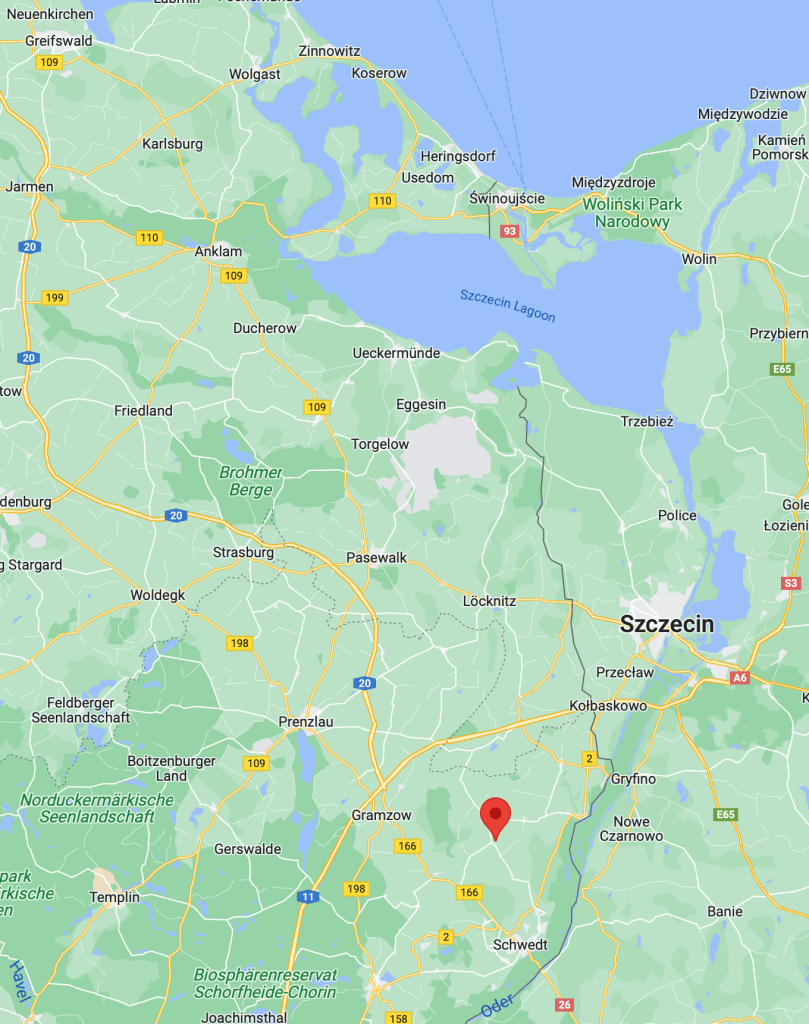
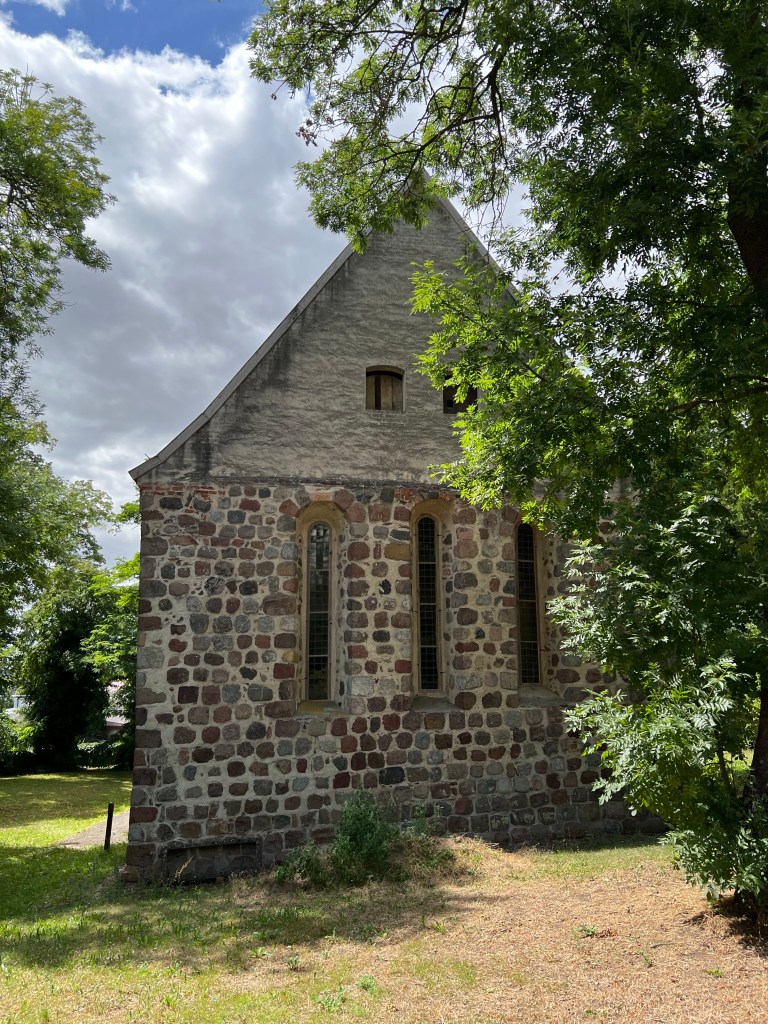
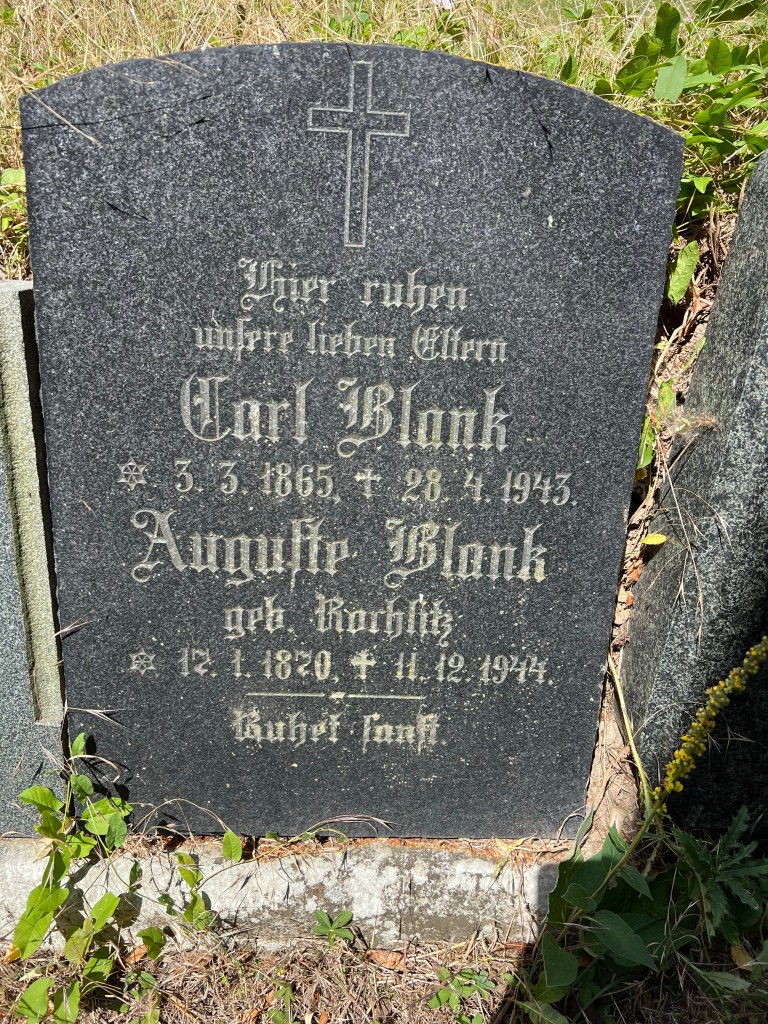
The region is home to sprawling farm fields — mostly wheat and hay, but occasionally corn and sunflowers. In some places giant wind turbines dominate the landscape. In each of the villages, I visited the local church, walked the graveyards, and tried to find names that I recognized. Unfortunately, I came up against the family historian’s biggest foe — time.

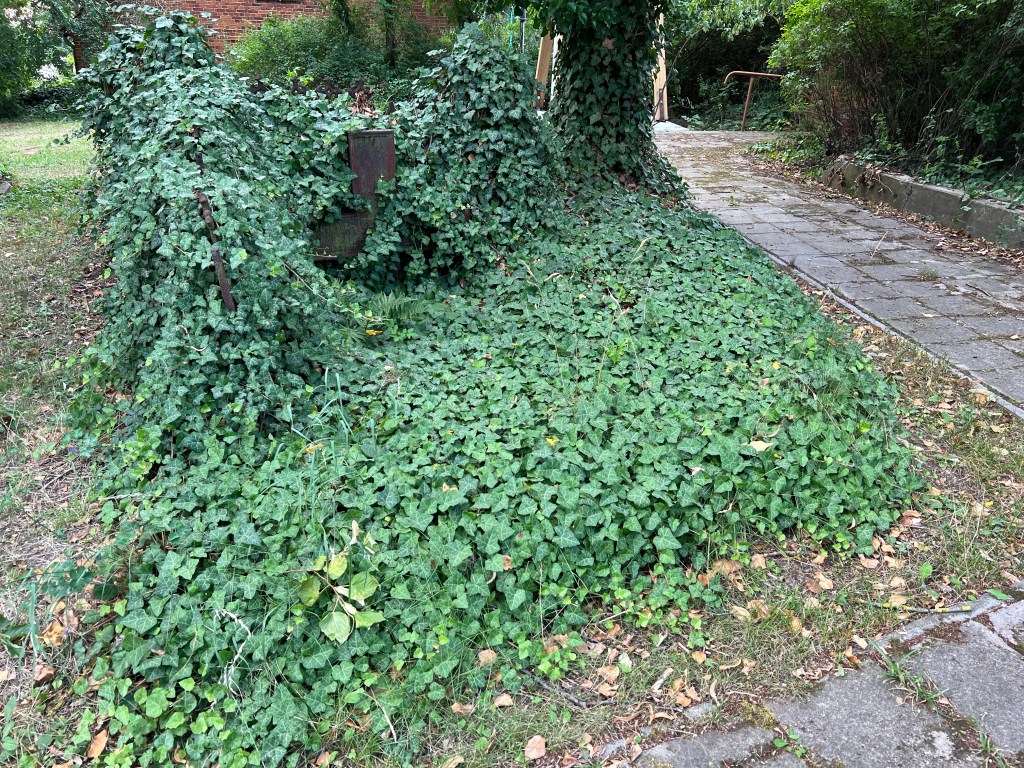
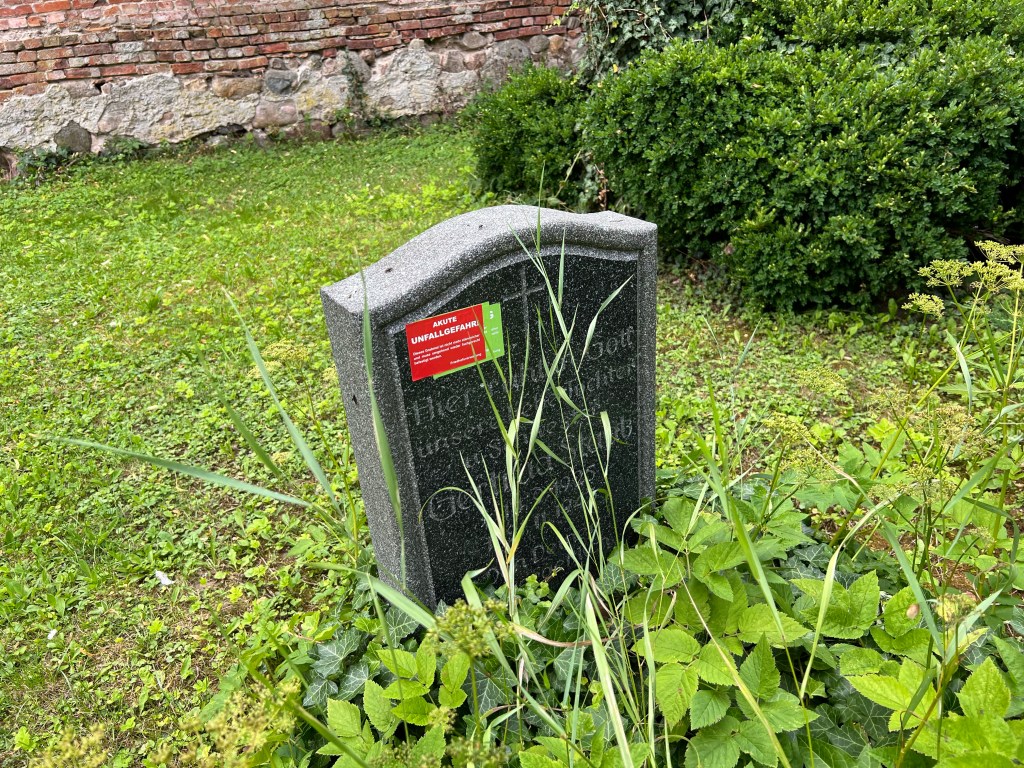
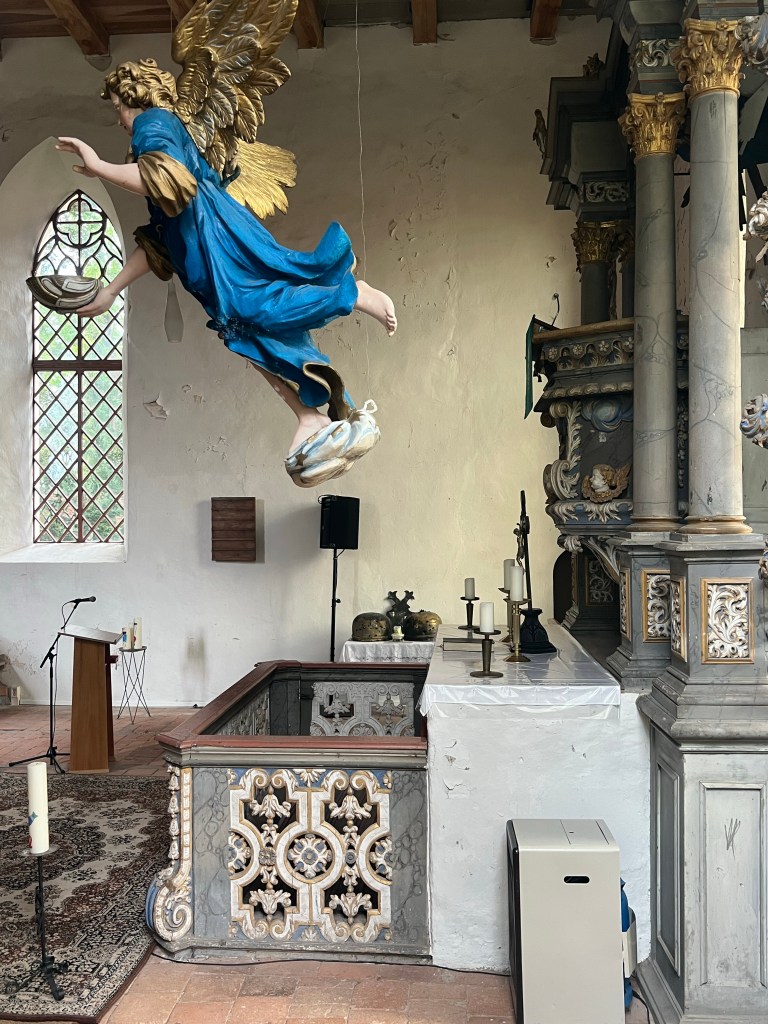
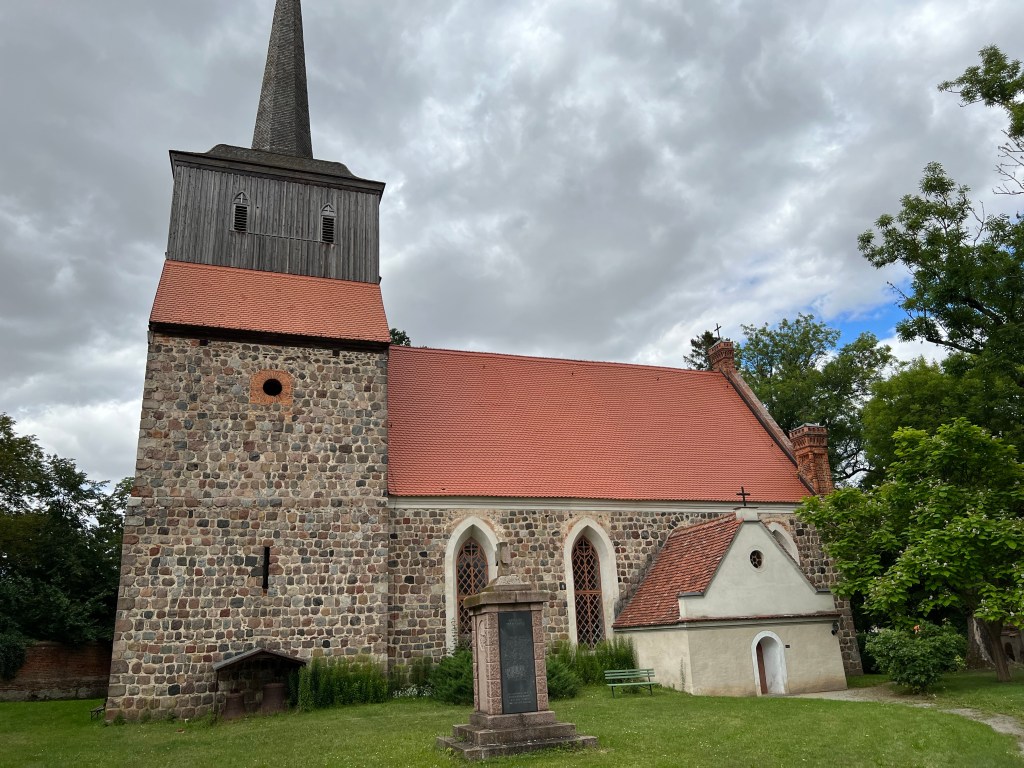
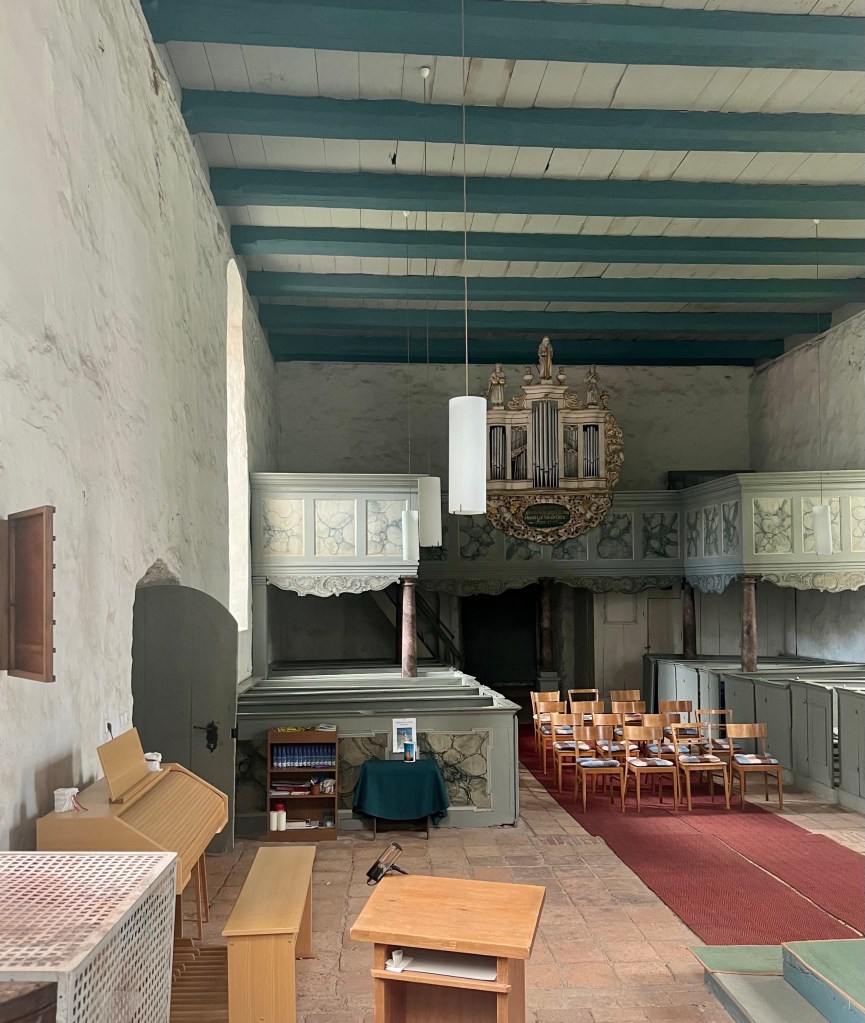

My great-grandpa Frank’s mother Augusta was born as Auguste Luise Friederike Hahn on September 14, 1858. Her birthplace of Woltersdorf was part of what was then Kreis Randow, the county southwest of Stettin in Pomerania.[1] Today the area is part of the town of Casekow, which is only a few miles from the Polish border and just within the boundaries of the modern German state of Brandenburg. Augusta’s parents were Wilhelmine Caroline Sahr and Johann Gottfried Hahn.
Augusta’s mother Wilhelmine Caroline Sahr was born on February 28, 1826 in nearby Wartin to Marie Matsdorf and Ludwig Sahr. Augusta’s father Johann Gottfried Hahn was born in Woltersdorf on September 26, 1823, and his parents were Maria Luise Nagel and Carl Hahn – a day laborer (Tagearbeiter).[2]
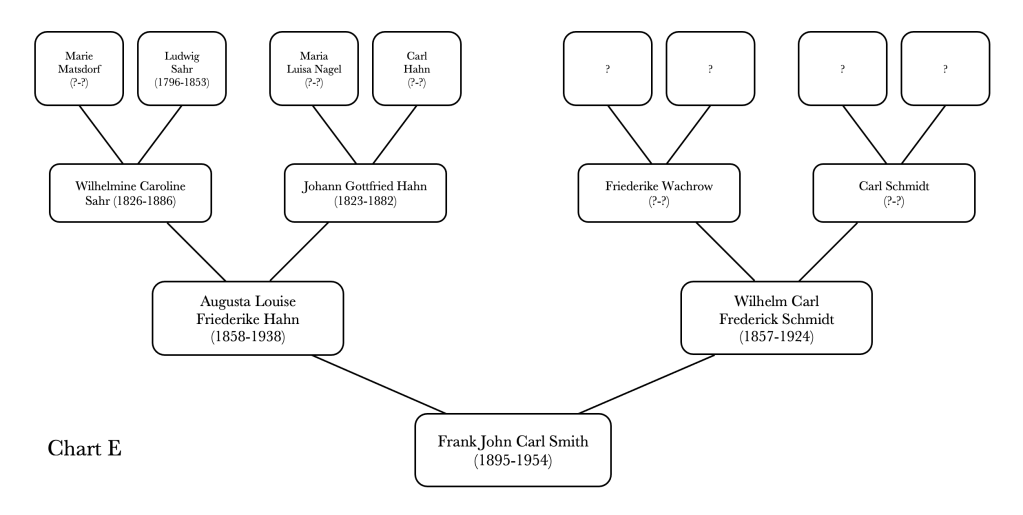
Augusta was one of at least eight children born to Wilhelmine Caroline and Johann Gottfried Hahn after they had married in Woltersdorf on September 6, 1849.[3] From church records, we have been able to identify the children as follows: Carl Ludwig Wilhelm (1849), Johann Wilhelm (1851), Johanne Caroline (1852), Wilhelm Martin Friedrich (1854), August Carl Wilhelm (1856), our ancestor Augusta (1858), Wilhelm Carl (1860) and August Wilhelm Carl (1862).
Four of the Hahn siblings – the eldest child Carl L.W., our ancestor Augusta, Wihelm C., and the youngest child August W.C. – immigrated to Wisconsin in the early 1880s, along with their widowed mother Wilhelmine Caroline. August C.W. died at age two and it’s likely that Wilhelm M.F. died young as well. It’s unknown whether the second and third siblings – Johann and Johanne – stayed in Prussia.*

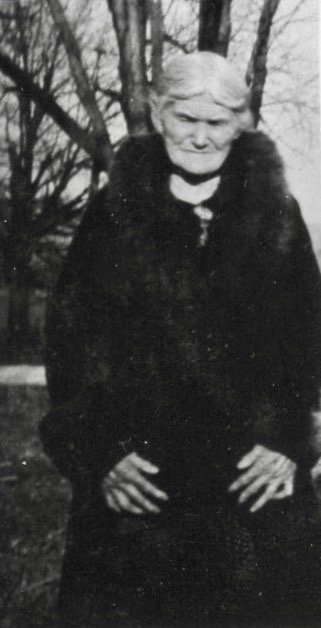
When I look at photos of my great-great grandma Augusta, I see pain as well as great strength. It’s hard for me to imagine everything she endured in her lifetime. In 1886, not long after arriving in the United States, Augusta’s mother Wilhelmine Caroline “Colleen” (Sahr) Hahn died at age 60. Grandma Colleen, as she became known in the U.S., had immigrated with her children after the death of her husband Johann. The next year, Augusta and Wilhelm’s daughter Anna died of croup before her third birthday. A decade later they lost their eldest daughter Millie from seizures caused by the measles. Millie was only 26 years old.
Augusta’s husband Wilhelm (William) Schmidt drank heavily and could be abusive towards Augusta and the children when intoxicated. He was arrested five times and convicted three times for such offenses. On one occasion in February of 1912, William attacked Augusta with a chair. Grandpa Frank’s brother Art feared for his mother’s life, tried to intervene but was threatened by his father with a revolver. Augusta decided she could endure this no longer. In July of 1912 she filed for divorce – a very rare thing for a woman to do at this time. The court sided with Augusta, awarding her custody of Frank and his brother John (the other children were legal adults by this time). Furthermore, the court granted Augusta sole ownership of the farm and created strict rules around when William could visit the property and use the horse for his masonry work.
According to my great-aunt Shirley, Grandma Augusta sold the farm and spent her later years living in a duplex in the Milwaukee area (not far from her son Art). She worked at a factory that made pots and pans, and in her spare time she knitted and sewed clothing for her grandkids. Aunt Shirley believes she had a “gentleman friend” in those years as well. I certainly hope she did.
[1] Augusta Hahn’s birth is recorded in the Hohenselchow-Woltersdorf church book for 1858 (Seite 87, Nr. 18), Blumberg Parish records at the Kirchenkreisarchiv Greifswald. These records were found thanks to the efforts of local historian and volunteer, Mr. Hartmut Wegner.
[2] Johann Hahn’s birth is recorded in the Hohenselchow-Woltersdorf church book for 1823 (Nr. 10), Blumberg Parish records at the Kirchenkreisarchiv Greifswald.
[3] Documentation of Wilhelmine Sahr and Johann Hahn’s marriage is found in the Hohenselchow-Woltersdorf church book for 1849 (Seite 152, Nr. 1), Blumberg Parish records at the Kirchenkreisarchiv Greifswald.
* All of the documentary evidence about the Hahns in Germany comes from the digital archives of Hartmut Wegner, the local historian in Mönkebude that I wrote about in yesterday’s post.


 Deep Roots
Leave a comment