
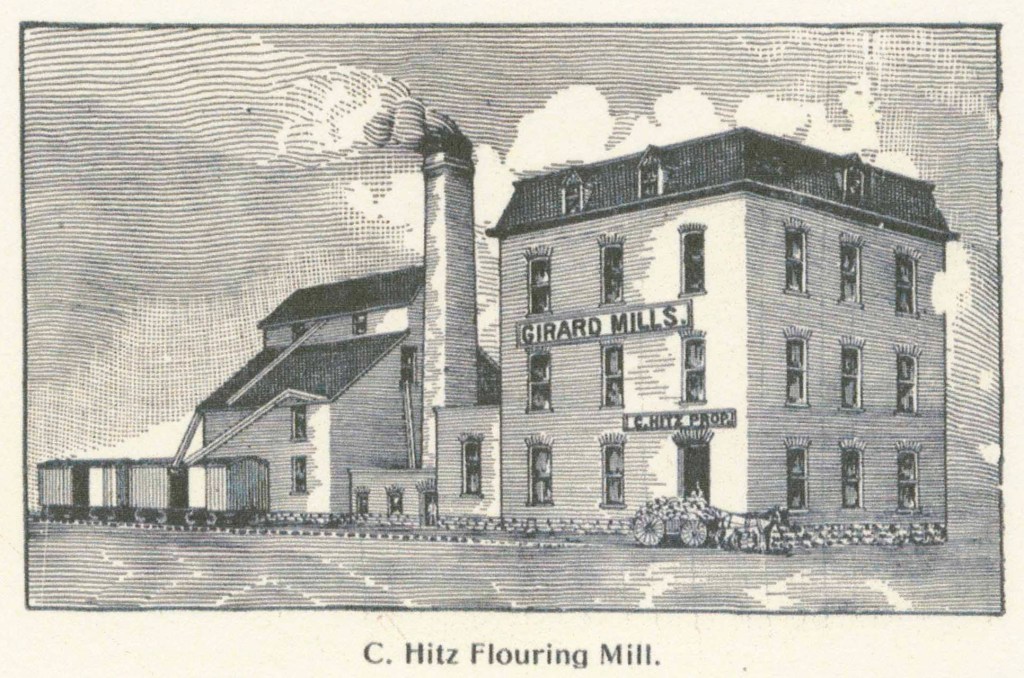
It’s our second day on the road to Fort Worth, and Spence and I are traveling through the rolling hills of the Kansas and Missouri borderlands. Yesterday I told you a little about my 3x great-grandmother’s brothers, John and George Hitz, and how they settled in Iowa with their mother Maria Tontz Hitz after the Civil War (see this post). Now that we’ve reached southeastern Kansas, it’s time to turn to the youngest brother in that family, Christian Hitz.
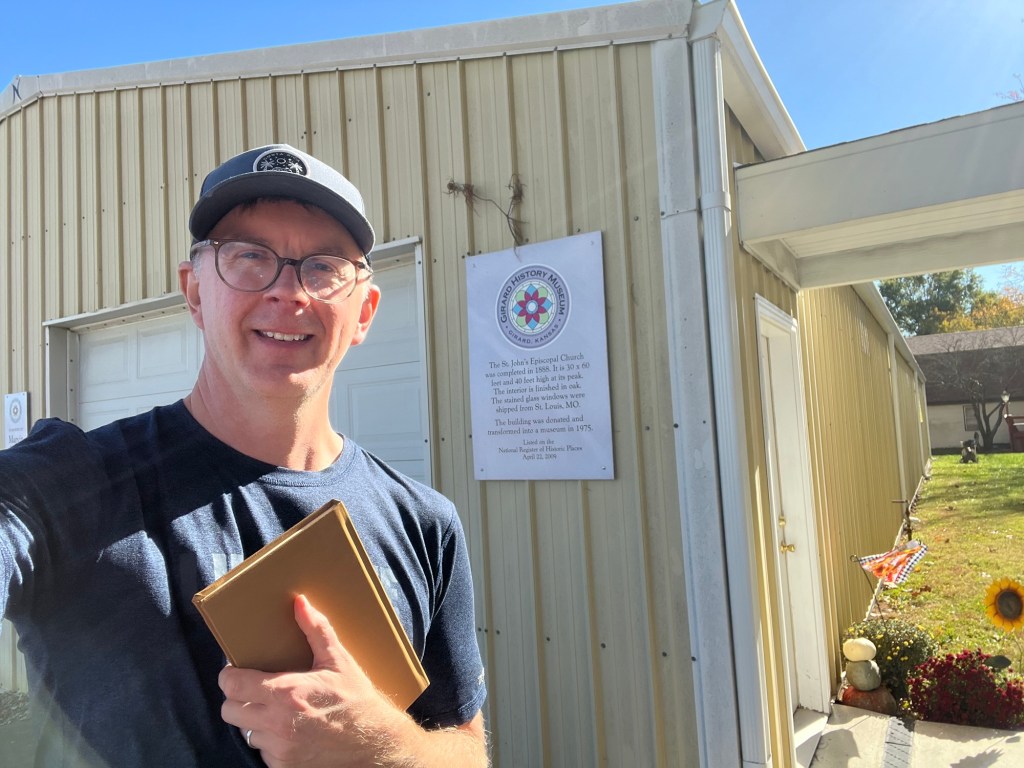
Girard, Kansas
Christian had enlisted in the Union Army during the Civil War. He served as a sergeant in the 12th Wisconsin Light Artillery Battery, which saw action in several battles in the Deep South, including the sieges of Corinth and Vicksburg. Coming home to Wisconsin after the war, Christian met and married a young lady named Mary Flint. Not long after they wed in 1868, Christian and Mary set out for Kansas.
What attracted Christian to Kansas was the opportunity to run a flour mill with an older cousin. Here I should back up and explain the family tree in more detail.
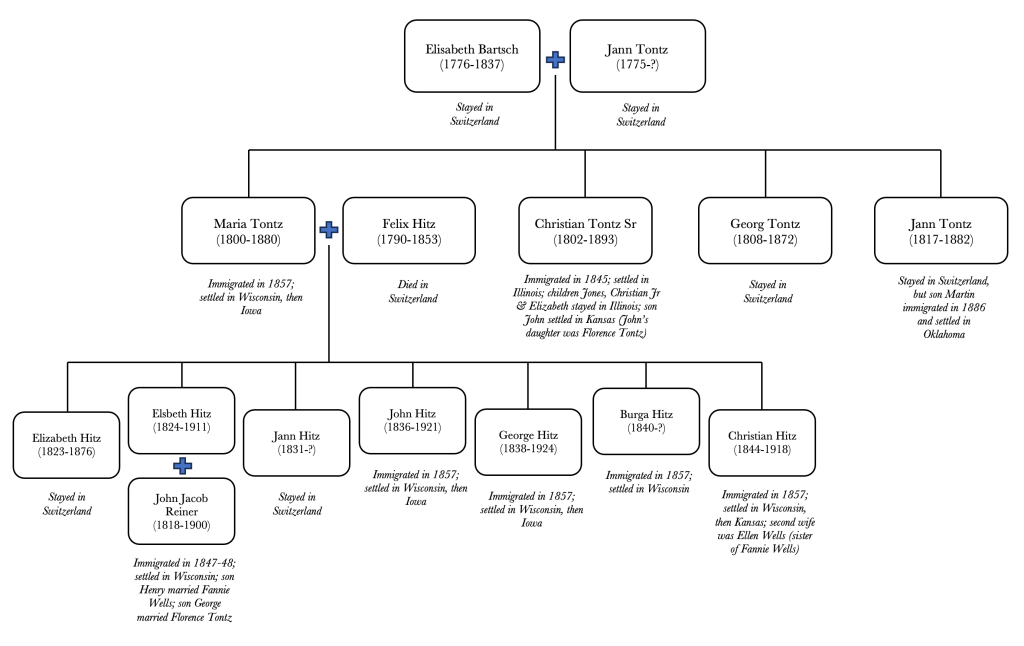
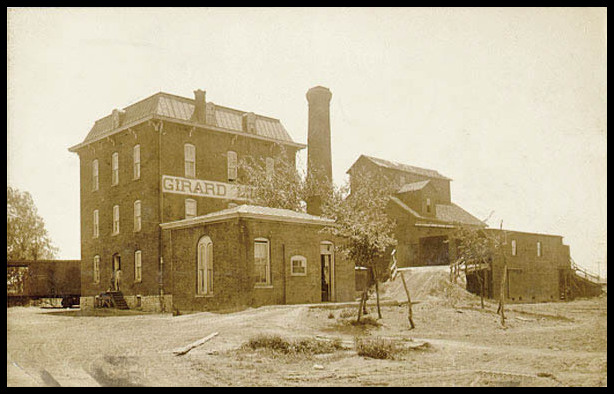
Christian Hitz’s mother Maria had a brother named Christian Tontz who had immigrated with his family from Switzerland to the United States (via New Orleans) in 1845. Maria’s brother Christian managed to secure a land patent for a homestead in Madison County, Illinois, not far from St. Louis, and thus the family were among the first white settlers to farm in that area. Christian and Barbara Tontz had four children, the eldest of whom was John Tontz. Sometime in the mid-1850s, John and his fiancée moved from Illinois to Kansas. John Tontz had clearly maintained ties with his family in Wisconsin because in 1869 he recruited his cousin Christian Hitz to join him in Kansas for a business venture. The two men built a flour mill in Girard, which had just been incorporated as a town and was situated along a new train line from Fort Scott.
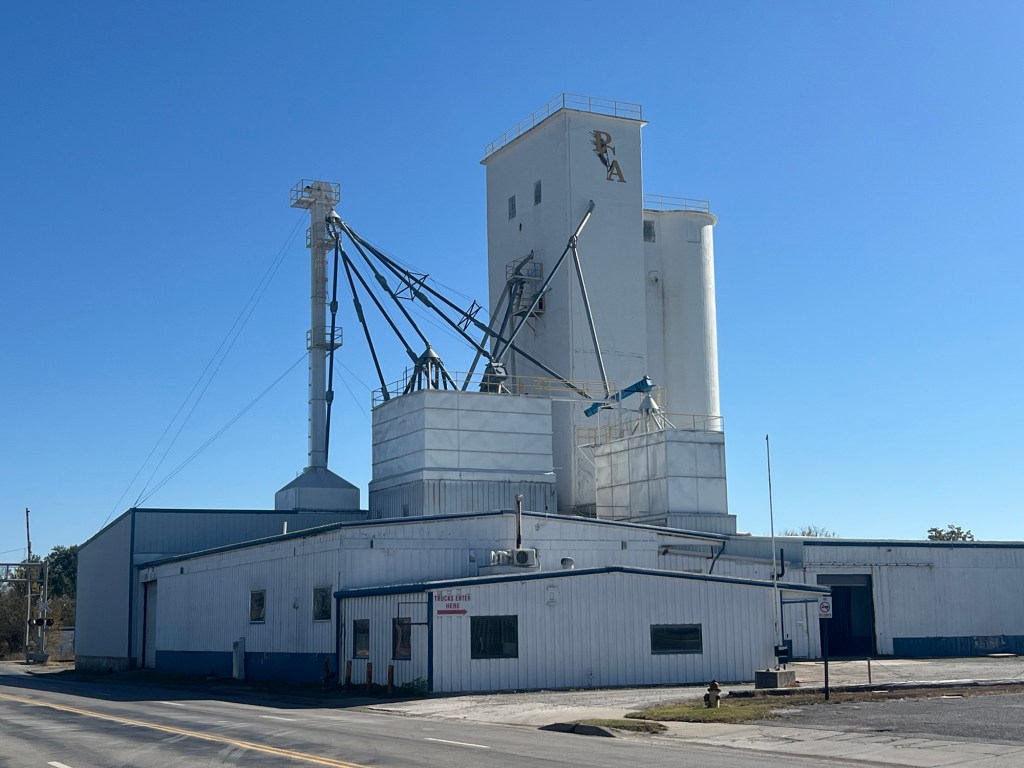
“The Girard Mills were built in 1870, and began operations in the spring of 1871. The first building was a two and a half story frame, costing, with the machinery and power, $10,000. The property was owned by Tontz & Hitz. In 1879, Tontz retired from active participation in the management of the business, and in 1882 sold his interest to Hitz. Mr. Hitz thereupon erected a three and a half story brick mill, put in five run of buhrs, and two sets of Gray’s patent rollers, thus making it a combined mill, which experience has demonstrated to be best adapted to grinding Kansas wheat.” (Excerpt from History of the State of Kansas, William G. Cutler, 1883 by A. T. Andreas, Chicago, IL, retrieved from this webpage.)
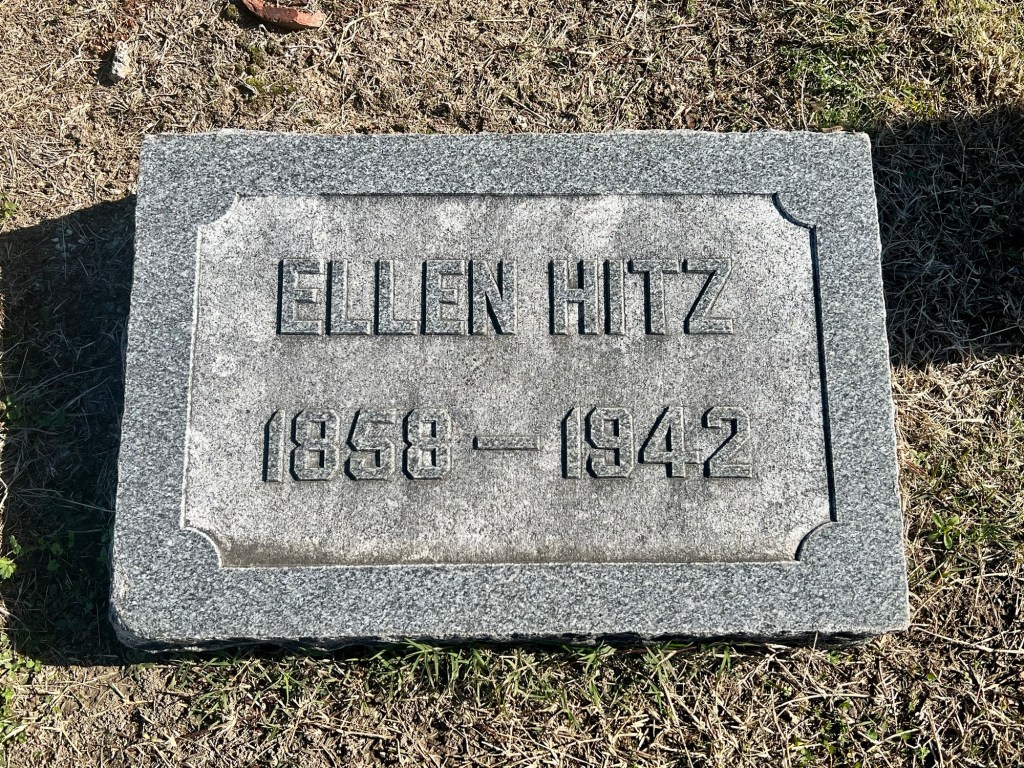
It would appear that the 1870s and 80s were a boom time for the Girard Mills. But tragedy struck in 1879 with the sudden death of Christian Hitz’s young wife, Mary. A year later, Christian’s mother Maria Tontz Hitz died in Iowa. Sometime between these two misfortunes, Christian must have traveled back to Wisconsin where he met Ellen Wells, the sister of the wife of his nephew Henry Reiner. Christian and Ellen wed in April of 1880.
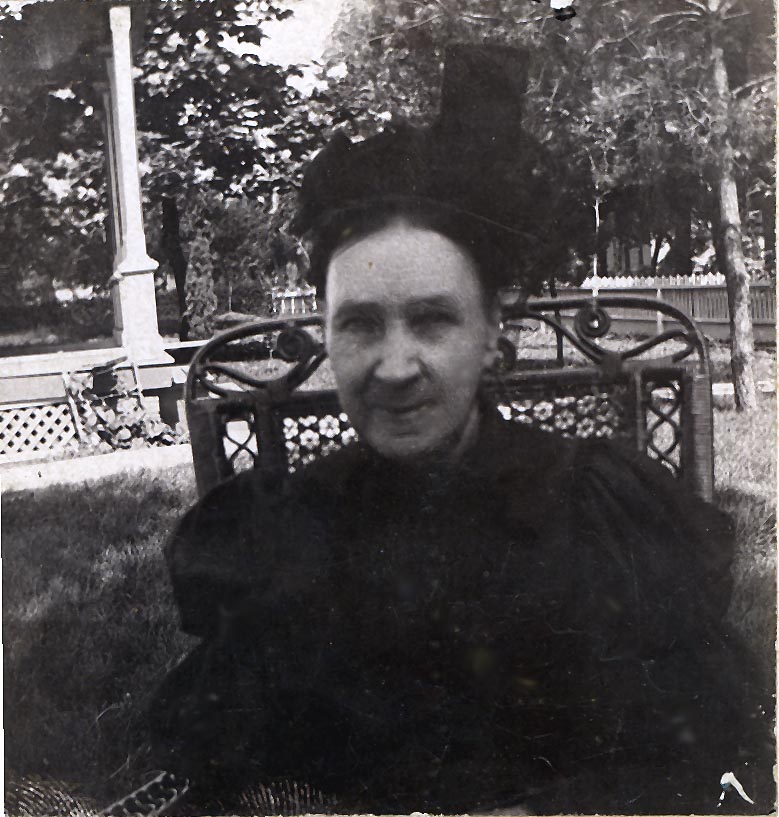
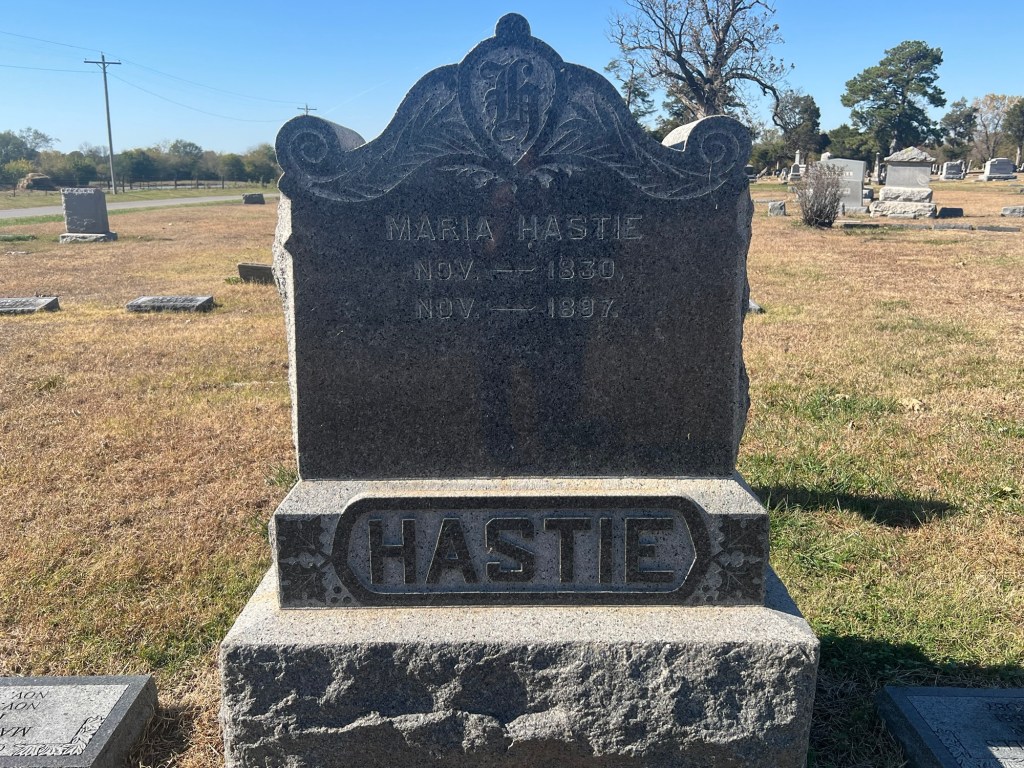
Ellen Wells was the fourth child of Maria and William Wells, leather workers from Worcester, England who had immigrated to the U.S. in 1845 (described in this post). Ellen’s father had served in the Union Army during the Civil War and died in Virginia from one of the war’s many “camp diseases” (more about William in this post.) Widowed with five young children to care for, Maria Wells quickly remarried in 1865. But nine years later, Maria was widowed again. In 1896, she visited Ellen in Kansas for a few months. According to her obituary in The Girard Press, Maria returned to Wisconsin for a while before coming back to Kansas. On that return trip, she came down with an illness and did not recover. In November of 1897, Maria died at Ellen and Christian’s home in Girard and was buried in the local cemetery.
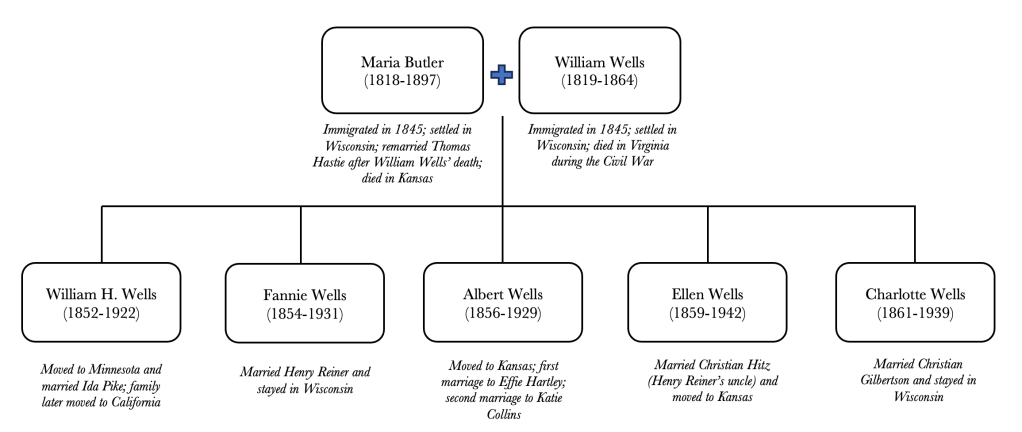
Albert Wells, brother of Ellen Wells Hitz and Fannie Wells Reiner, also moved from Wisconsin to Kansas to work at the mill. I have been in touch with Albert’s granddaughter, JoAnn Hopper, who is a family historian living in the Houston area. She writes: “Albert wanted a job and Chris [Hitz] invited him to Girard to work in his flour mill. [He] worked there for 40 years. The mill failed in 1924 when recession hit farming country. He married Effie Hartley and they had 3 children. [After their divorce], Albert employed housekeeper/childcare helpers to work at his home. That’s how he met my grandma, Katie Collins and married her in 1903. She revered him and always called him Mr. Wells.”

A further twist in this tale of interconnected families is that George Reiner, younger brother of my great-great grandpa Henry Reiner, also traveled to Kansas to work in the Girard Mills. It was there he met and married his second cousin, Florence Tontz (John Tontz’s daughter). George and Florence later relocated their family to Detroit, Michigan.

* POST SCRIPT *
Fort Scott, Kansas and Newtonia, Missouri
Spence and I made a couple of detours today to soak up some Civil War history. In the section above, I briefly covered Christian Hitz’s Civil War record, but I neglected to mention his brother George’s.
George Hitz served in the 9th Wisconsin Infantry (Company F and later C). The 9th was informally known as “the German regiment”, with Company F specifically known as “the Madison sharpshooters”. One of the first places this regiment was stationed was Fort Scott, Kansas.
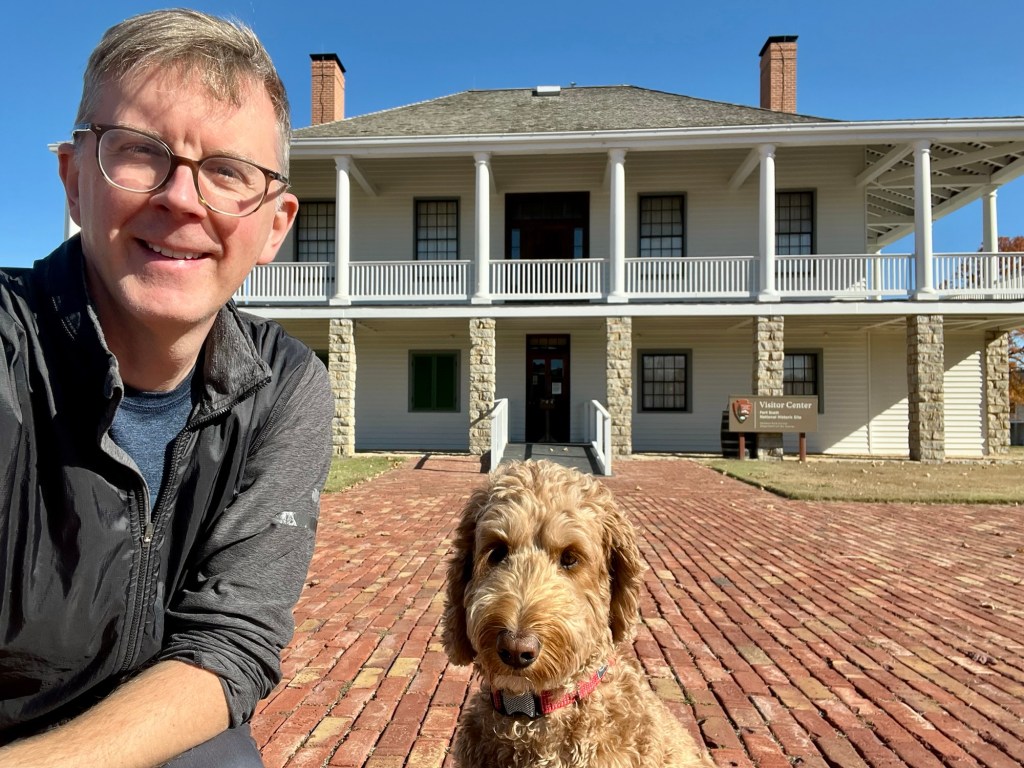
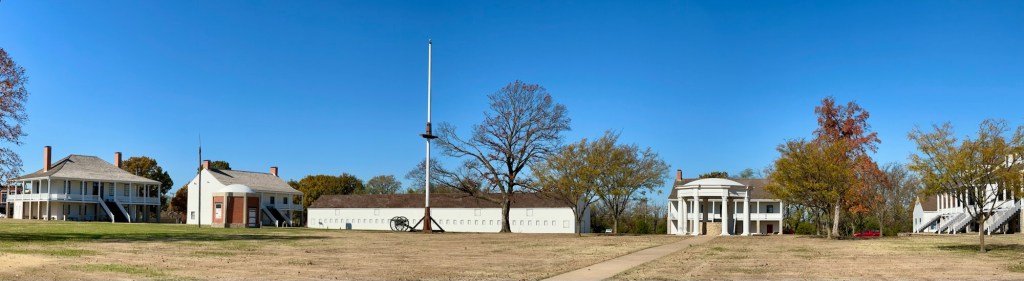
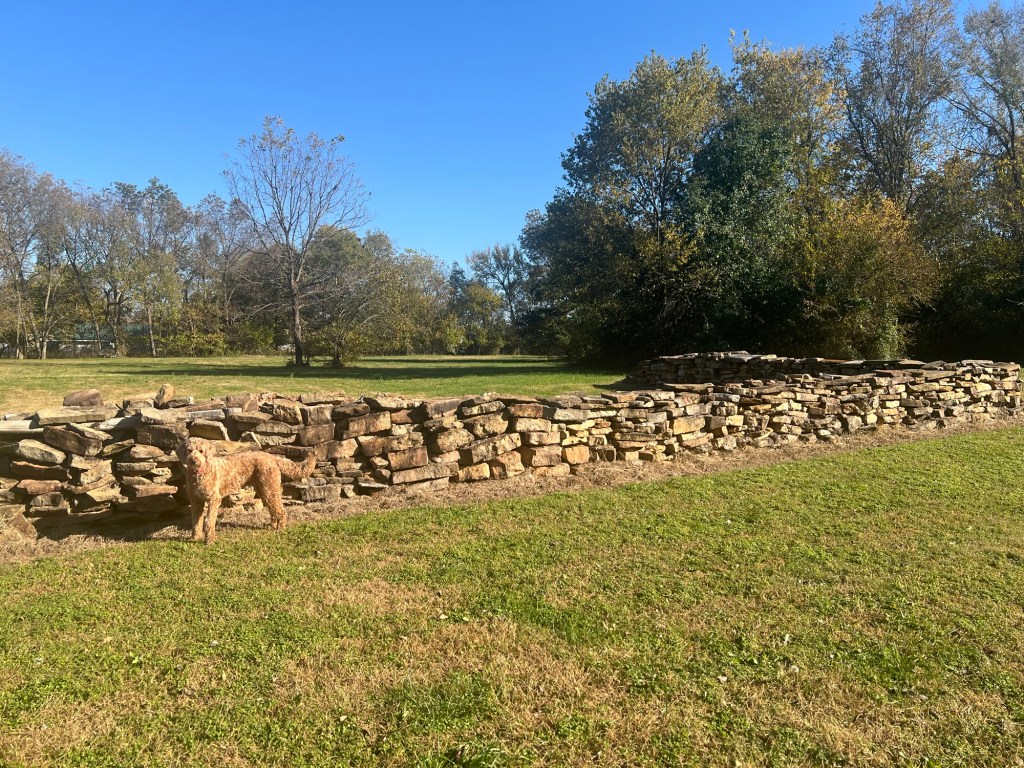
The regiment participated in several conflicts in Missouri and Arkansas, including the First Battle of Newtonia. Spence and I had an opportunity to walk around that battle site today.

(Side note: the 9th Wisconsin was commanded by Frederick and Charles E. Salomon, brothers of Wisconsin’s war-time governor, Edward Salomon. Salomon was Wisconsin’s first German-born and first Jewish governor.)
Neosho, Missouri
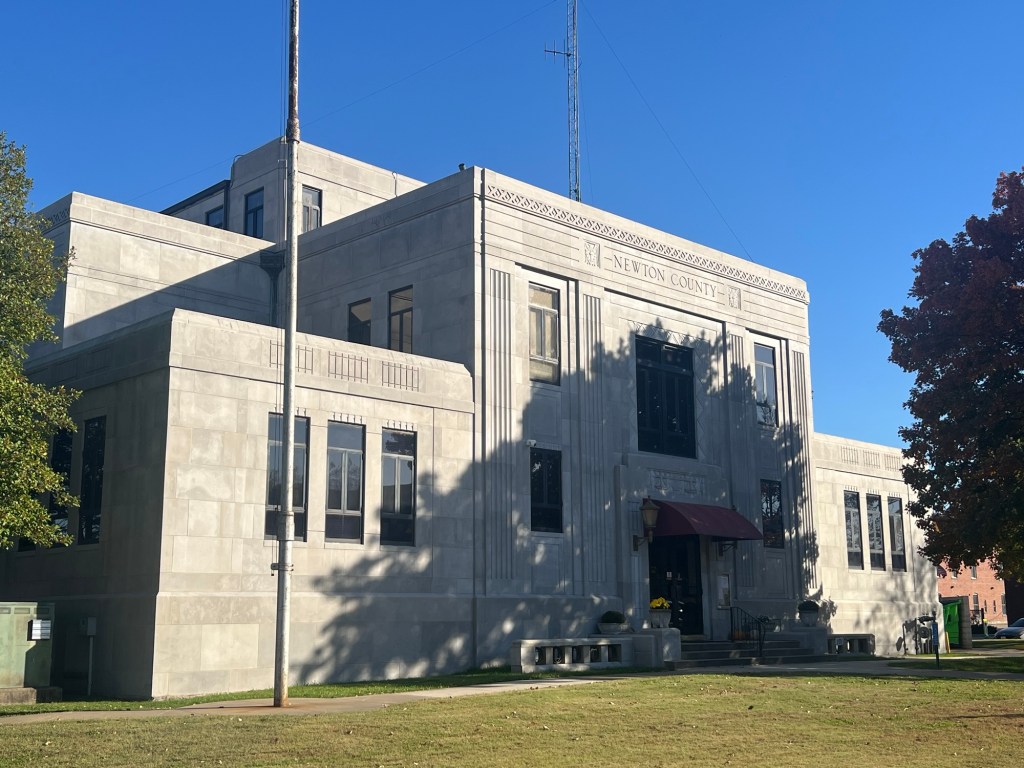
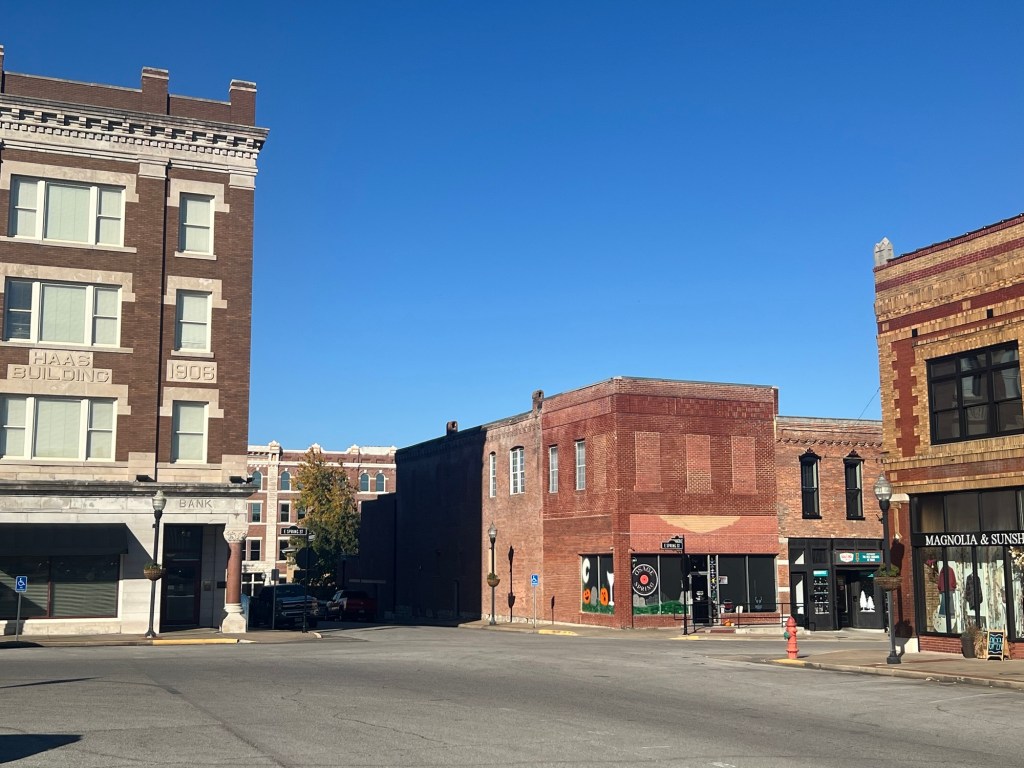
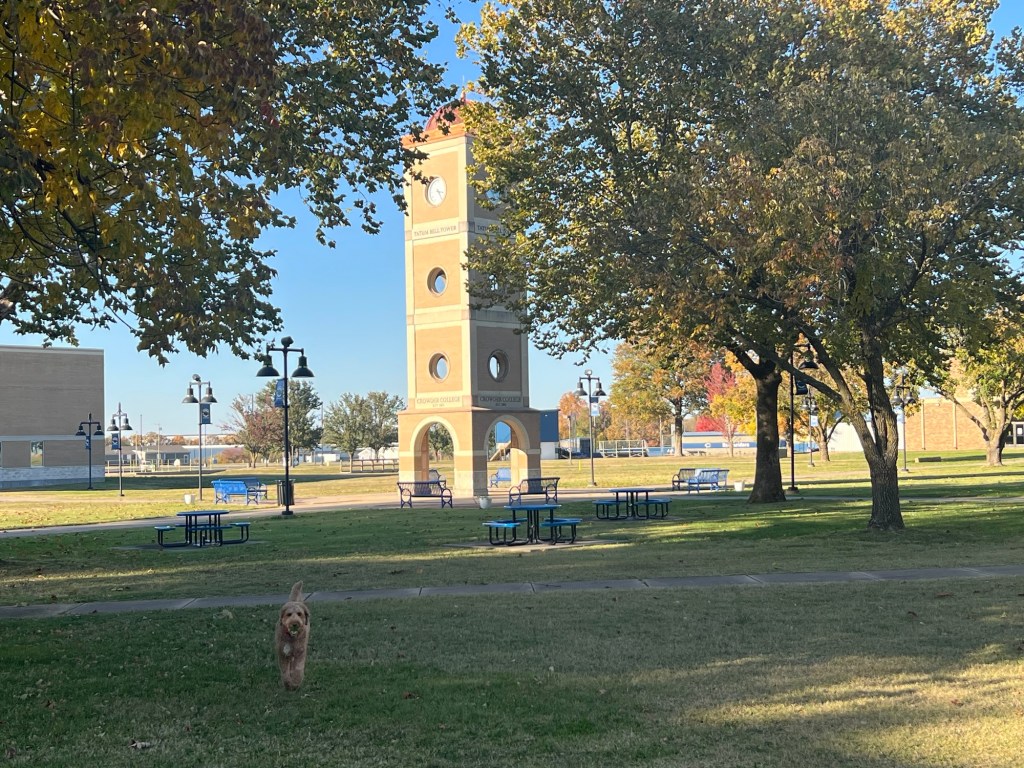
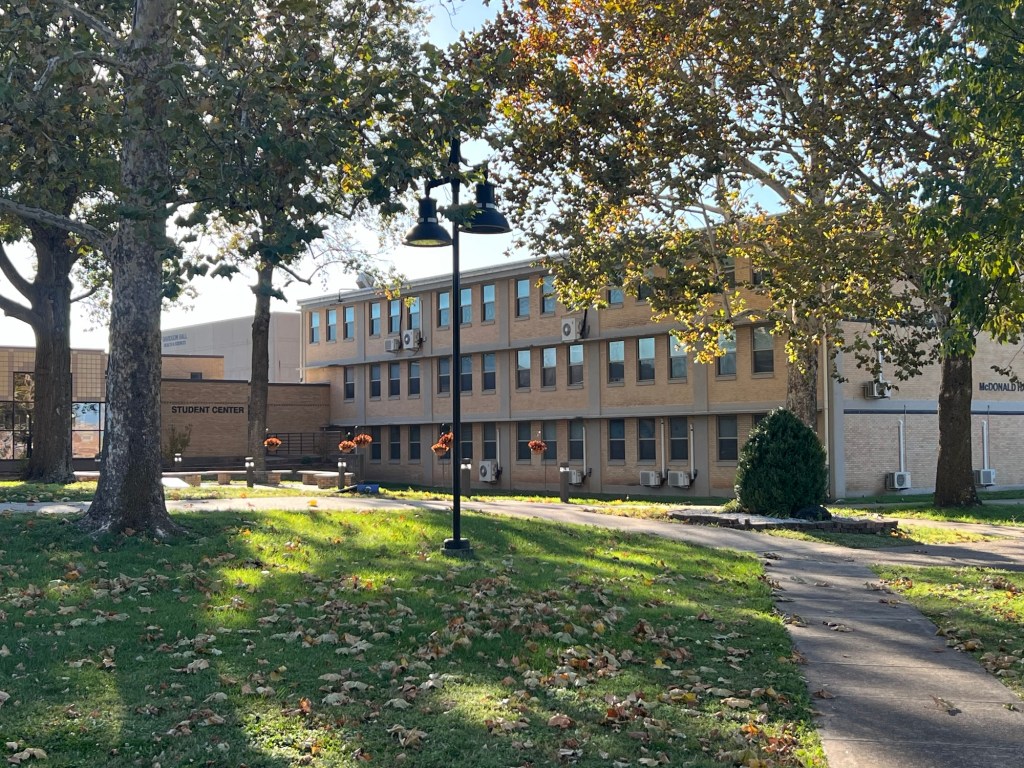
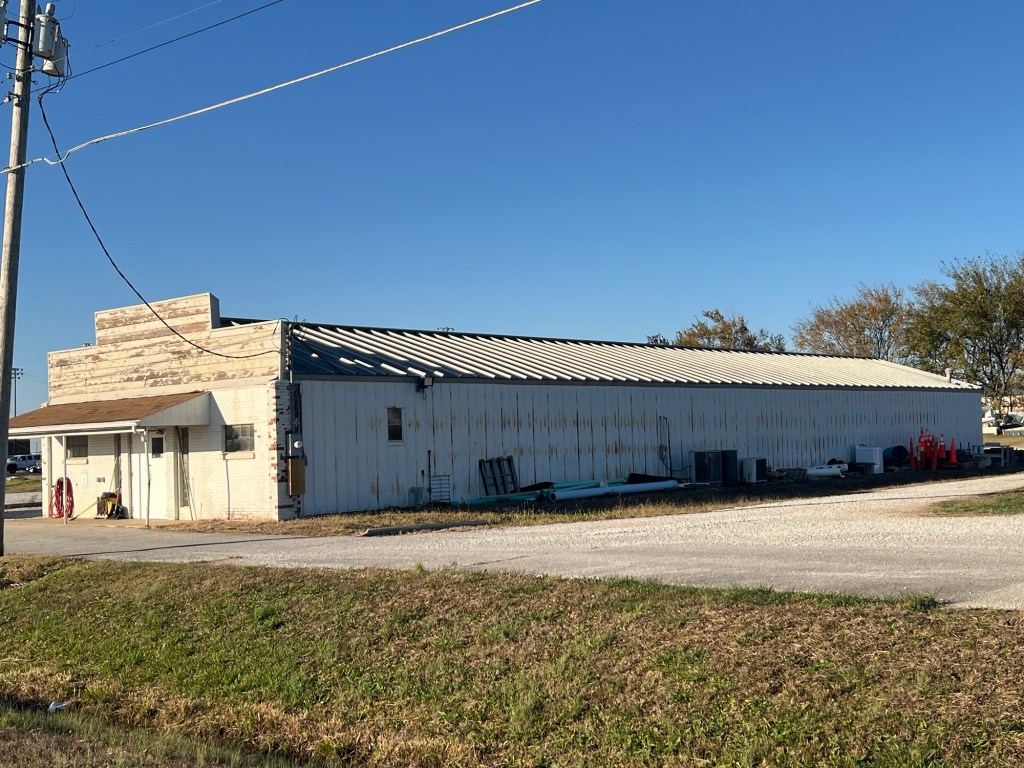
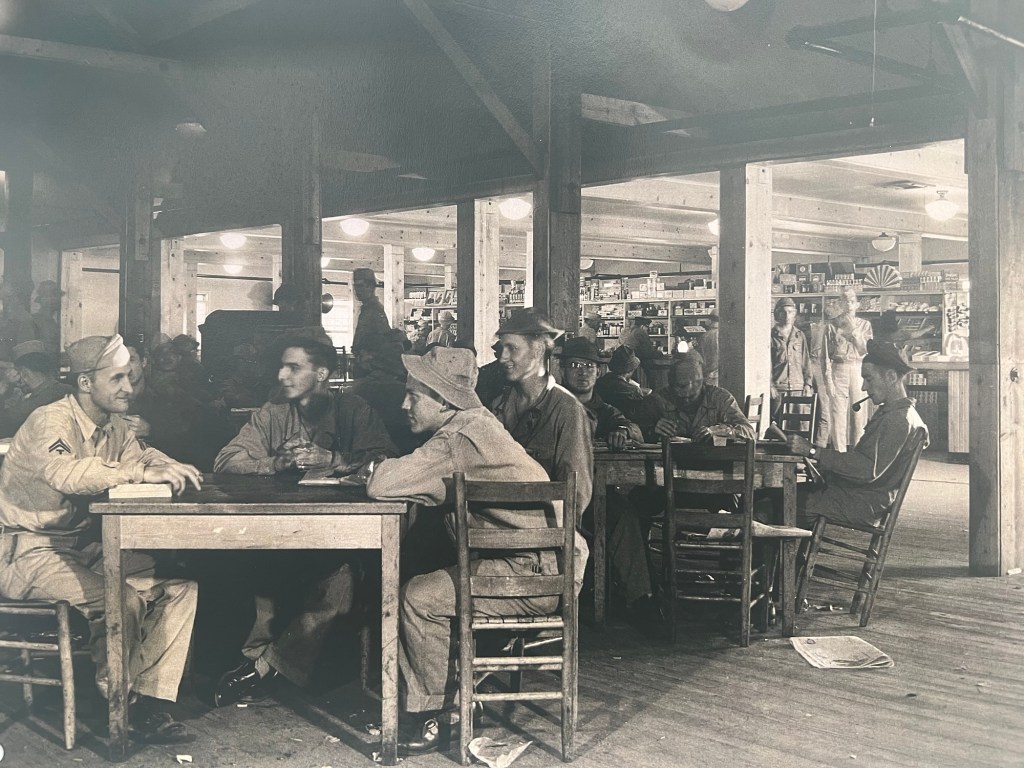
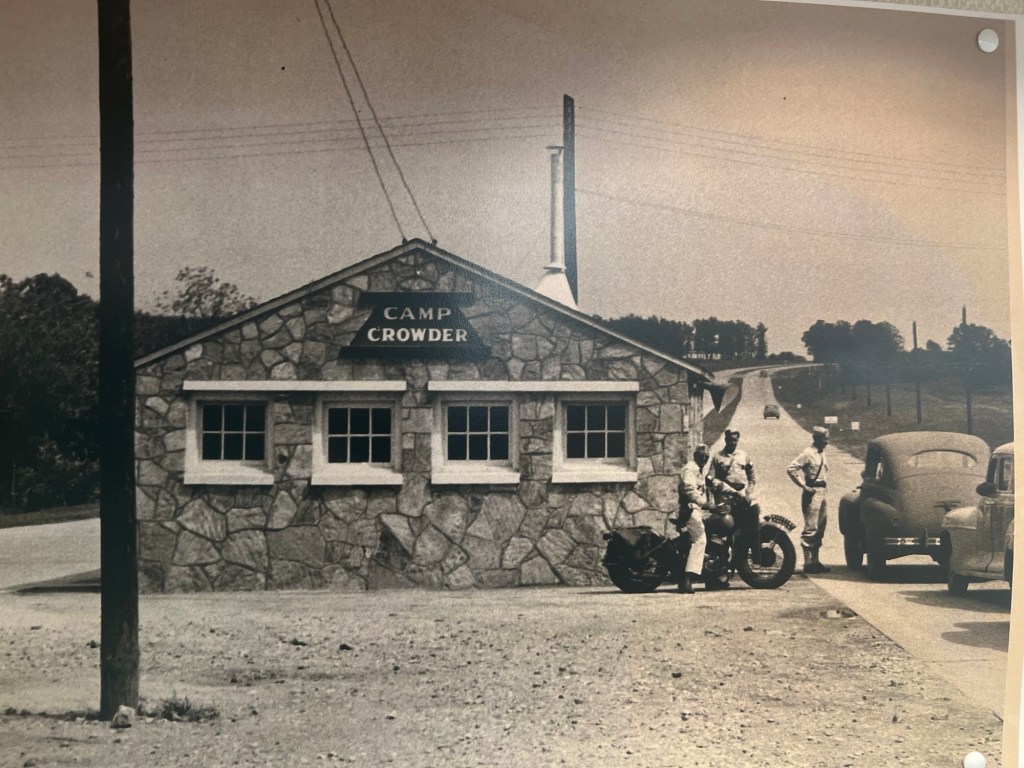
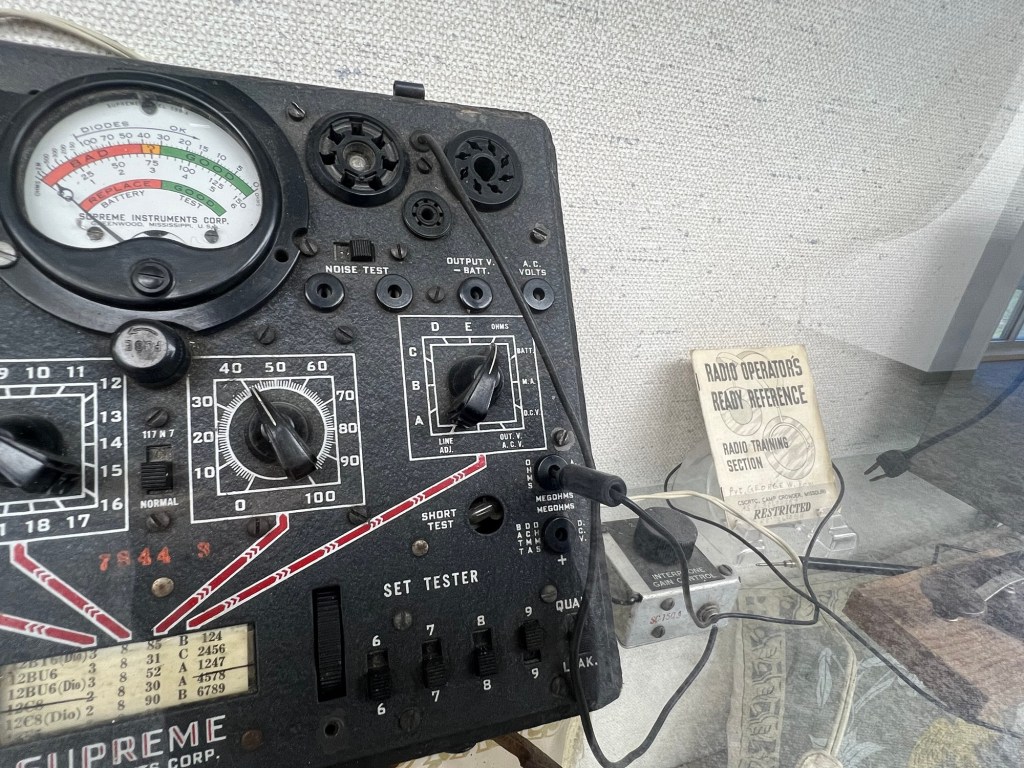
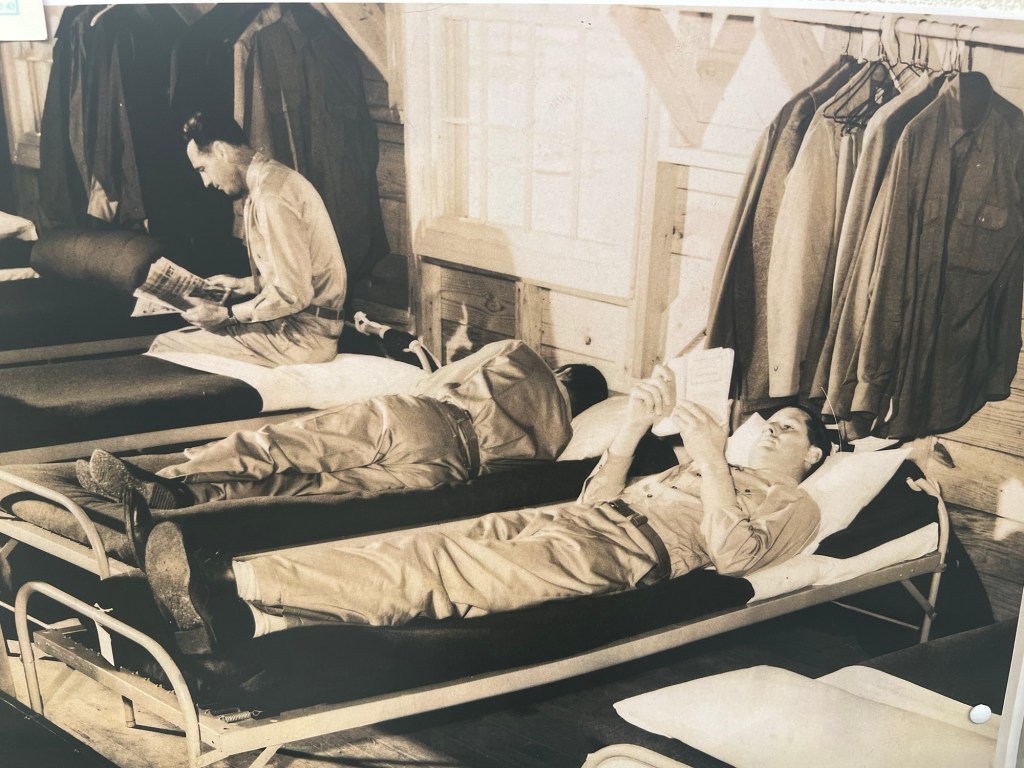
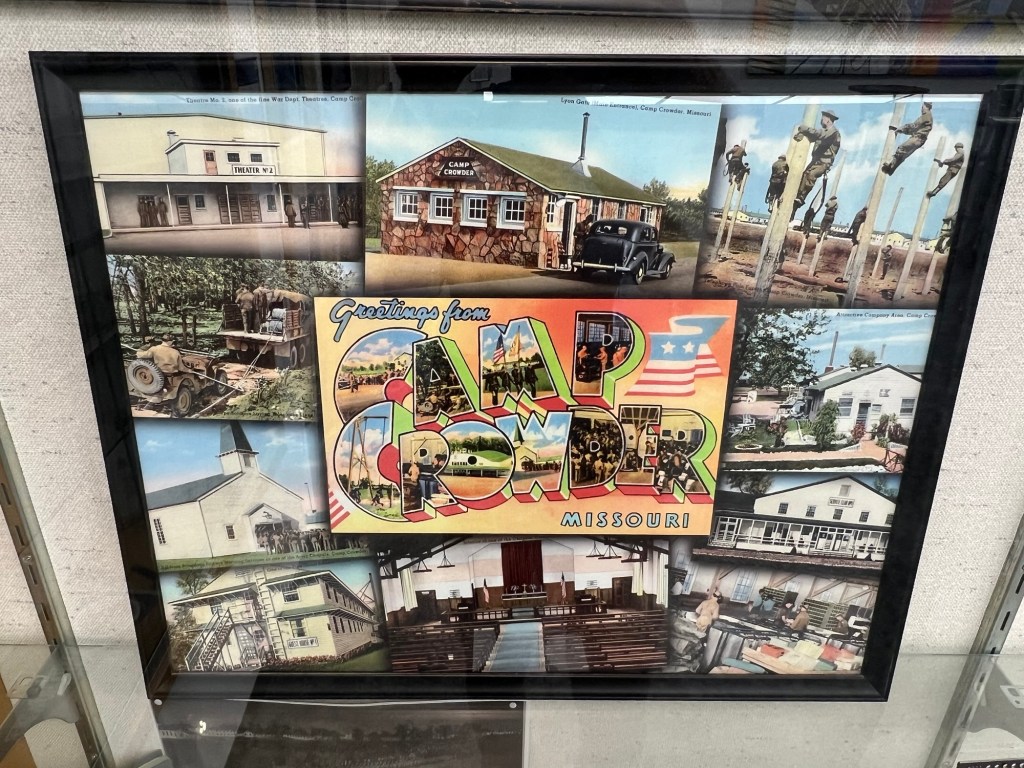
This area of Missouri has a much more recent tie to the country’s military history. Camp Crowder, just south of Neosho, Missouri, was once home to tens of thousands of World War II servicemen training to become Signal Corps radio operators and technicians. The actors Dick Van Dyke and Carl Reiner were alumni of Crowder, as was Mort Walker, creator of the Beetle Bailey comic strip. Walker’s “Camp Swampy” was based on his experiences at Crowder. But more importantly for my family, Camp Crowder is the place where my maternal grandpa Eugene R. Smith was trained before he was sent to England and France in 1944.
I described some of my grandparents’ experiences at Crowder — including their 1943 wedding — in a prior blog post. But I’m adding a few photos of the area to bring those descriptions to life.



 Deep Roots
Leave a comment