
(This post is a continuation from yesterday’s post about Anders Andersen Torblaa and Anna Nilsdatter Skeie of Ulvik)
The Torblå farm (also spelled Torblao or Torblaa) is – like many Norwegian farms – actually a collection of several farmsteads rather than a single entity. The breaking up of farms into smaller and smaller parcels occurred throughout the 17th through 19th centuries, as Norway’s population grew and struggled to support itself on a limited supply of arable land. But the introduction of better health and sanitation measures (especially the smallpox vaccine in the early 19th century) led to a population spike that Norway could not support. Migration from farms to cities and emigration to the United States served as a release valve for this surplus population.
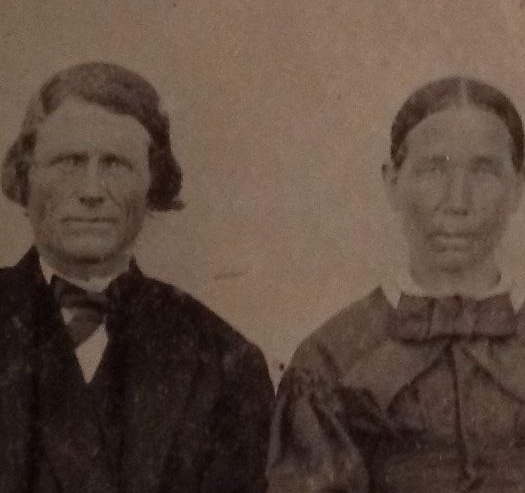
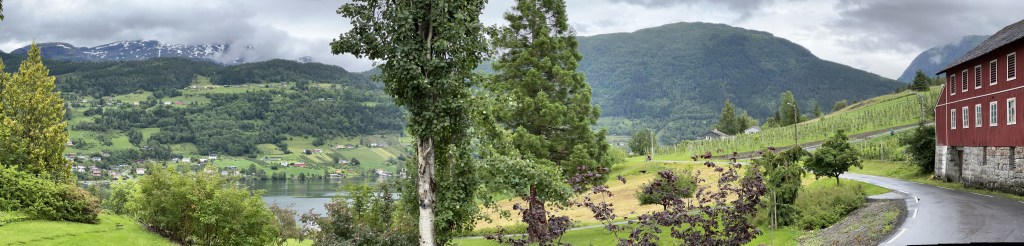
Our ancestor, Anders Andersen Torblaa (1826-1902), grew up on Bruk 12 of the group of farms called Nedre Torblå (Lower Torblå). Bruk 12 lies along the westernmost flank of the Torblå properties – the area closest to the town of Ulvik and the terminus of the Ulvikafjord. Anders was the son of Anders Olsen Osa (1785-?) and Guri Olsdatter Hetlenes (1802-1893).* As their “farm names” (farm-based last names) imply, neither of Anders’s parents grew up at Torblå, and as far as I can tell, the family’s connection to Torblå didn’t last more than a generation or two.[1]
Interestingly, when Anders and Anna immigrated to America, they are listed on the ship manifest as Anders A. Skeie and Anna Nilsdatter – he has taken his wife’s farm name here. In Wisconsin, they chose the farm name Torblaa as their last name but started spelling it Torbleau, which I think was a clever way to enforce a correct pronounciation as well as “Wisconsinize” the name. After all, so many Wisconsin placenames are French in origin. My AirBnB hostess informs me that the name Torblå comes from “Thor’s blót” — a place where “blót” (blood sacrifice) was given to the god Thor.
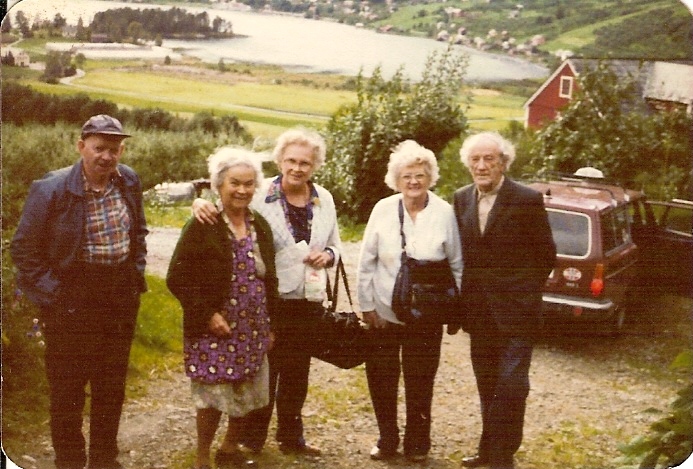
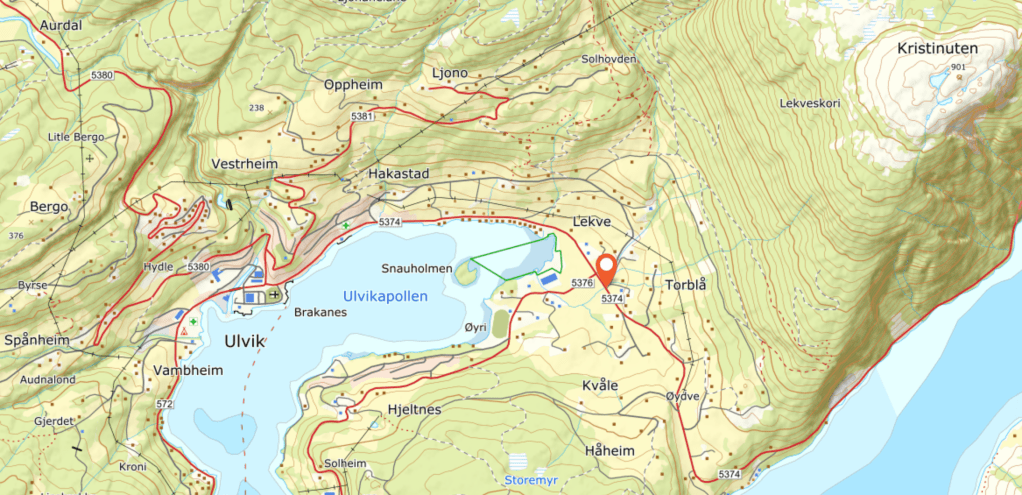
Yesterday I drove over to Nedre Torblå and met the current residents of the farm — Mr. and Mrs. Strømmen, who were out doing some gardening. The Strømmens are transplants from eastern Norway and they originally bought the place to be a summer home. But they liked it so much they’ve decided to retire here.
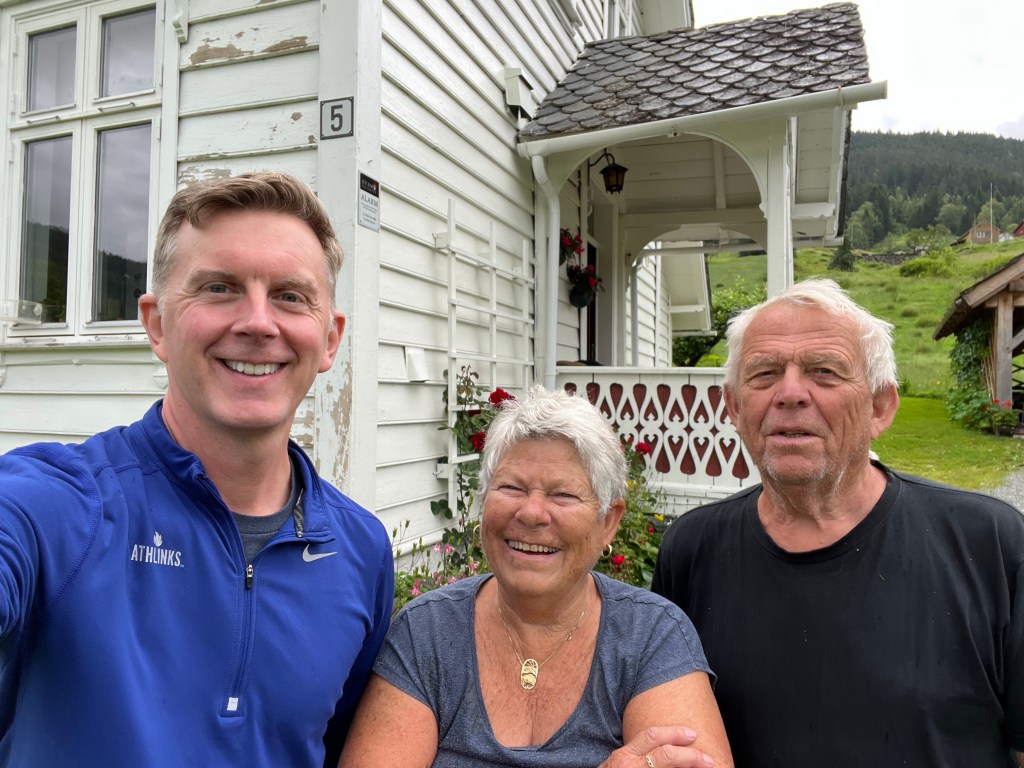
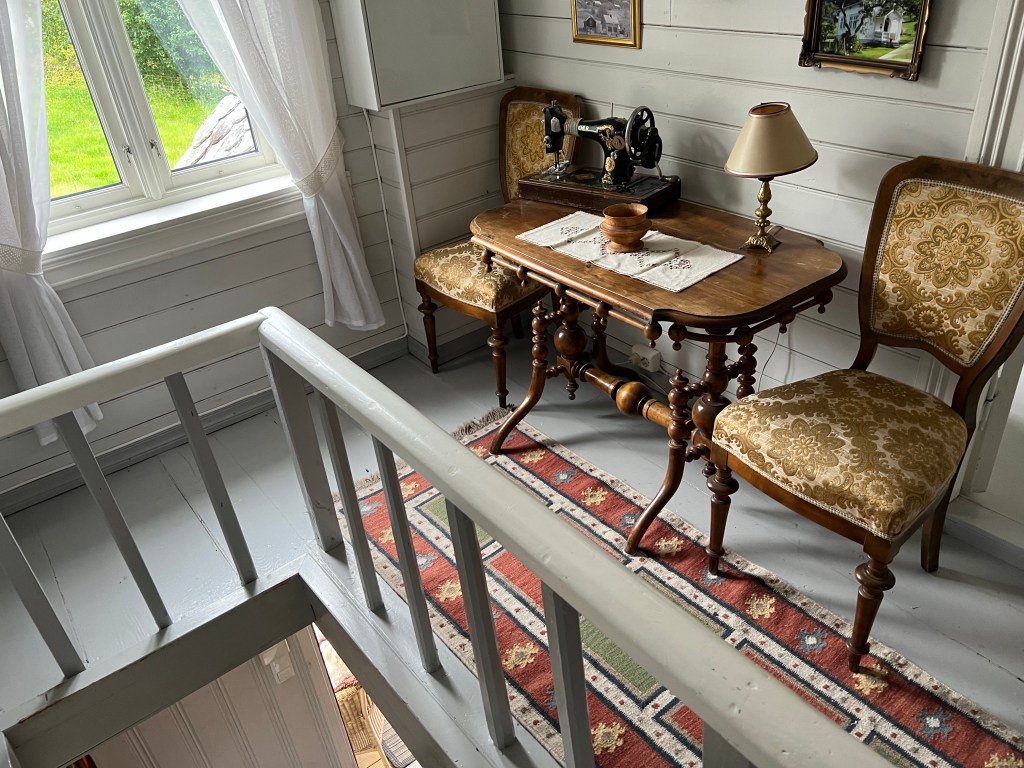
I explained the family connection to the farm, and they immediately invited me into their home to show me some of the artifacts that had been left by the previous residents. Now, it’s unlikely that anything remains here from the time of our family — after all, they left in 1849. Still it was an extremely kind gesture and afforded me a fascinating glimpse backward in the life of a Norwegian farm.
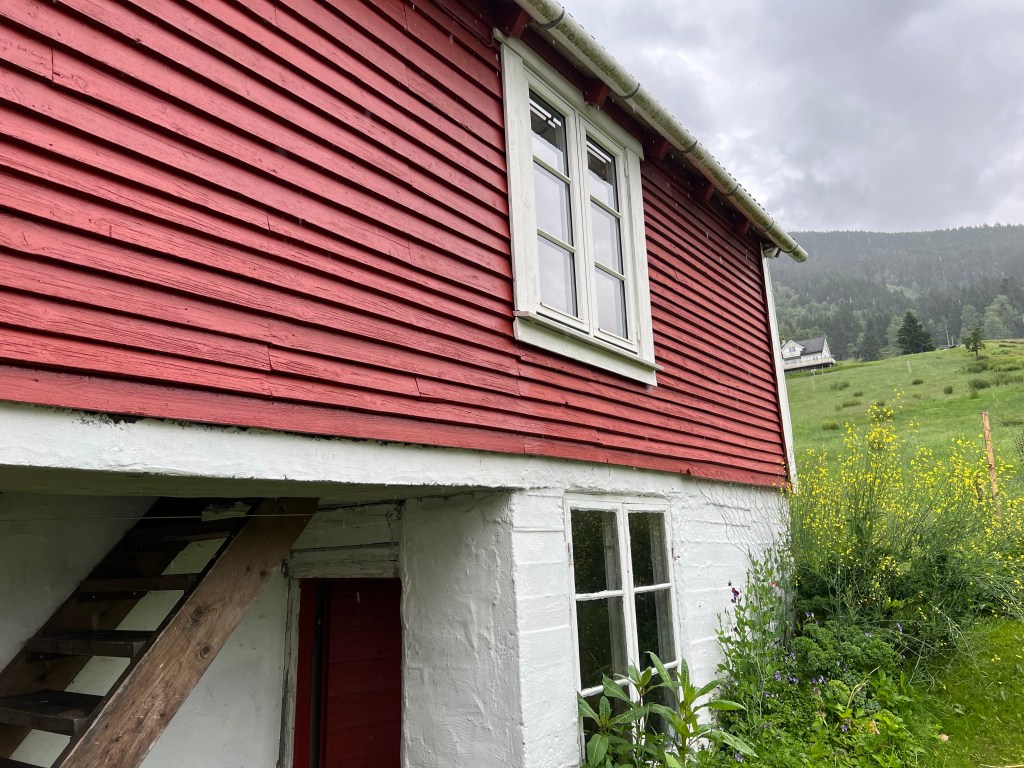
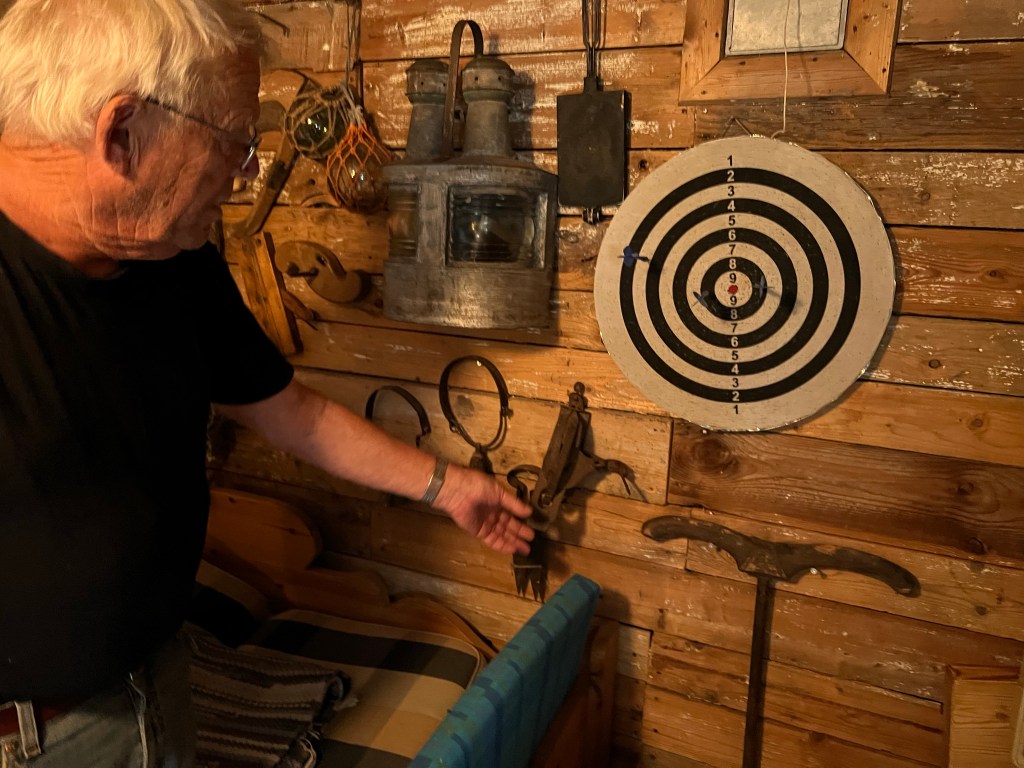
Behind the house (which probably dates from the late 19th century) is an older outbuilding that was once used as a chicken coop. These days Mr. Strømmen has it decked out as a kind of luxury man cave (hvordan sier man «man cave» på norsk??), replete with comfy couches and a TV. But in a more rustic back room of that building he has a wall where he displays all sorts of odds and ends he’s found around the farm — tools, animal traps, farming equipment, etc.
And in a second-hand shop in town, Mr. Strømmen found a painting (dated 1929) made by one of the farm’s former inhabitants, an artist by the name of Torgeir Lekve. Mr. Strømmen believes he’s found the remains of the old building shown in the painting.

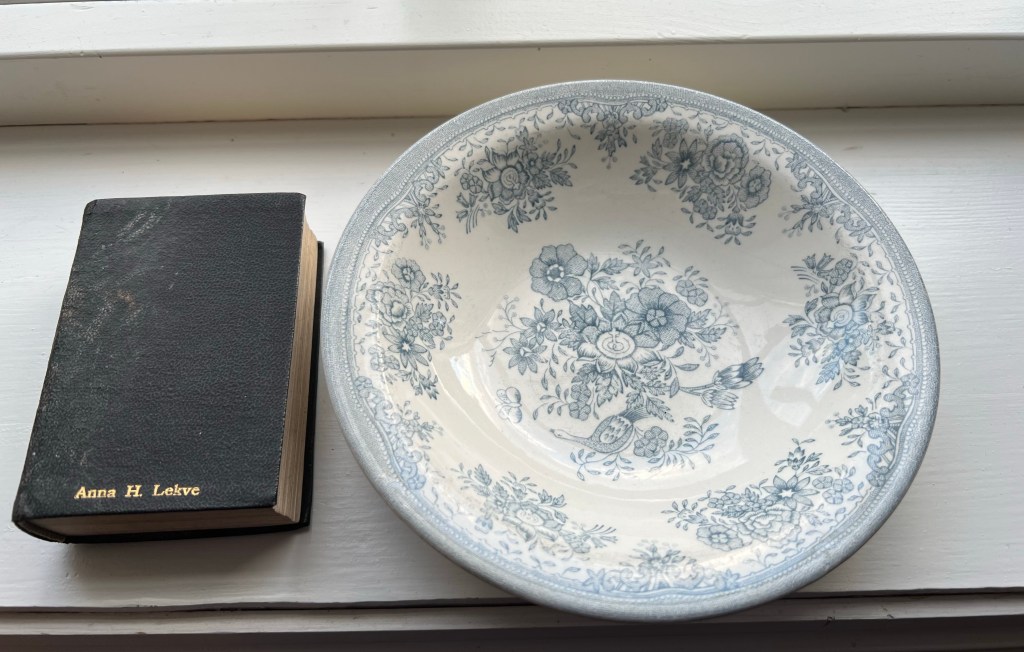
Before I left the Strømmens, they gave me two objects they had found in the house: a bowl and a prayer book. I was blown away by their generosity and kindness to a total stranger. Again, these objects are probably not old enough to be items my direct ancestors had used, but I’ll still cherish them, knowing they came from the Torblå farm.
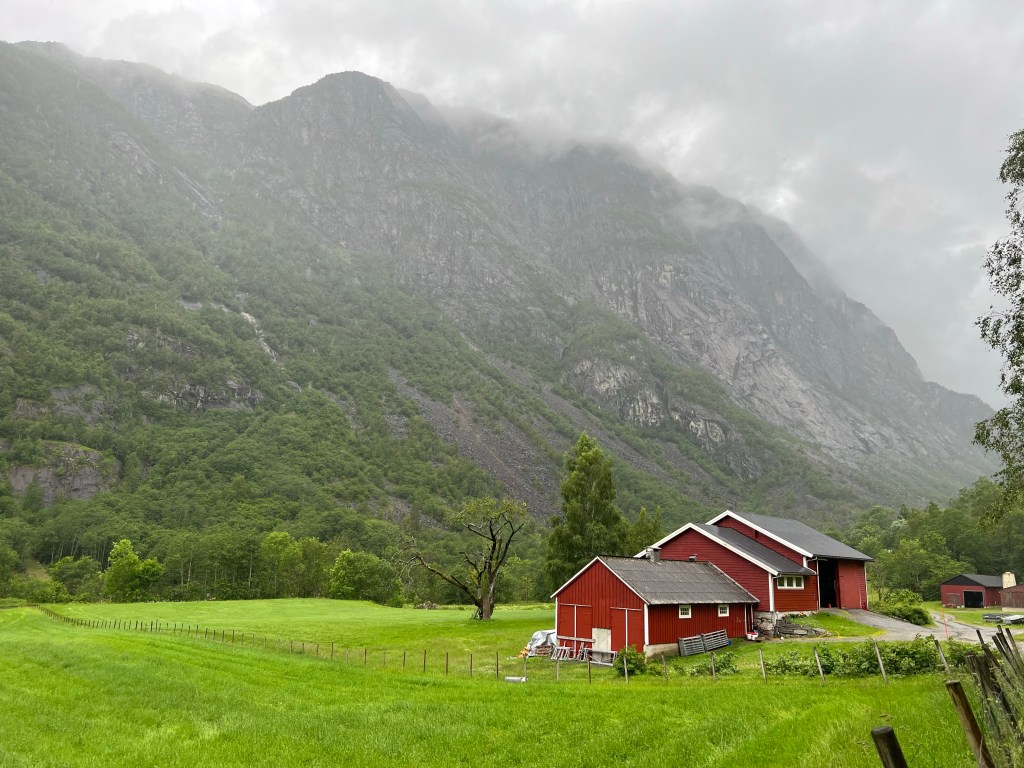
* I visited the Osa and Hetlenes farms as well — but only to stop and take photos. Osa is located a few kilometers from Ulvik on a separate inlet — the Osafjord. The area is stunningly beautiful and feels cut off from the rest of the world; the road simply ends in Osa.
[1] Kolltveit, Kvestad and Dyrvik. (1987) Ulvik: Gards- og Ættesoga Vol. 1, p. 481.


 Deep Roots
Leave a reply to Jesse Rude Cancel reply