In search of the Lehmanns

I drove out into the German countryside today to get a sense of where my grandma’s grandma came from.
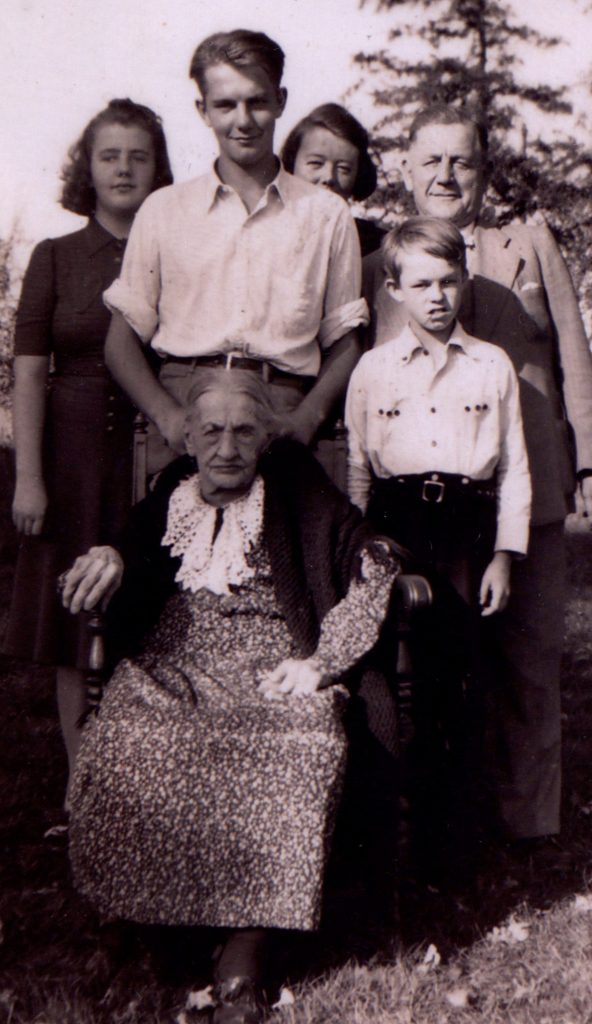
Standing at back: Barbara Jean Kaufman, Ruth Clark Kaufman, and Edward Carl Kaufman; standing in front: Edward Clyde Kaufman and Jack Kaufman; seated: Louise Lehmann Kaufman
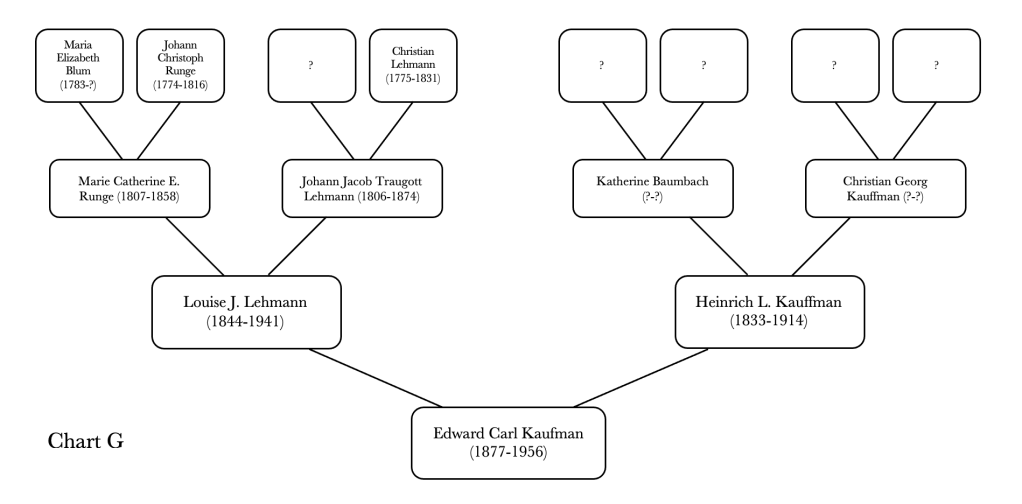
Direct ancestors of my great-grandpa Edward Carl Kaufman

The grandma in question is Louise Lehmann Kaufman, the mother of my paternal grandma’s father, Edward Carl Kaufman. My great-grandpa Ed Kaufman is the man on the right in the photo above. His mother Louise is the old woman seated below. And her granddaughter, Barbara Jean Kaufman (standing at left), is my grandma, who is nearly 96 years old now and still going strong.

Grandpa Ed was born on August 9, 1877 in Edgerton, Wisconsin. Both of his parents — Louise Lehmann Kaufman (1844-1941) and Heinrich (“Henry”) Kaufman (1833-1914) — immigrated from Germany. But whereas Grandpa Heinrich arrived as an adult in the 1860s, Grandma Louise came as a girl with her parents in the 1850s.

Grandma Louise’s parents (i.e., my great-grandpa Ed Kaufman’s maternal grandparents) were Maria “Catherine” Runge and Johann “Jacob” Traugott Lehmann, immigrants to Wisconsin from the province of Brandenburg within the Kingdom of Prussia. At the time Catherine and Jacob married in 1831, Prussia was the most powerful member of an alliance of 39 German kingdoms and duchies called the German Confederation, which predated the German Empire established in 1871. In the mid-19th century, the province of Brandenburg straddled the Oder River, which now separates Germany from Poland.

My best guess is that Catherine Runge and Jacob Lehmann were born in farming towns a few miles north of Frankurt an der Oder (not to be confused with the much larger city of Frankfurt am Main in the west). I am not entirely certain of their towns of origin, but it appears they married in Groß Neuendorf on January 2, 1831.
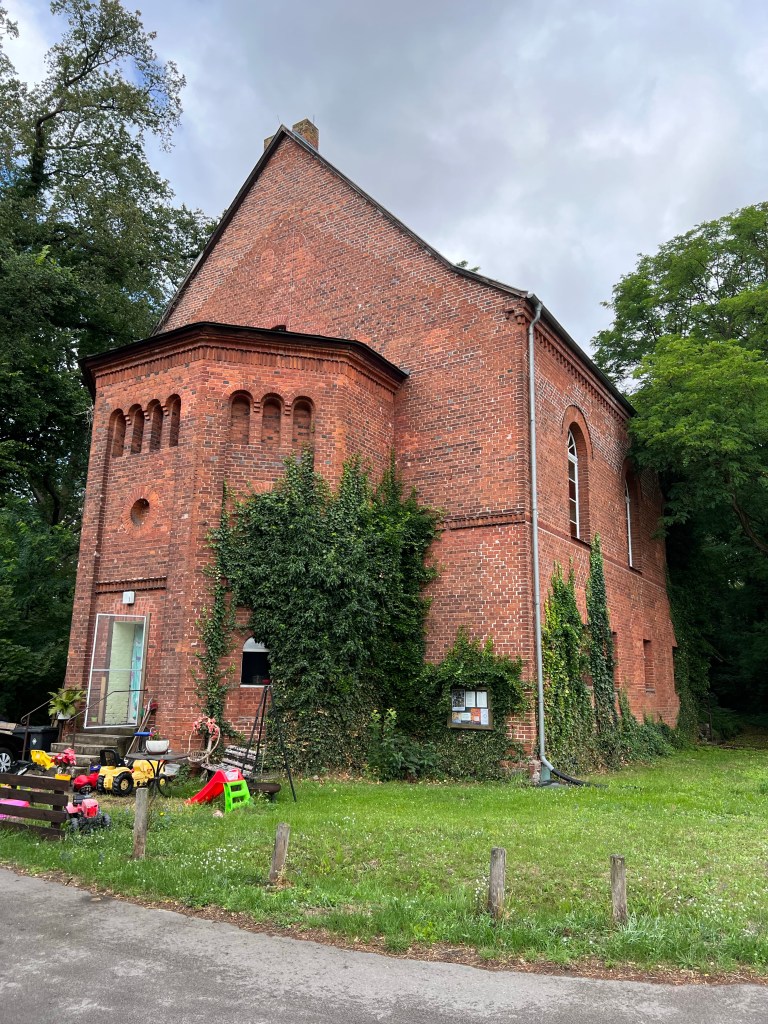
The current church in Groß Neuendorf, which dates to 1850, replaced a church here from 1703. That earlier church may be where our ancestors married.
(And no, I have no idea why there are a bunch of children’s toys on the front steps. It looks like a family may be living in this church.)
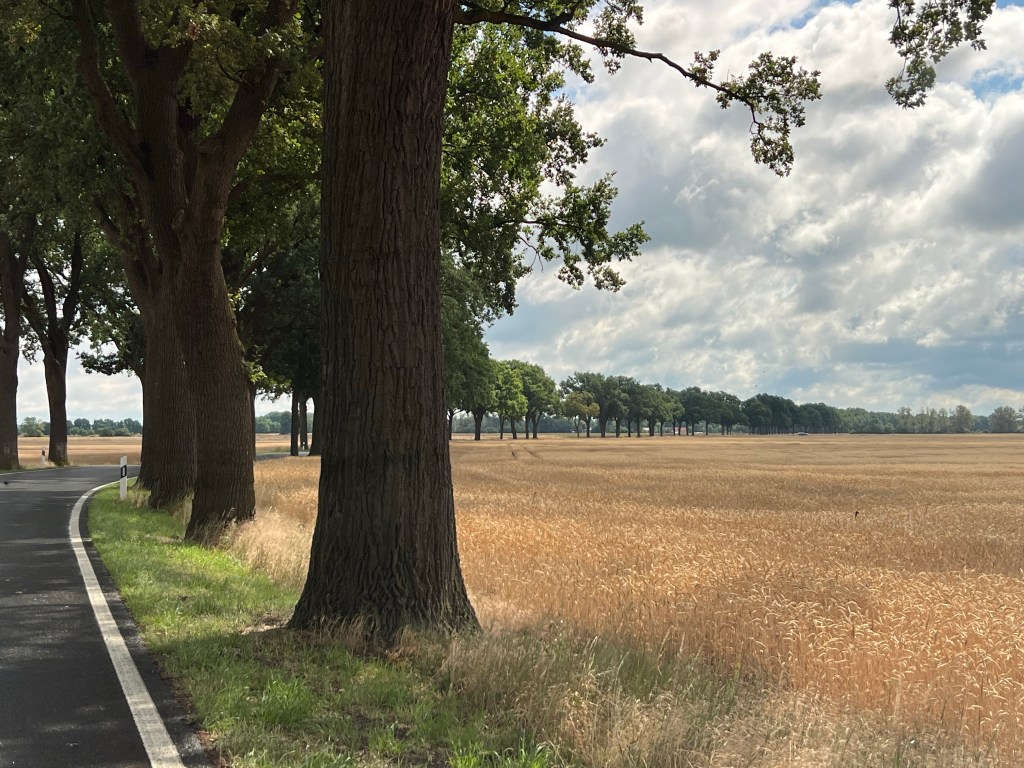
The road to Groß Neuendorf, like many German country towns, is lined with oaks.
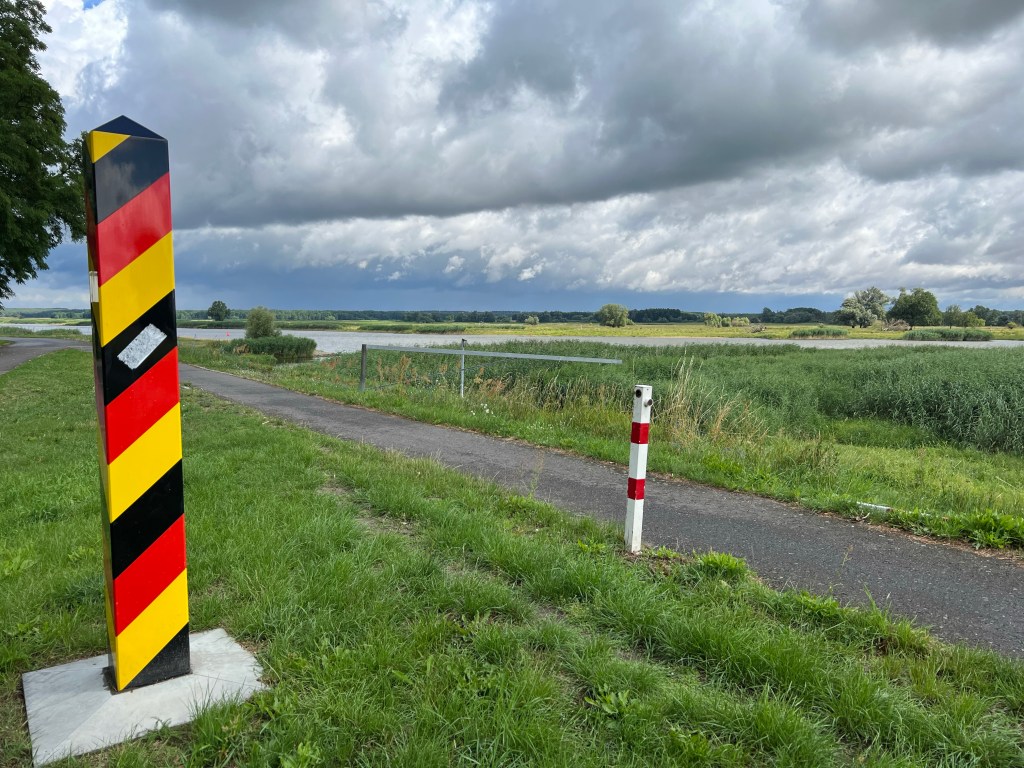
Looking across the Oder River from Groß Neuendorf to Poland
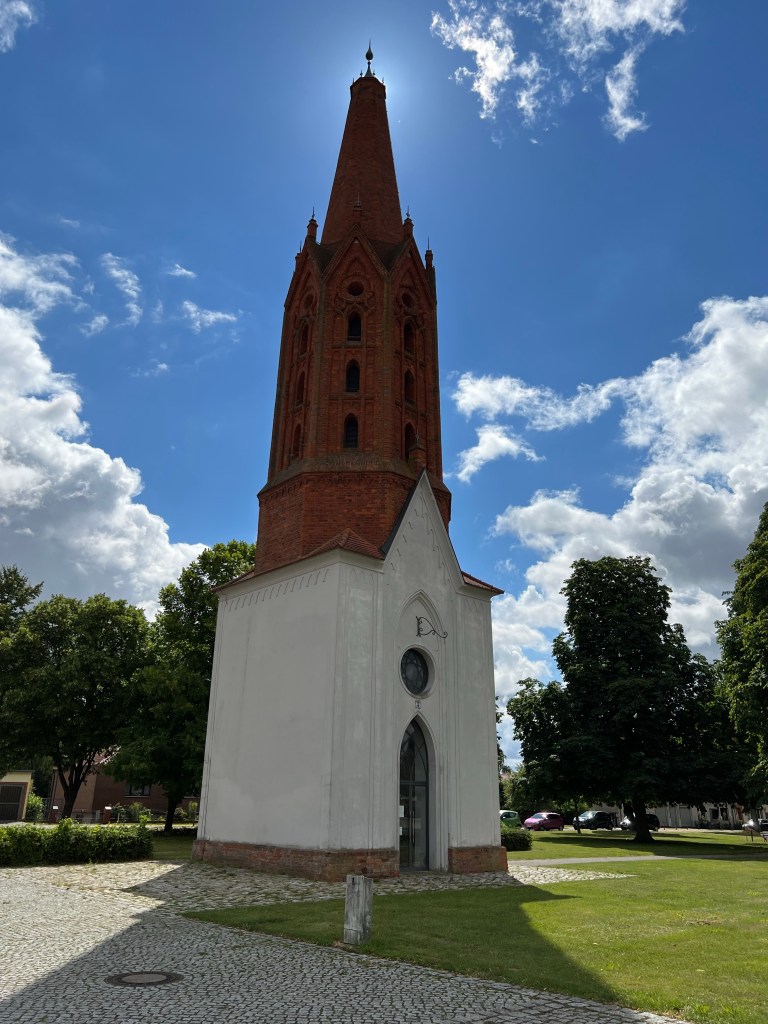
Here’s a sight our ancestors might recognize — the tower from the church in neighboring Letschin, which now stands on its own. It was originally constructed by Karl Friedrich Schinkel in 1818-1820.

In the years after Catherine and Jacob married, they leased a farm in a small village once called Zicher in the section of Brandenburg on the east side of the Oder called Neumark. The village later became known as Cychry, Poland after the Soviet army gained control of the area in 1945 and has since been annexed into the administrative region of Dębno. I took a drive over there to check out the area.
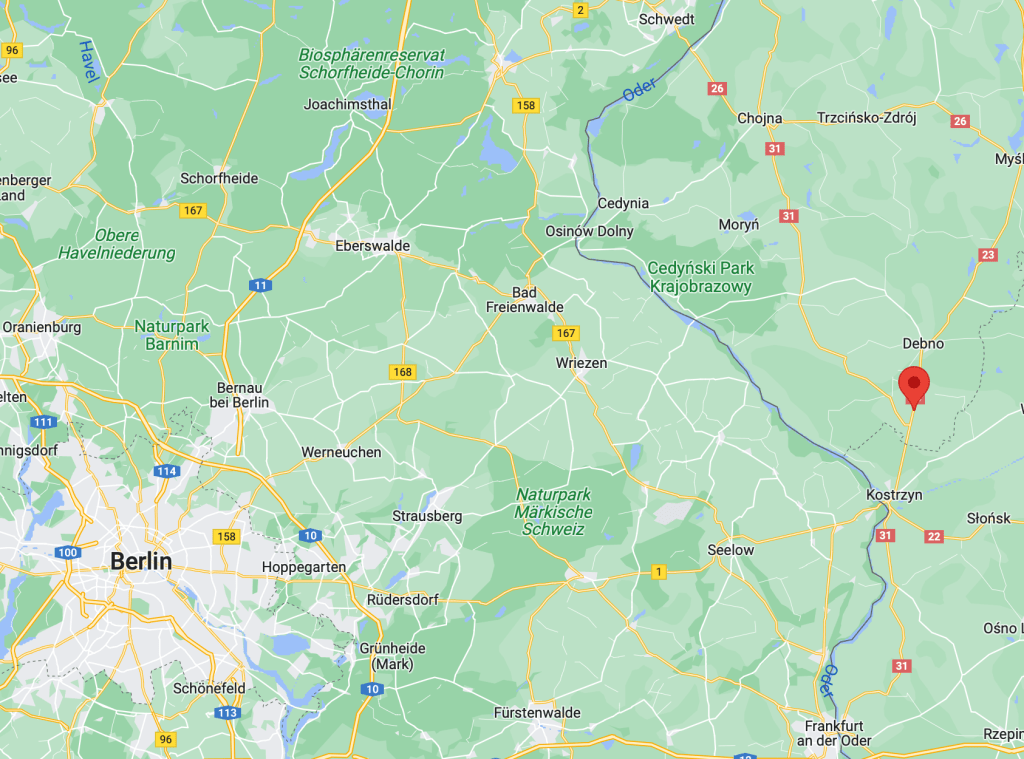
Location of Zicher, Neumark (now Cychry, Poland)
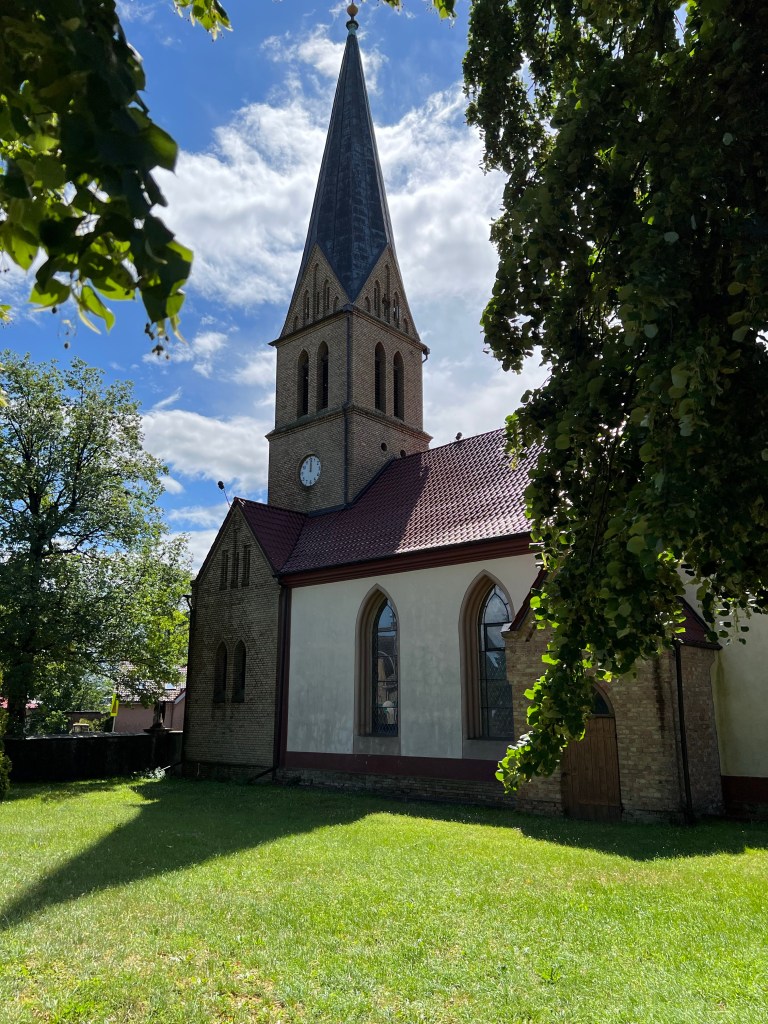
Does the tower look familiar? This is the church just south of Cychry in Sarbinowie, Poland. It was built in 1832 and yes, the tower was also designed by Karl Schinkel. Today the church is Roman Catholic (Kościół Wniebowzięcia Najświętszej Maryi Panny w Sarbinowie).
There are still many examples of German-style architecture on the east side of the Oder River.
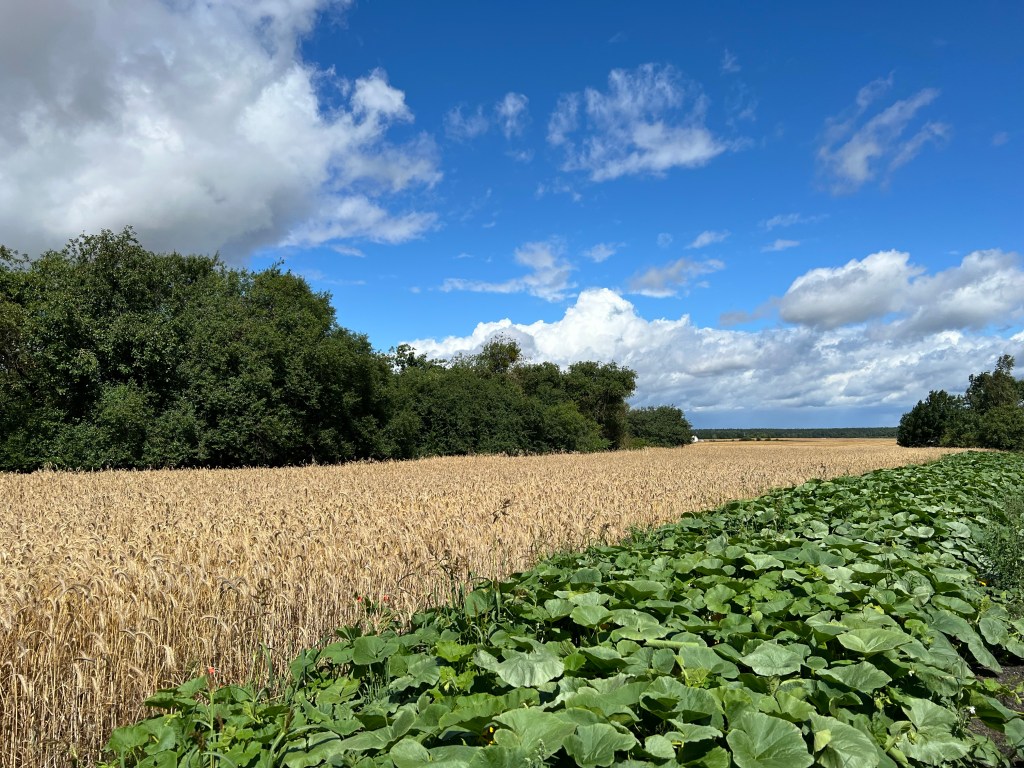
Farmlands in the former Neumark, now Poland

Catherine and Jacob Lehmann had seven children in Zicher before emigrating: August (1833), Johann (1836), Carl Frederick (1839), Augusta (1842), our ancestor Louise (1844), Wilhelmine (1846), and Caroline (1849).
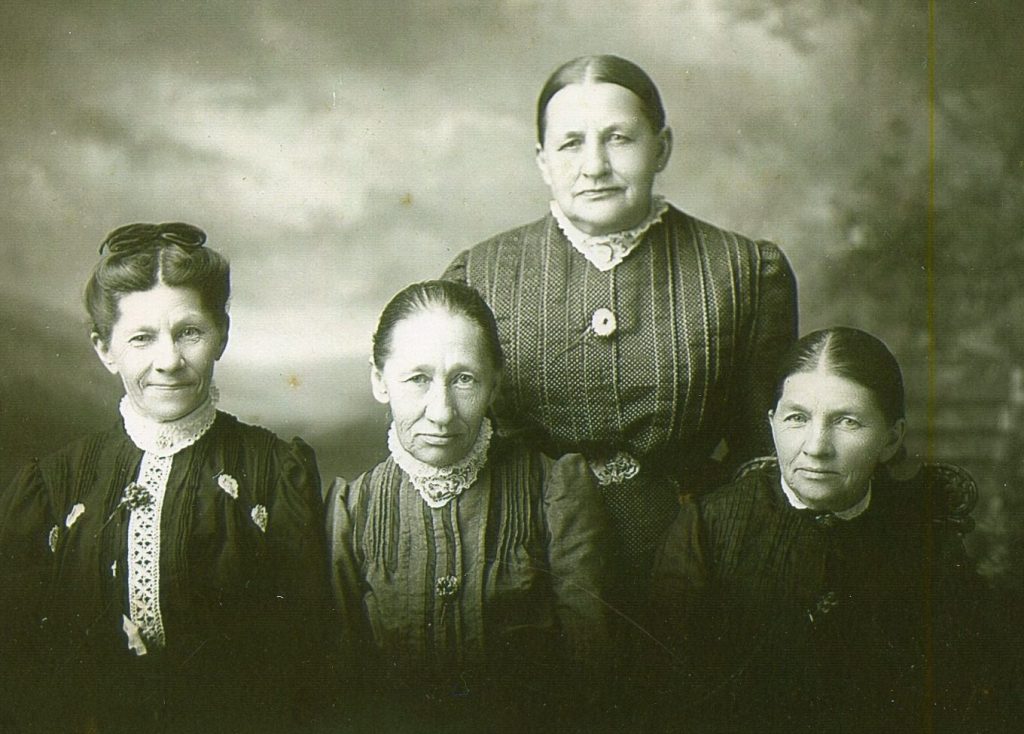
Grandma Louise Lehmann Kaufman standing with her sisters seated (left to right): Wilhelmina (Mina) Lehmann Goede, Augusta Lehmann Ruosch, Caroline Lehmann Gessert-Schachtschneider

In 1856 the Lehmanns journeyed to Hamburg and boarded the Rhein for New York. The voyage took more than six weeks, and we can imagine how stressful it must have been for the family of nine.[1] My great-great grandma, Louise, was 11 at the time. The family made their way to Watertown, Wisconsin (Jefferson County), and no doubt quickly tapped into the thriving Germany community that had been established there since the late 1840s.

After visiting the lands on both sides of the Oder, it was clear to me that settling in Wisconsin must have felt somewhat like home to the Lehmanns. With its rolling farmlands, these regions in Germany and Poland have much the same feel as Southern Wisconsin.

Sunflowers growing in the Märkisch-Oderland

*** Update and correction based on the information from Teddie Anderson Hill (see her comment below) ***

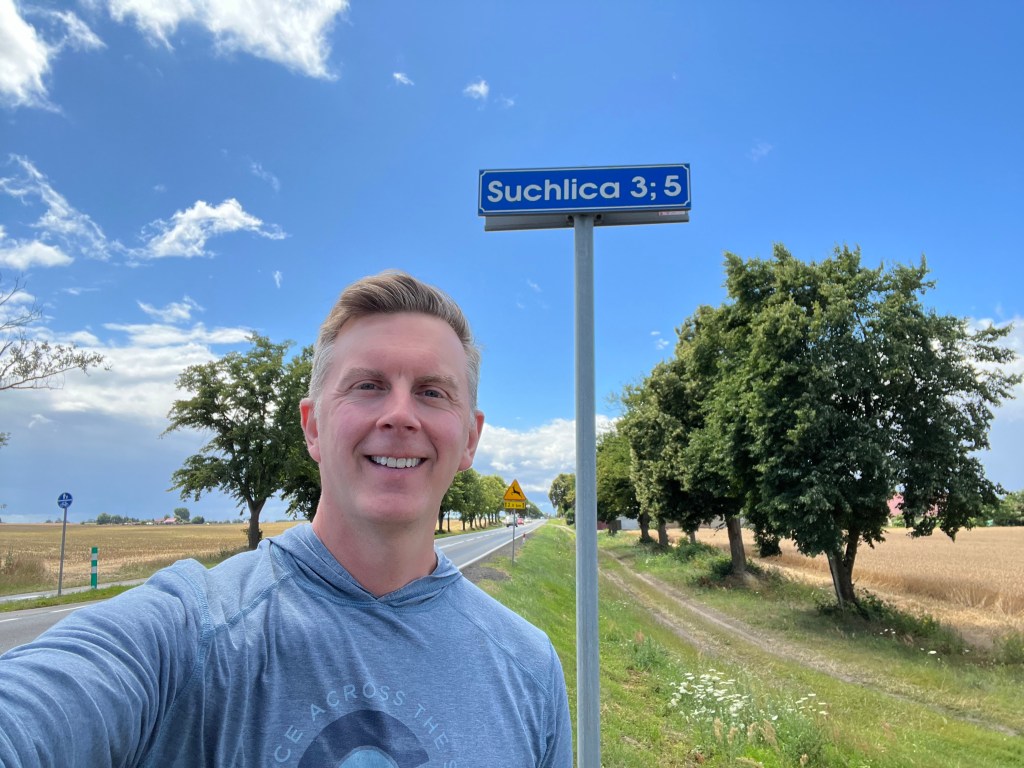
The exact village the Lehmanns lived in was Neu Zicher, not Zicher, which corresponds to Suchlica, Poland today. I drove through Suchica, and in fact the photo above of “Farmlands in the Neumark” (with squash and wheat) was taken in Suchlica.

Teddie is correct in saying that there is no church in Suchlica. (There’s not much of anything in this tiny village!) There’s a church that dates to the times of our ancestors just south of Suchlica in Sarbinowie (photo is above). And there’s also a Roman Catholic church in Cychry, which was Protestant before the 1950s. The building dates back to the 13th century and the tower dates to 1768. It’s likely that either this church or the one in Sarbinowie was the home church for the Lehmanns before they emigrated.
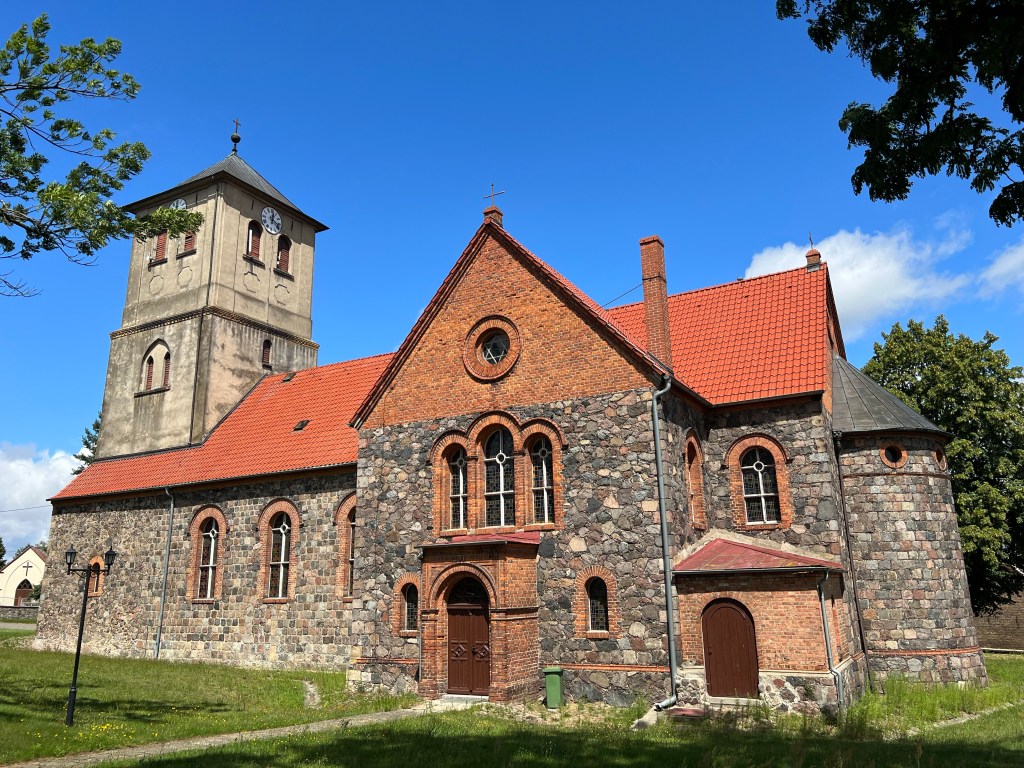
Church of Saint Stanislaus in Cychry (Kościół Rzymskokatolicki p.w. Św Stanisława)
Just outside of Suchlica (formerly Neu Zicher) in Poland

[1] Much of what we know about the Lehmanns is thanks to the genealogical research of Teddie Lynn Anderson Hill and her mother Darlene “Donna” (Lehmann) Eichorst, descendants of Grandma Louise’s brother John T. Lehmann.

4 responses to “In search of the Lehmanns”

  1. Oh Jesse, tears are streaming down my face as I read this. You are there! I love you for doing this!

    These are my notes and links in case you need them while you are over there:

    Civil Records were not kept by the government until after 1874. Records prior to 1874 and many years after, were kept by the parish/church.
    On the marriage record for Johann “Jacob” Traugott Lehmann, age 24 years, and Sophia Maria Catharine Runge, age 24 years, (father’s name Christoph Runge) (*1), it shows that both Jacob and his father, Christian Lehmann (deceased at the time of the marriage) were farmers in Kienitz, Lebus, Frankfurt (Oder), Brandenburg, Preussen/Prussia (*2). Religion is listed as Evangelical (Protestant). Date of marriage was 2 Jan 1831 in Groß Neuendorf im Oderbruch, Lebus, Frankfurt, Brandenurg, Preussen/Prussia. Groß Neuendorf im Oderbruch has one evangelisch Pfarrkirche (Protestant parish church) (*3).

    Johann “John” Traugott Lehmann was born in Neu Zicher (*4), Königsberg, Frankfurt (Oder), Brandenburg, Prussia, which later became Suchlica, Wielkopolskie, Poland (*5). The closest town was Zorndorf, which later became Sarbinowo, Wielkopolskie, Poland. Zorndorf/Sarbinowo is located 7.9 kilometers and 12 degrees from Küstrin, which is known today as Kostrzyn (*6). There does not appear to have been a church in Neu Zicher/Suchlica, so any church records are most likely going to be found in Zorndorf/Sarbinowo or Zicher/Cychry (*7).

    Sources:
    (*1) Ancestry.com, Germany, Prussia, Brandenburg and Posen, Select Church Book Duplicates, 1794-1874,Volume Year Range: 1116-1117, 1822-1848, Family History Library (Salt Lake City, Utah) Film Number 1334960.
    (*2) Meyer’s Gazetteer http://www.meyersgaz.org. Search for Kienitz https://www.meyersgaz.org/place/10958060
    (*3) Meyer’s Gazetteer http://www.meyersgaz.org. Search for Groß Neuendorf https://www.meyersgaz.org/place/10650005
    (*4) Ancestry.com, Brandenburg, Prussia Emigration Records, Author: Wolfert, Marion, comp, Publisher: Ancestry.com Operations Inc, Publisher Date: 2006. Publisher Location, Provo, Utah. And, Civil War Discharge Papers for John T Lehmann listed New Zucher, Prussia as place of birth (was spelled wrong) and
    (*5) Kartenmeister, http://www.kartenmeister.com. Search for Neu Zicher http://www.kartenmeister.com/preview/City.asp?CitNum=27730
    (*6) Kartenmeister, http://www.kartenmeister.com. Search for Zorndorf http://www.kartenmeister.com/preview/City.asp?CitNum=27724
    (*7) Kartenmeister, http://www.kartenmeister.com. Search for Zicher http://www.kartenmeister.com/preview/City.asp?CitNum=27759

    Liked by 1 person

    1. Thank you for this information, Teddie! I have added an update to the blog post. I wish I had visited Kienitz while I was in the area! Now I’m in Berlin and going home tomorrow. But there’s got to be something for next time, right?

      Like

      1. It is probably too late for this information but parish records for churches that are no longer in existence or were destroyed during the war are located at:

        Evangelisches Zentralarchiv In Berlin (EZAB)
        Bethaniendamm 29
        D-10997 Berlin
        Germany
        Email: archiv@ezab.de or kirchenbuchstelle@ezab.de
        Web: http://www.ezab.de/index.html

        If you have any time left in Berlin, this could be helpful?

        I hope you are already planning your “next time”! Safe travels, dear cousin. Stay well! You have made me very happy just knowing you stood in places where our ancestors have trod. I wish I had asked you to put a small rock in your pocket from there to bring home to me so I could have a piece of the land.

        Liked by 1 person

  2. Donna Eichorst Avatar
    Donna Eichorst

    Wonderful to have this information! Thank you for your hard work!

    Liked by 2 people

Leave a reply to Jesse Rude Cancel reply