
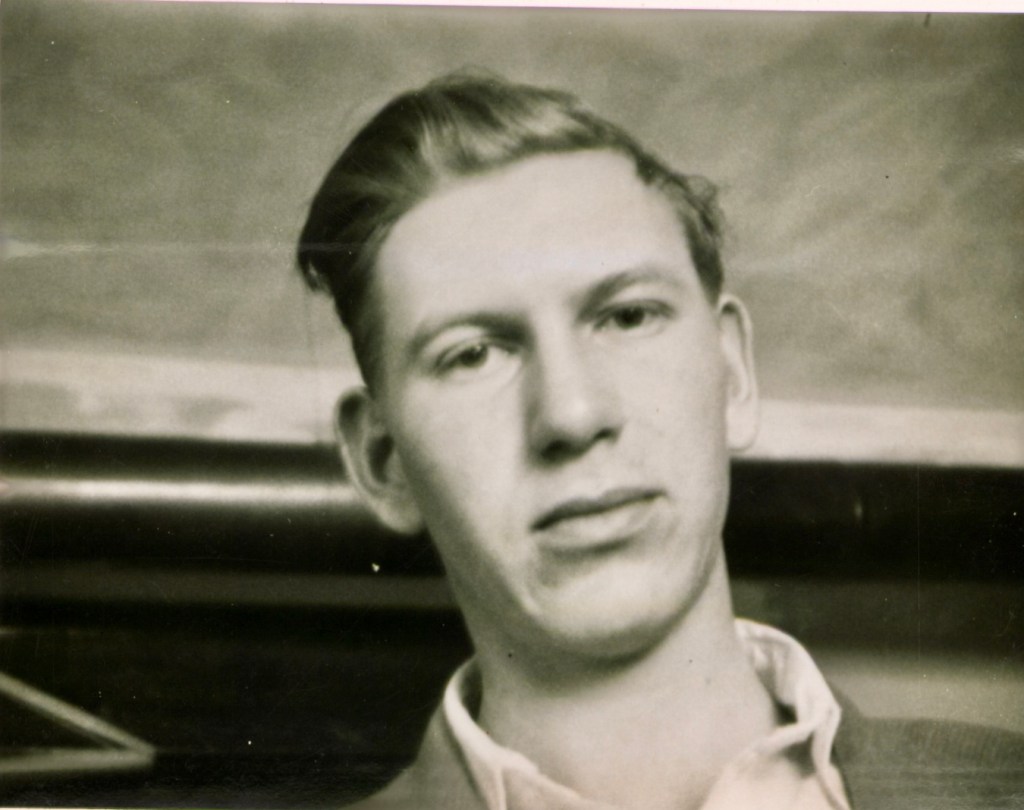
Think of World War II and, if you’re like me, you probably imagine it a bit like a movie. And thanks to compelling movies like Saving Private Ryan and Dunkirk, we might picture men doing heroic deeds in the face of uncertain odds. Don’t get me wrong – this kind of heroism did occur and ought to be remembered in film. But consider another side of the War for a moment. Consider what it took to mobilize millions of Allied troops, send them into battle, and supply them with all the necessities of both war and daily living. Consider what it took to coordinate all their movements and communications in a world before the computer chip, satellites, or the internet.
The logistics behind the War were monumental. At its peak in 1944, the U.S. Army’s Signal Corps included over 350,000 servicemen and women.[1] My grandpa Eugene Smith was one of those servicemen. Starting in the autumn of 1943, he served in Company C of the 3110th Signal Service Battalion. In the spring of 1945, he was transferred to Company A, First Platoon of the 3160th Signal Service Battalion.
A couple of years ago I came across a blog post about a Signal Corps solider named Felix Cizewski, and my heart skipped a beat: my grandpa and Felix had served together in Company C of the 3110th. The two men undoubtedly knew each other, and their experiences would have been similar. The blog’s author Leonard Cizewski was Felix’s son, and he has painstakingly researched his father’s wartime record. We’re indebted to Leonard for his work on this subject. Like most men of their generation, Leonard’s father Felix and my grandpa Gene didn’t talk much about their time in the War. What we know about their experiences we’ve had to piece together from fragments: Army records, the odd photo here or there, and letters home.
My grandpa Gene and his new bride Phyllis tried to write each other a letter every day during the War. They didn’t always succeed, but they came close. And because both my grandma Phyllis and her mother-in-law Vina were fastidious about keeping Gene’s letters, many of them survive today. I’ve mined those letters, Leonard’s blog, and a few other sources to piece together a rough history of my grandpa’s time in the Army. My goal is to write this history in three parts: (1) Gene’s pre-deployment in Missouri and New Jersey (spring 1943 – early 1944); (2) his service in England during the spring and early summer of 1944; and (3) his service in France after D-Day to the end of the War (summer 1944 – late 1945).

But before I get into that history, I want to sketch for you a young Gene Smith. This was a Gene Smith I never met but who I can picture to an extent – because even as my grandpa got older and his health started to fail, you would get glimpses of the lively, driven young man he used to be.
Gene was Vina and Frank Smith’s first child, born in 1921 when the couple lived in Milwaukee, Wisconsin and Frank worked as a streetcar conductor. The Smiths left the city while Gene was still little. First, they moved to Cambridge, Wisconsin, which was close to both Frank and Vina’s families, and Frank worked for Standard Oil, delivering gasoline to local farms. Then, for several years, the family moved from place to place in the area, renting farms and doing their best to make a living off them. Frank and Vina eventually found steady farm work as suppliers to the Fort Atkinson Canning Company, but they never had much money.
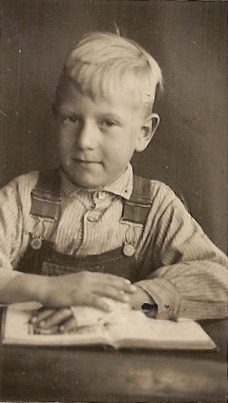
Gene was a bright kid, but he didn’t get the chance to stay in any one school for long before he had to move on to the next. Perpetually the “new kid”, he learned to adapt to unfamiliar environments and to stick up for himself and his younger sisters, Shirley and Ruthie. While he tolerated farm work, it was never his passion. Gene was a bit of a dreamer by nature, but his modest upbringing made him pragmatic and resourceful. He enjoyed drawing and word games, but he also loved to tinker with machines and figure out how they worked.
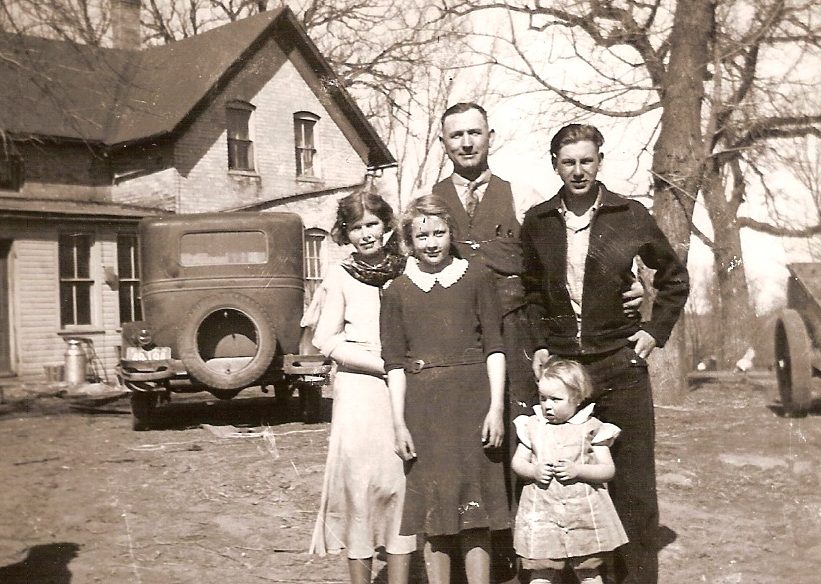
When it came time for high school, Frank didn’t see much point in Gene attending. But here Vina put her foot down: both she and Frank had been denied a high school education and she argued that Gene should have the opportunity. So, Gene went to Fort Atkinson High, and it would appear that going to school did open Gene’s eyes to other possibilities.

After graduating in 1938, Gene moved out and supported himself through a series of odd jobs. Eventually, he managed to land himself an entry-level position in a field he was truly interested in — electronics. The job was with the Western Electric Company in Milwaukee, a subsidiary of AT&T. It must have been an exciting time in Gene’s life; he was living on his own, he had a little money in his pocket for once, and Western Electric’s products were at the forefront of that era’s technology in communications.
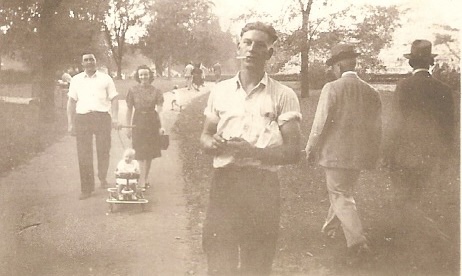
Adding to the excitement, Gene had started going out to dancehalls to meet girls. In the summer of 1939, at a dance hall in Lake Mills, one girl in particular caught his eye. A farm girl from Cambridge, Phyllis Reiner laughed easily, danced with abandon, and asked a million questions. She was young – only 16 – but she seemed as taken with Gene as he was with her. They started writing letters to each other and met up for dates on the weekends when Gene could get away from work.

Like Gene, Phyllis had ambitions for a life beyond the farm. She dreamed of becoming a nurse, and after graduating from Cambridge High in 1941 she began a nurses training program at St. Mary’s Hospital in Madison. The young couple continued their courtship through letters and brief visits when they could arrange them. But Gene and Phyl’s carefree lives – like the lives of most young people at that time in America – were about to change dramatically. As Hitler sent his forces across great swathes of Europe and as he aligned himself with authoritarian regimes in Japan and Italy, war seemed ever more likely. Britain and other allies implored the U.S. to declare war. In December of that year, Japan’s attack on Hawaii and the Philippines (then U.S. territories) proved to be the tipping point. With America entering the War, the fate of young men like Gene was suddenly up in the air.
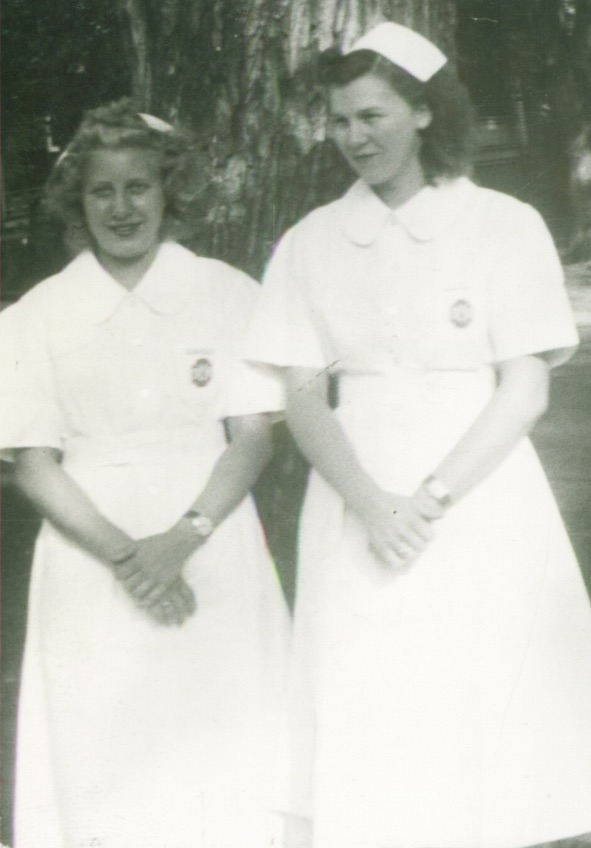
What a tumultuous moment this was for all American families, as the country, barely recovered from the Great Depression, geared up for war on two fronts. For Gene and Phyl this moment must have also been colored by their young love and worries about how the war might change things. Complicating matters, a case of tuberculosis forced Phyllis to take a leave of absence from nursing school. For several months she was isolated, confined to bed rest at her family’s farm while she recovered.
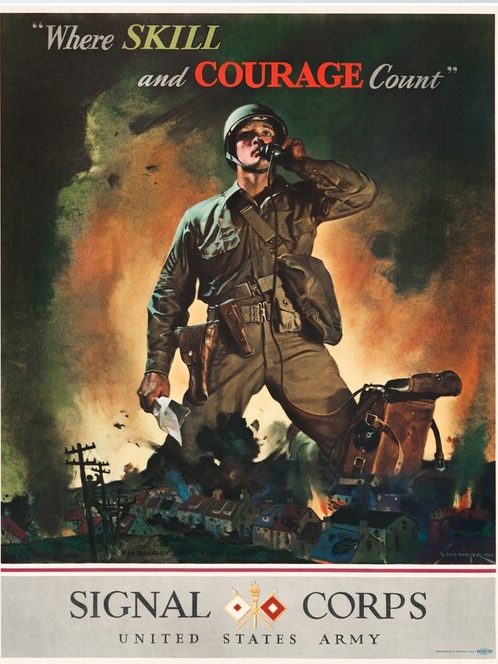
Military recruiters, meanwhile, wasted no time in appealing to young men across the country to do their duty and join the armed forces. Given Gene’s interests in electrical engineering and communications, the recruiters in Milwaukee told Gene he could be an asset to the Signal Corps. They promised he would receive additional training in these fields, which could boost his career when the war was over. That proved compelling to Gene, and he enlisted on August 12th, 1942.[2] True to their word, the Army sent Gene to Army radio school for three months in Janesville, and then to a radio school in Milwaukee. He graduated there on March 1st, 1943, and went home for a couple of weeks to see Phyllis and his family.
On one of his visits with Phyllis during during this time, he popped the question and presented her with an engagement ring. The two of them didn’t know when or how they would get married, but they were certain they wanted to make it happen one way or another.
Gene reported to the induction center at Fort Sheridan, just north of Chicago, to begin active duty on March 16th.
He had become Private Smith.
To continue this story sequentially, you can read about Gene’s pre-deployment Signal Corps training in this post.
[1] See p. 280 in Rebecca Robbins Raines’ (1996) Getting the Message Through: A Branch History of the U.S. Army Signal Corps. Washington, D.C.: Center of Military History, United States Army.
[2] This propaganda film produced by RCA, “Radio at War”, gives some insight into what enticed Gene to the Signal Corps and what he might have expected Army life to be like: https://www.youtube.com/watch?v=WUx_hqwHM1I.


 Deep Roots
Leave a reply to Jesse Rude Cancel reply