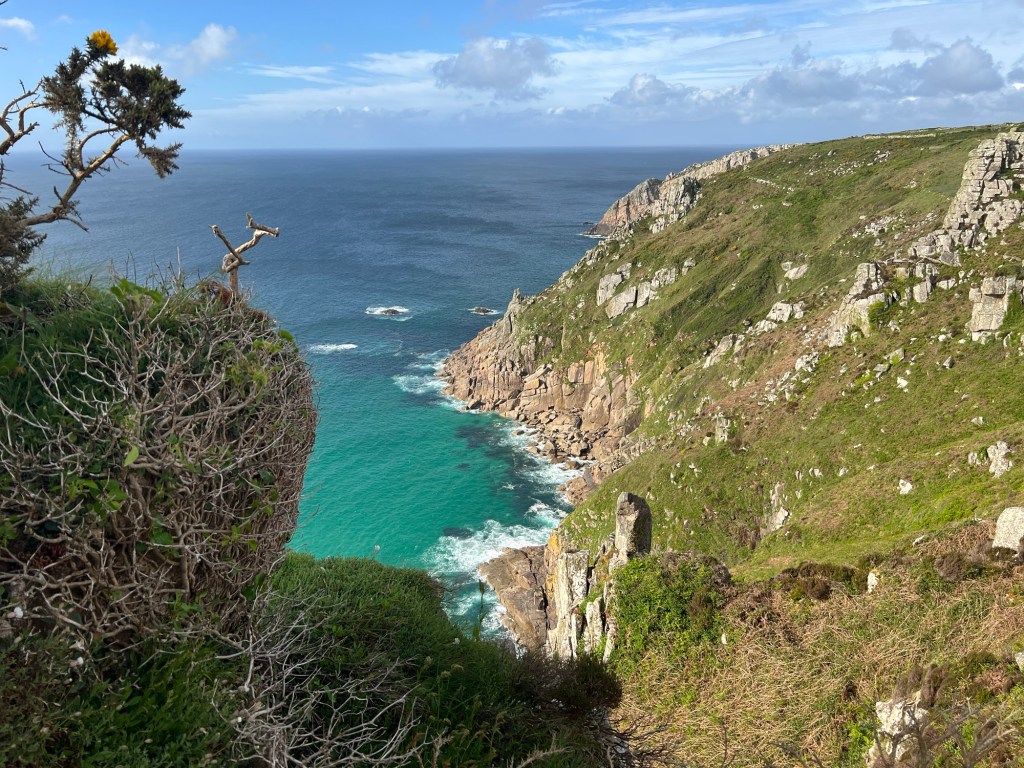
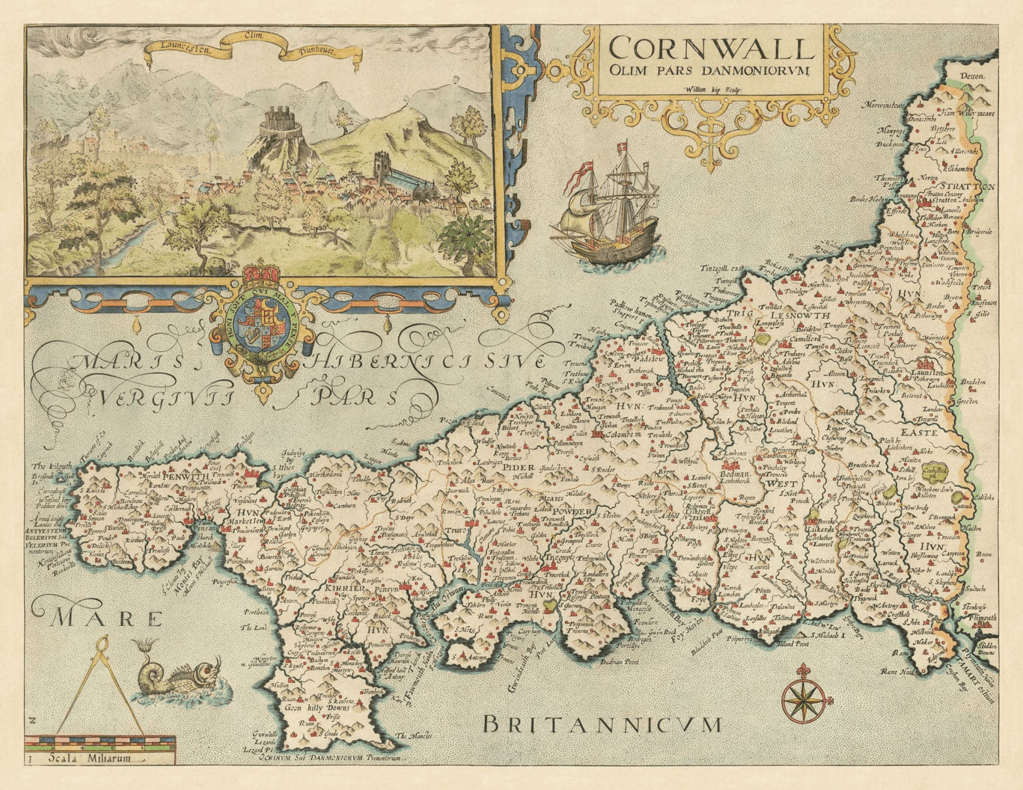
Our globe may not actually have corners, but Britain certainly does. Cornwall is perched on Britain’s southwest corner. The “corn” in Cornwall derives from the Romans’ name for the tribe that lived here — the Cornovii — and the Latin root cornu means horn, perhaps referring to the horn of land where this tribe dwelt. The English words “horn” and “corner” are descendants of this Latin root. The “wall” part of Cornwall comes from the Old English term wealas, which referred to the non-Anglo-Saxon (i.e., Celtic) people of Britain, such as the Welsh. (Ultimately this word derives from a Roman name of a Celtic people living in what is now France — the Gauls. For a fascinating look at these etymologies, I recommend this video.)

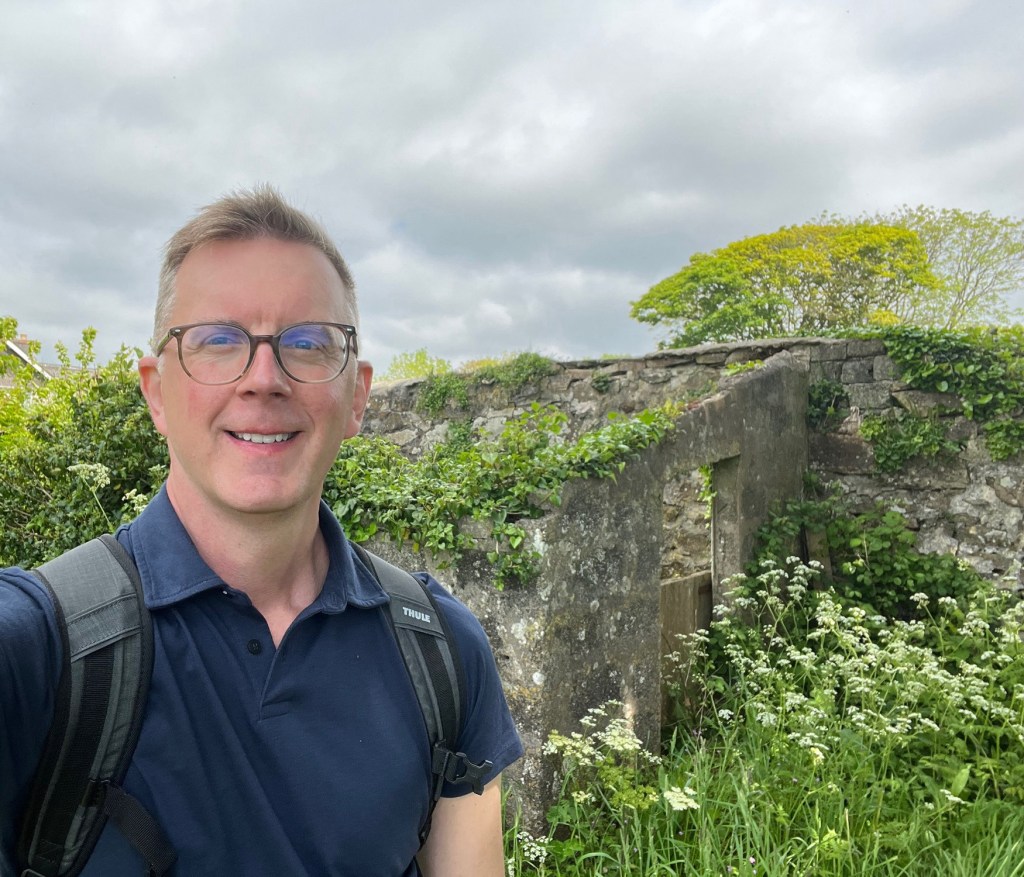
I am exploring Cornwall to get a sense of the place where a branch of my dad’s family came from. Until a few years ago, I knew nothing about this branch or its origins. With a little help from the kind folks at the Wisconsin Historical Society (see this post), I discovered that a great-great-great grandmother of mine, Mary Cock, immigrated to Wisconsin from Cornwall with her family when she was a girl in the 1840s. Her father Charles had been a copper miner, and like many others of that era, Charles sought his fortunes elsewhere when Cornwall’s copper and tin mines started shutting their doors due to an influx of cheaper ore from places like South Australia and Malaysia.
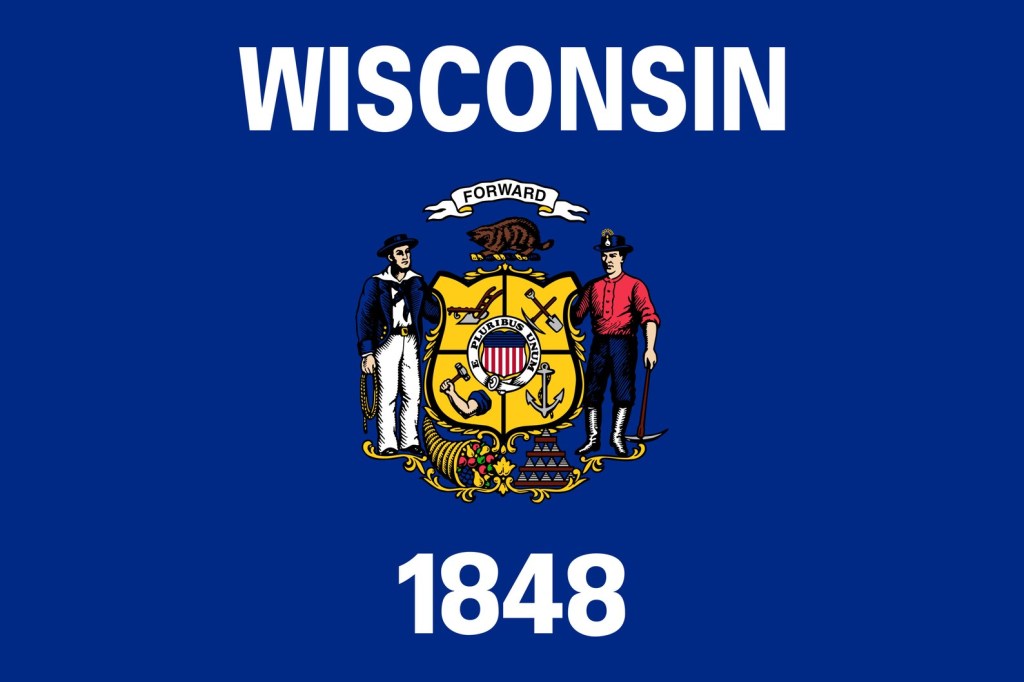
The descendants of Cornish miners can be found today in almost every part of the world where there are rich mineral deposits: the American West, Canada, Australia, New Zealand, South Africa, Brazil, Mexico, etc.* You might not associate Wisconsin with mining, but in the mid-19th century, Wisconsin was an important source of lead and zinc. The state’s flag even features a miner holding the state seal, a corner of which includes a pickaxe and shovel.
The historical imprint of the mining industry can be found throughout Cornwall. The ruins of engine houses for pumping water from the mines still dot the landscape.
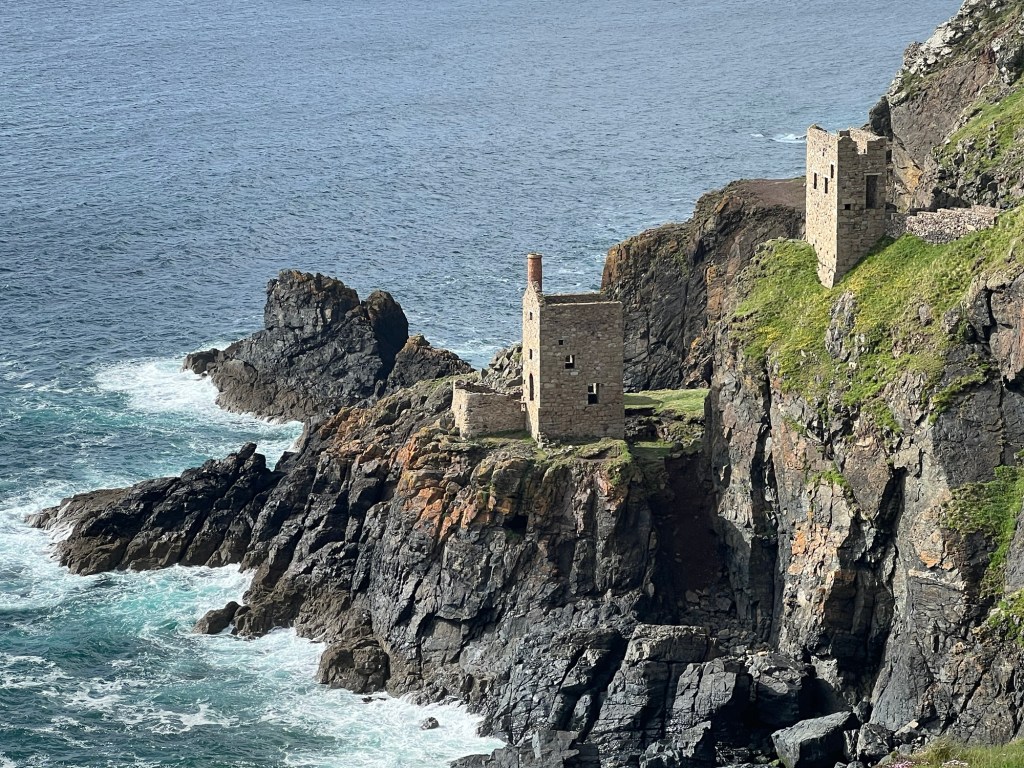

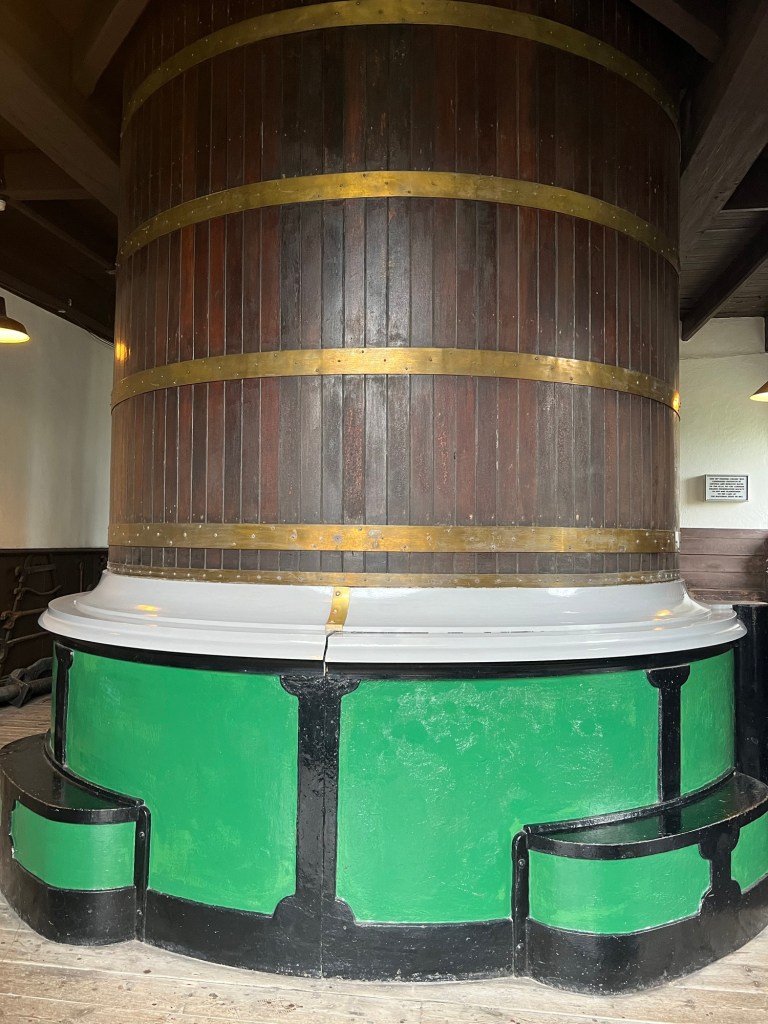
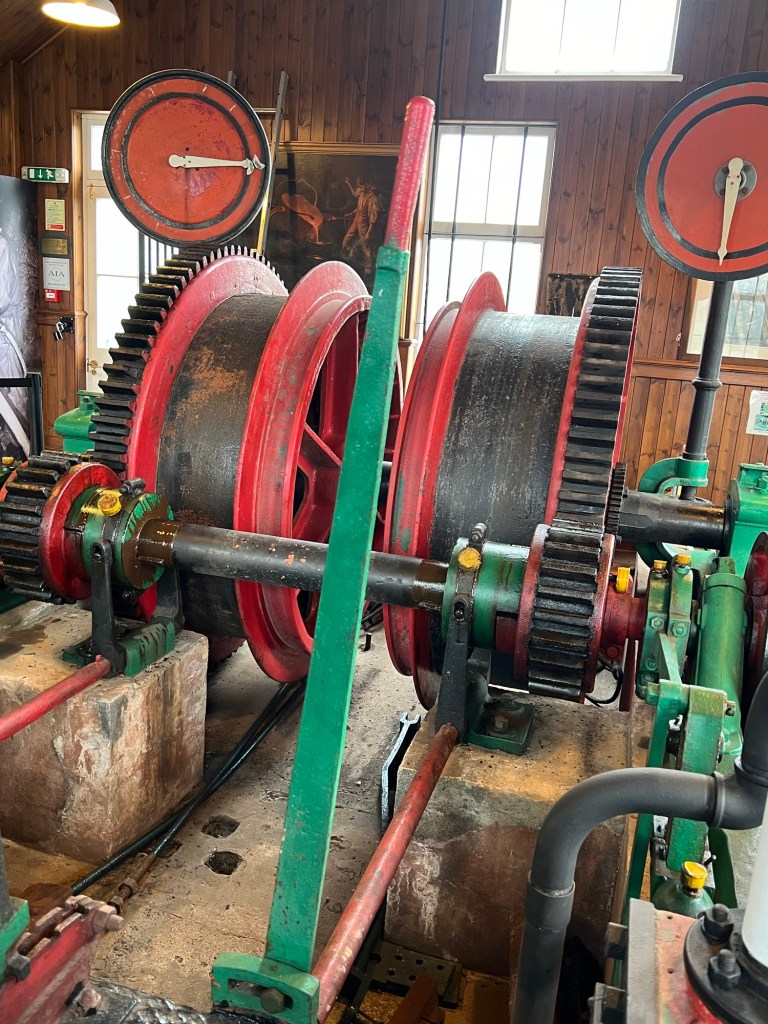
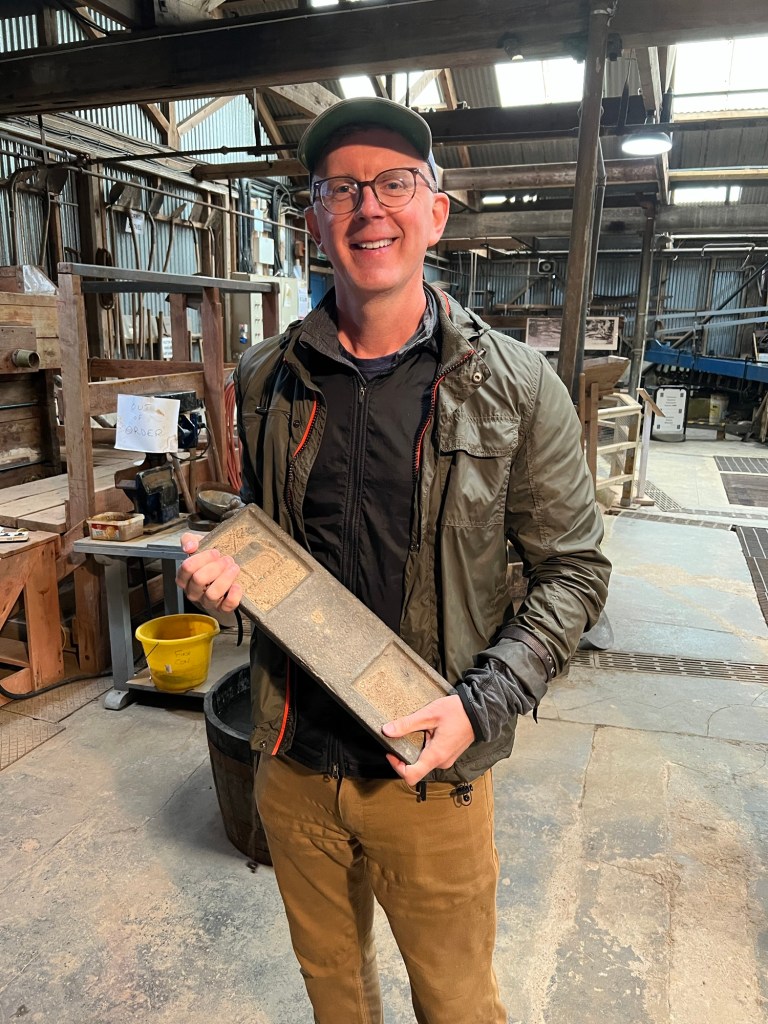
I had the opportunity to visit two different mining museums today, the East Pool Mine and the King Edward Mine. Both were fascinating and provided insight into the working conditions my ancestors would have experienced. In short, mining was extremely dangerous work; miners were subject to any number of accidents, and they frequently lost fingers, toes and limbs. The mines themselves could suddenly flood, cave in, or lose their air supply. Nevertheless, a mining job was also highly coveted because it could provide a living that farming or fishing could not. I was also interested to learn that mining was often a family affair: men and boys as young as 8 worked down below, while women and girls (called ‘Bal Maidens’) would work above ground, pounding the ore into smaller pieces — an arduous process called “dressing”.
The development of the steam engine by Cornwall native Richard Trevithick revolutionized the industry by enabling mine operators to delve below the water table. It also facilitated mechanical means of moving both ore and men. Such engines required large amounts of coal, which was imported from Wales.
The wealth extracted from these mines was not distributed equally. Evidence of the huge fortunes made by a handful of mine proprietors and bankers can still be seen in the crumbling yet grand estates of Cornish nobles. (For a well made dramatization of the clash between social classes at the end of the 18th century in Cornwall, I recommend the 2015 television series Poldark, based on the books by Winston Graham.)

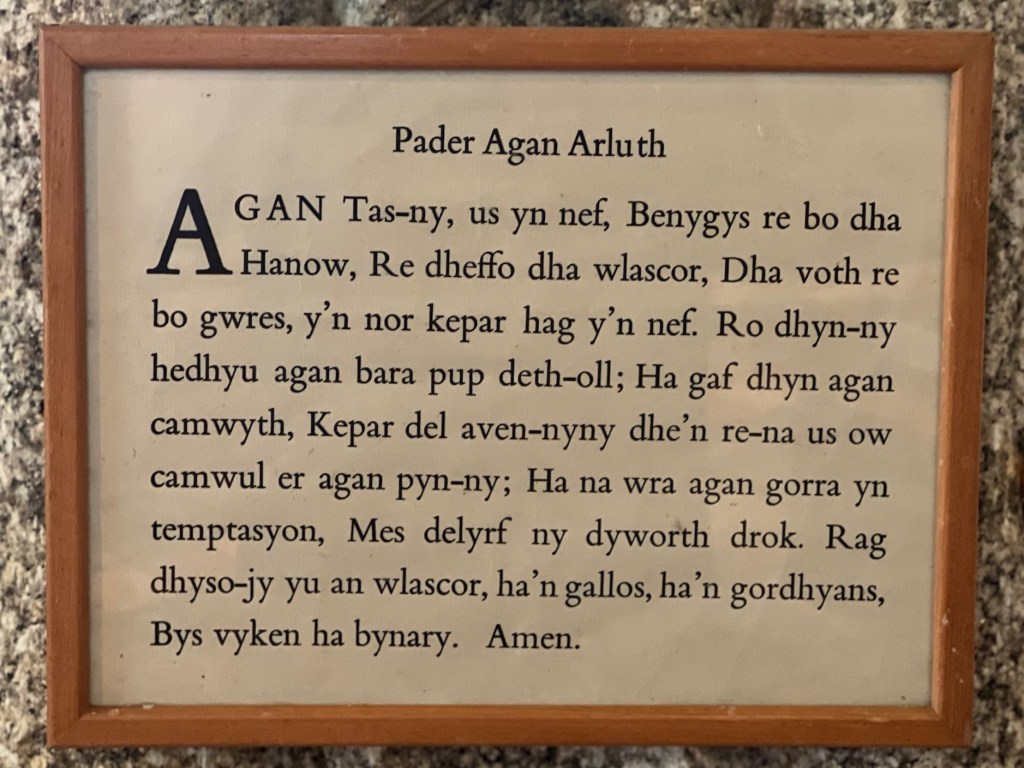
The Celtic roots of Cornwall run as deep as the mines. Even though the last native speakers of the Celtic Cornish language probably died in the late 18th century, there are now efforts to revitalize Cornish, and its UNESCO classification has been changed from “extinct” to “critically endangered”. The language’s closest cousins are Welsh and Breton (the language of the Celtic people of Brittany in France). Celtic place names are sprinkled throughout the countryside, street signs (like the one above) are written bilingually, and several locales are named for Celtic saints.
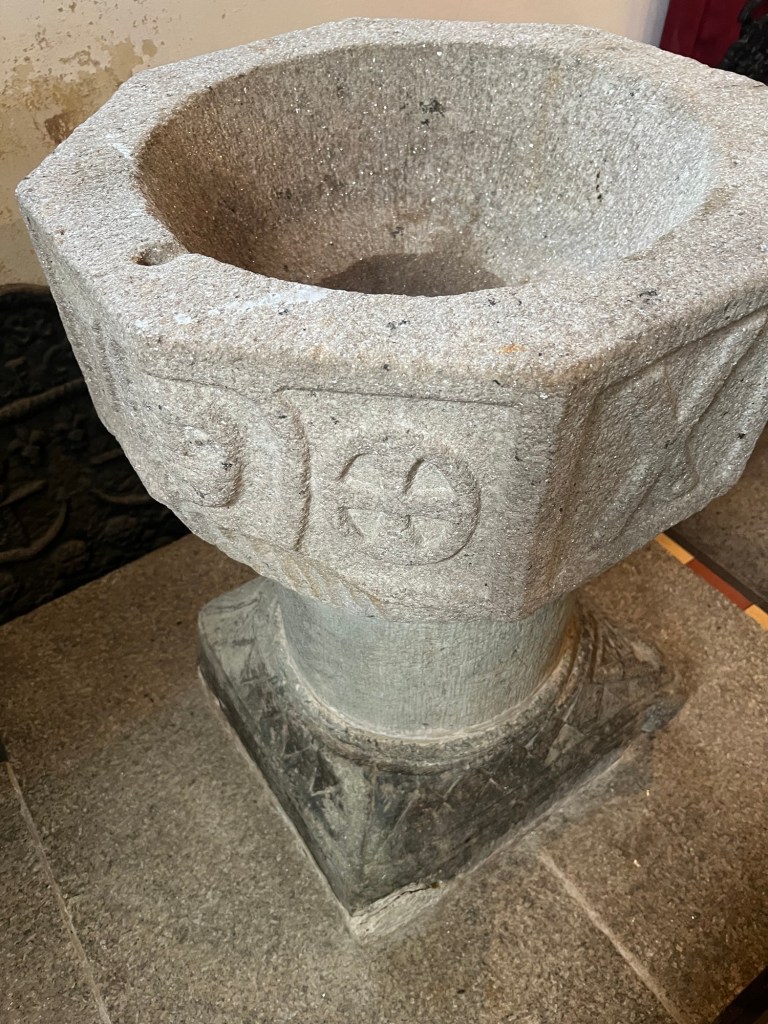
My first stop in Cornwall when I arrived yesterday morning was the Parish Church of Saint Gwinear, named for a 6th century Irish missionary. My ancestors were members of this church, and it boggles my mind to imagine how many generations of my family might have walked its aisles since its construction in the 13th century.
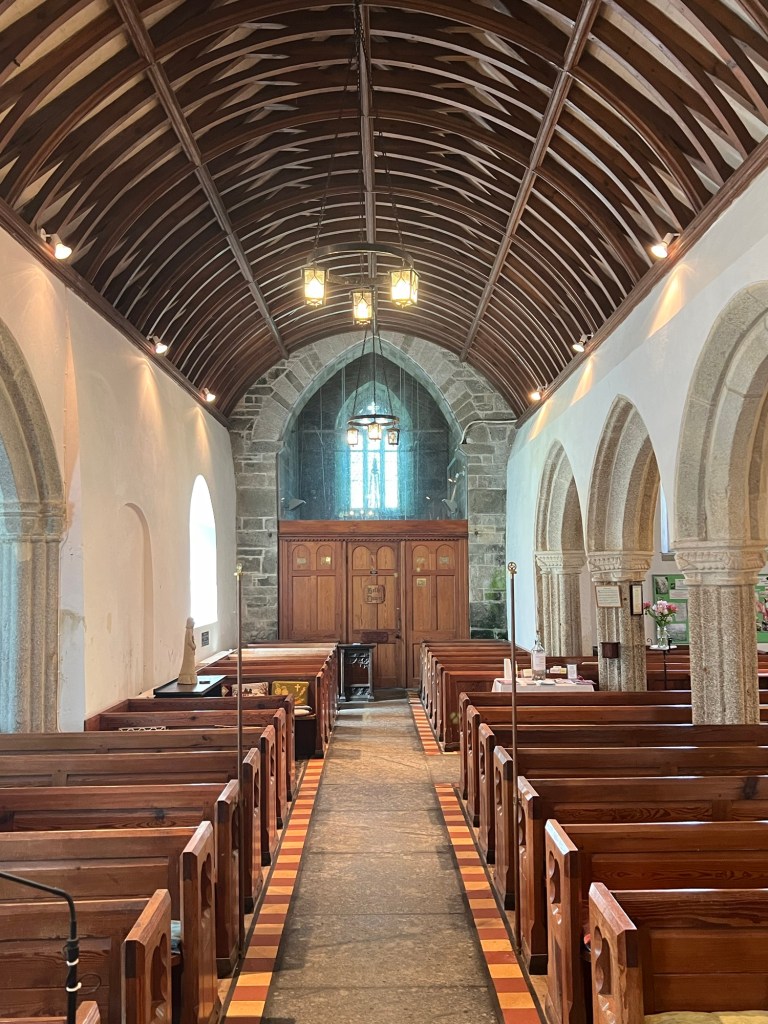
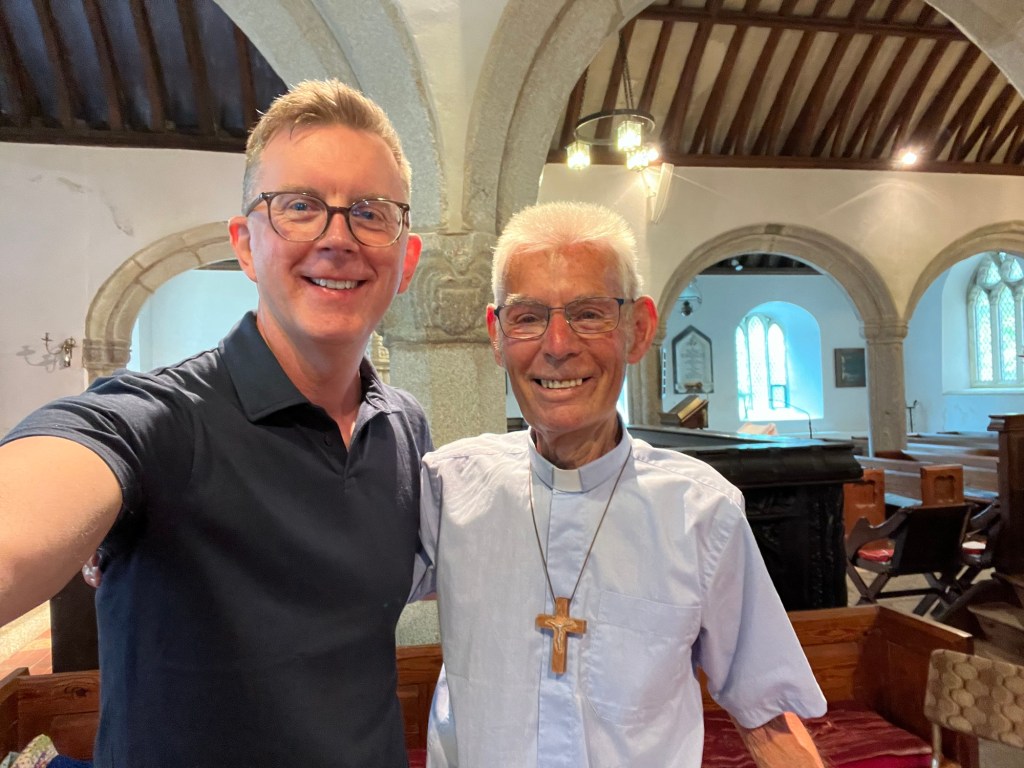


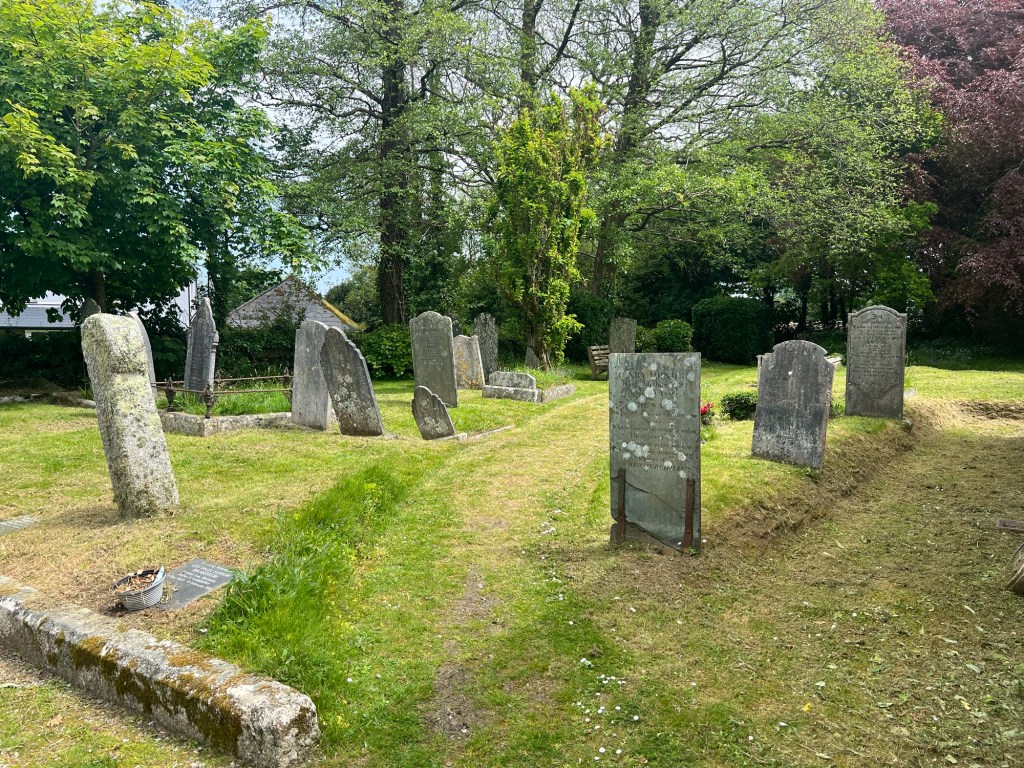
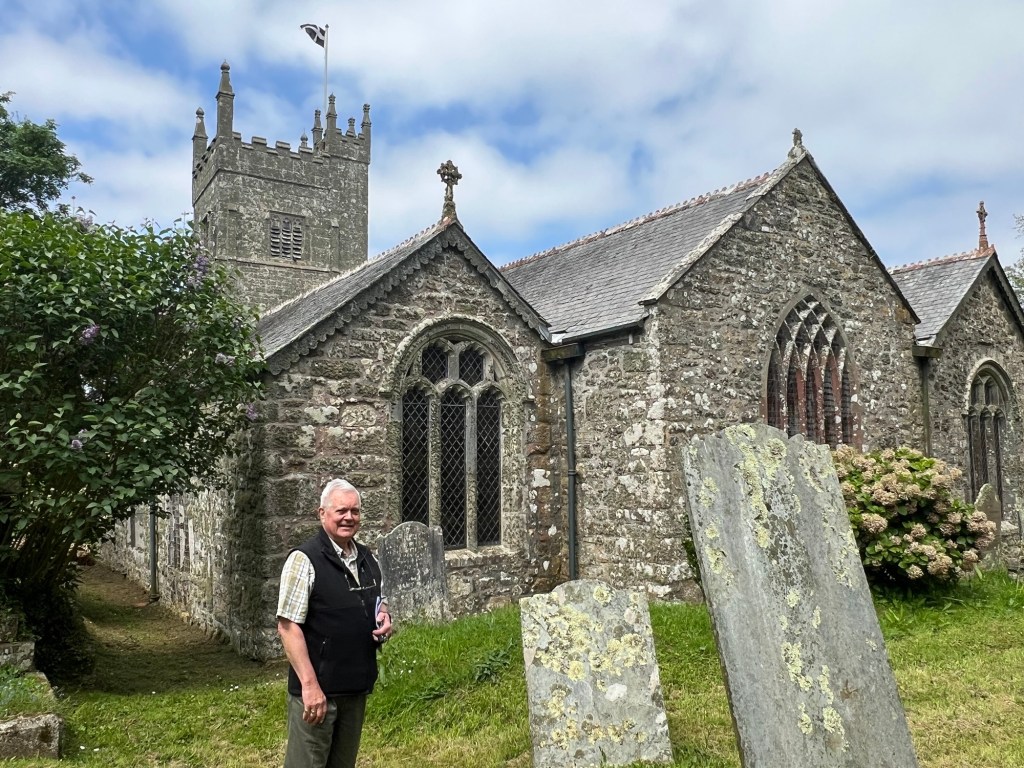
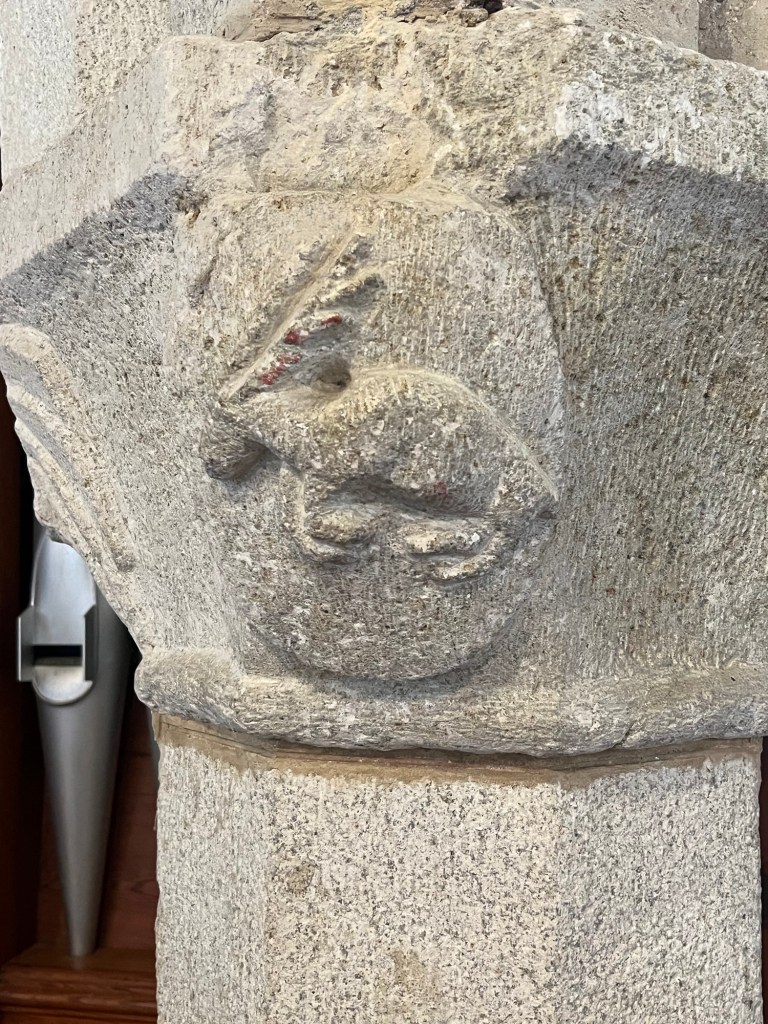
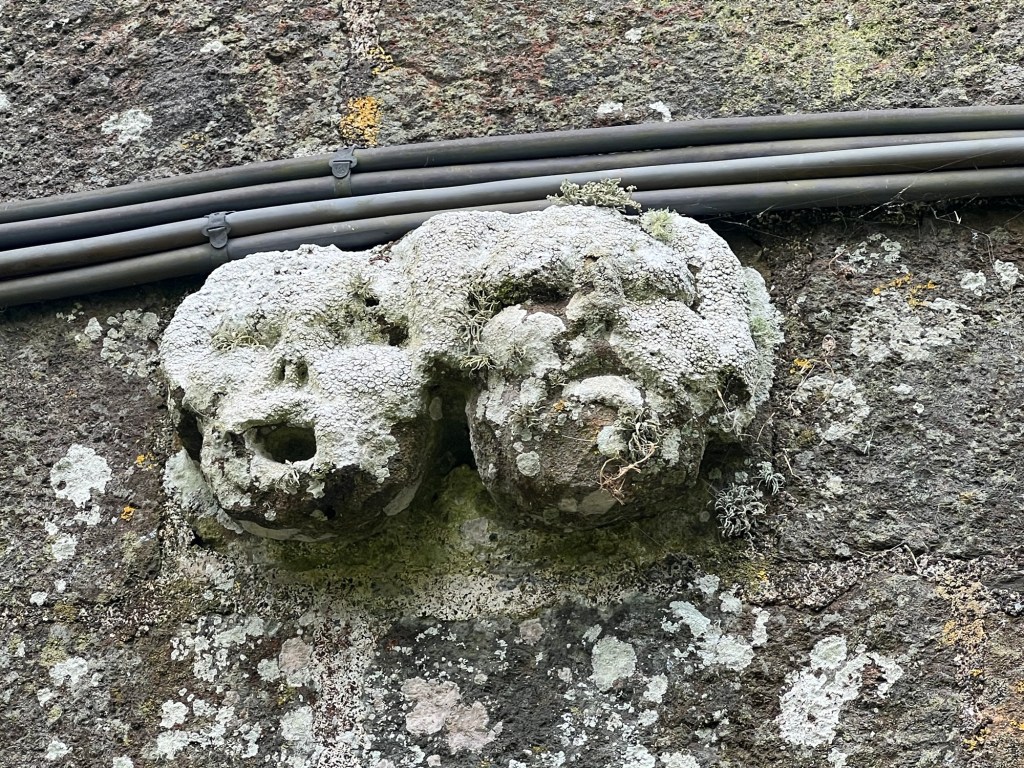
I arrived at the church just in time for the Sunday service, and Father Malcolm and the church warden, Mr. Geoff Webster, greeted me so warmly. Perhaps my favorite moment in this Cornish adventure was being invited to join the congregation for coffee after the service. Being able to chat a while with Gwinear locals made me feel for a moment that I, too, was a local — just one who hadn’t made it to mass in 175 years.
_______________
* There’s a saying in Cornwall that if there’s a hole anywhere on earth, you’re sure to find a Cornishman at the bottom of it.


 Deep Roots
Leave a reply to A journey down a genealogical mineshaft – Deep Roots Cancel reply