

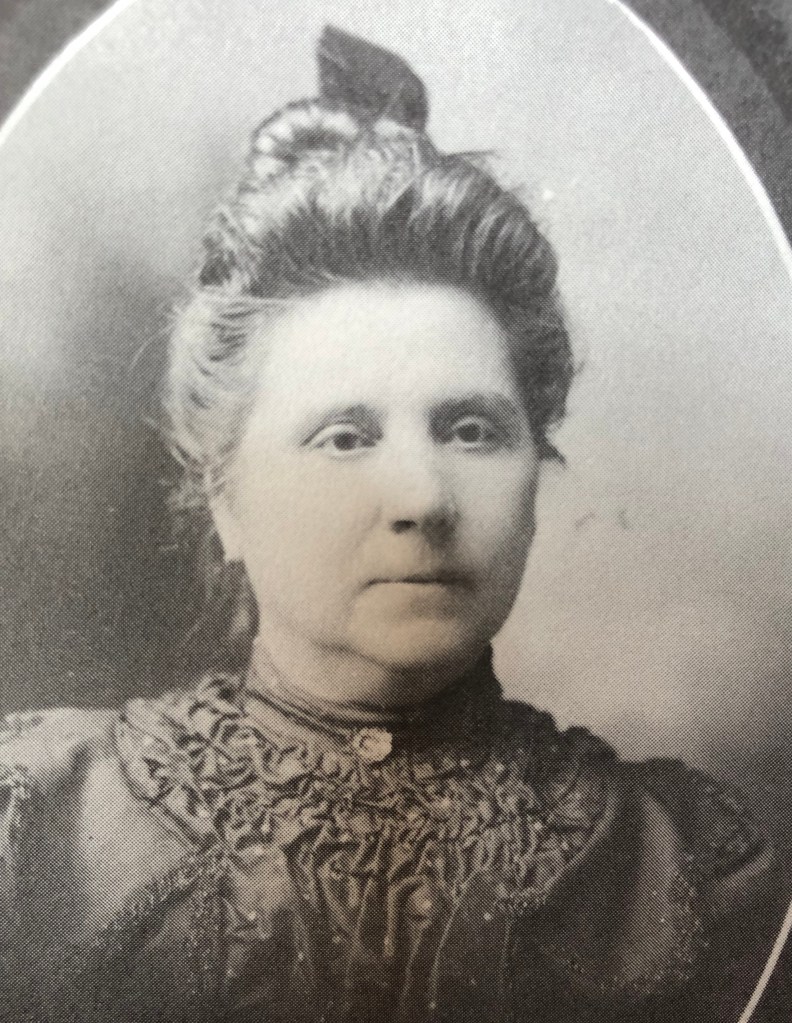
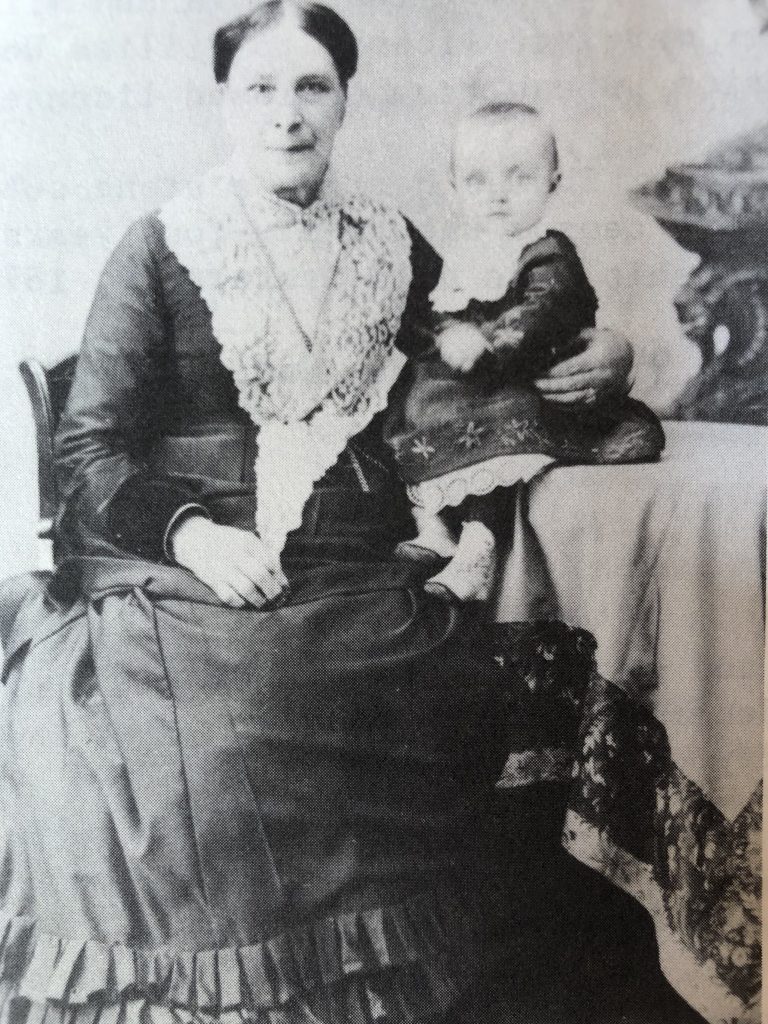
My grandmother’s grandmother Fannie Wells was born just north of Madison, Wisconsin in 1854, a few years after her parents Maria and William Wells had emigrated from Worcester, England. Fannie died in 1931, but she is remembered in my great-aunt Helen’s genealogy as a deeply spiritual person and “an immaculate housekeeper, [who] always placed a newspaper under the dinner plates of children.” She dressed well and “always looked quite prim without so much as a hair out of place.”[1] Fannie was the second of five known children born to Maria and William, and she would have been 10 years old when her father enlisted in the Union Army and never returned.
I attempt to retrace William Wells’ Civil War experiences in a separate blog post. Today, I’m in Worcester, wandering the streets where William and Maria once trod. I’m not the first descendant to do so. My great-aunt Helen Reed, my mother Beverly Rude, and a relative named JoAnn Hopper (a descendant of Maria and William’s son Albert) have all made separate pilgrimages to Worcester over the years.

Worcester is steeped in history, and coming here helps me imagine what Maria and William’s lives may have been like before they left in the 1840s. According to their 1845 marriage record, William’s occupation was a skinner.[2] And an entry on a ship manifest from the same year, which I believe belongs to the couple, lists both of their occupations as “leather dressers.” In other words, Maria and William, like thousands of their neighbours in Worcester, made their living from the manufacture of leather.
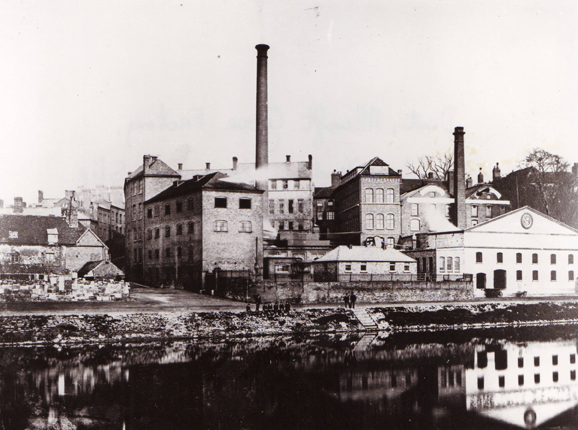

The leather industry, particularly glove-making, was central to Worcester’s economy for centuries. According to this blog post by Museums Worcestershire manager Philippa Tinsley, the industry peaked between 1790 and 1820, “when half of all British gloves were made in Worcester. In the 1820s there were 150 manufacturers of leather gloves in Worcester and 30-40,000 people were estimated to be employed in the glove industry in Worcestershire and Herefordshire.”
However, the English tax on imported gloves was lifted in 1826, resulting in an influx of cheaper imports. The effect was that “in Worcester, thirty thousand full-time jobs in 1825 [were] reduced to sixteen thousand in 1832, of which only just over three thousand were full-time.”[3] According to research by Museums Worcestershire, “following the disastrous 1820s, the two decades prior to mid-century were a period of uncertainty. Many manufacturers were bankrupted or voluntarily moved out of the glove trade.” And in the 15 years prior to the Wellses’ emigration, the number of glove manufacturers fell by about 50%. Believing that the leather industry was in freefall, Maria and William Wells may have felt they needed to seek a livelihood elsewhere.
But what was their work in Worcester like? When William and Maria Wells labored as leather dressers, the converting of animal hides into the fine leather used for gloves and other items was no small task. Prior to modern chemical processing and mechanization, glove-making required a great amount of time, resources, and skilled labor. David Nash, social history curator with Museums Worcestershire, explains (in this blog post):
“[The skins] are first cleaned and soaked in lime to remove hair and break down fats before being soaked in bark pits to tan the leather. This tanning process is essential to stop the skins from decaying. It also makes the flesh much more durable and gives the leather the traditional brown colouring that we are familiar with.”
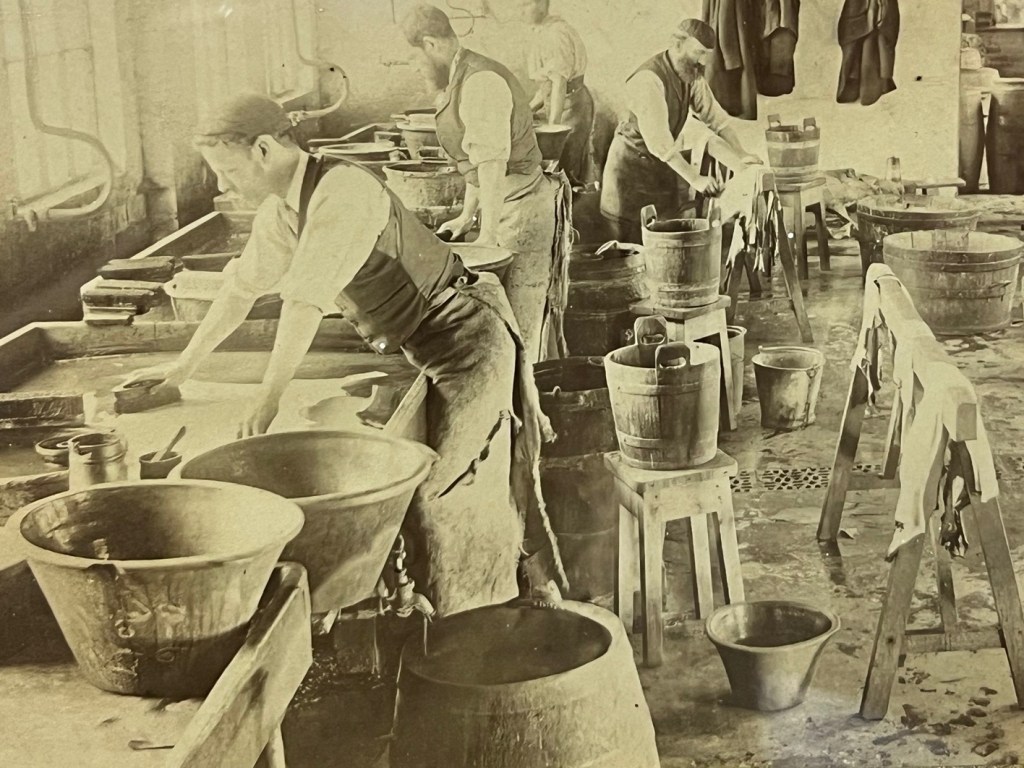
“For good gloves, the leather would need to be softened. Leather can be ‘misted’ and then ‘dressed’ with egg yolks which will permanently soften it without making it greasy. Leather for gloves might also be stained, and the colour fixed by boiling it with dye. After these processes, the skins are slowly dried out and stretched to achieve a finished state. Any remaining toughness is removed by drawing the leather firmly over a curved blade and the side that will sit against the wearer’s hand is then shaved with a paring knife in order to remove any roughness.”

I reached out to Mr. Nash to better understand the industry and he generously offered to meet me at his museum’s off-site storage facility, where he is busy preparing a new exhibit on Worcester’s glove-making industry.
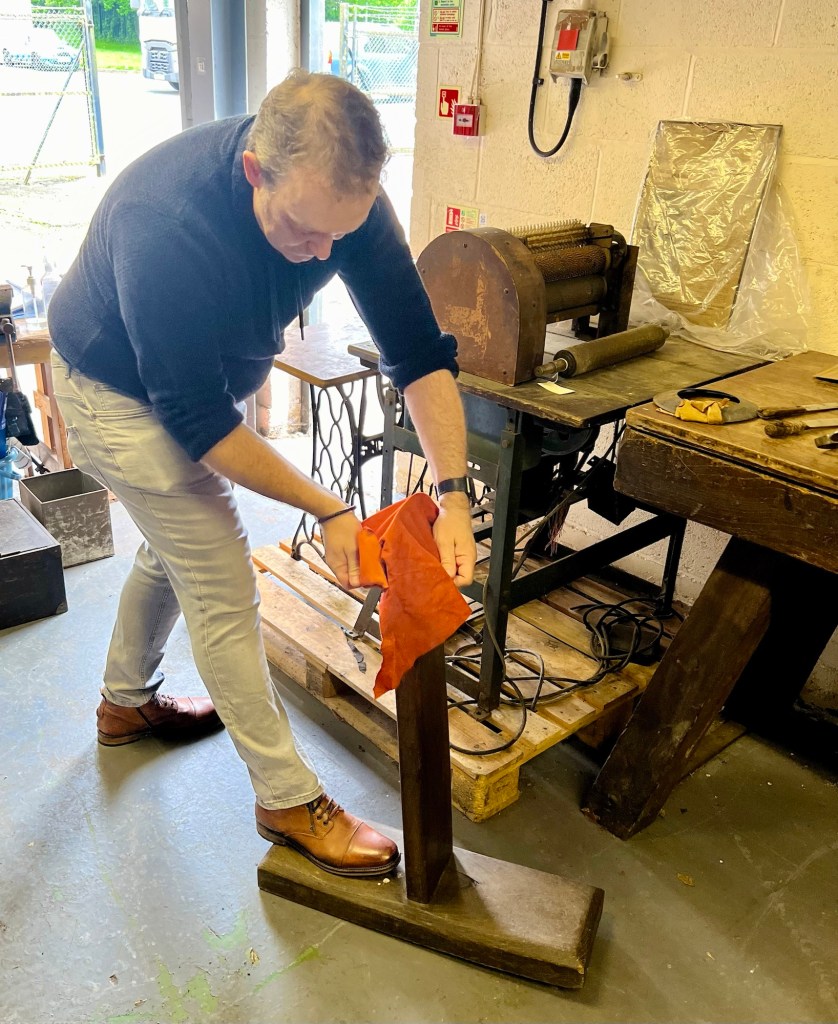
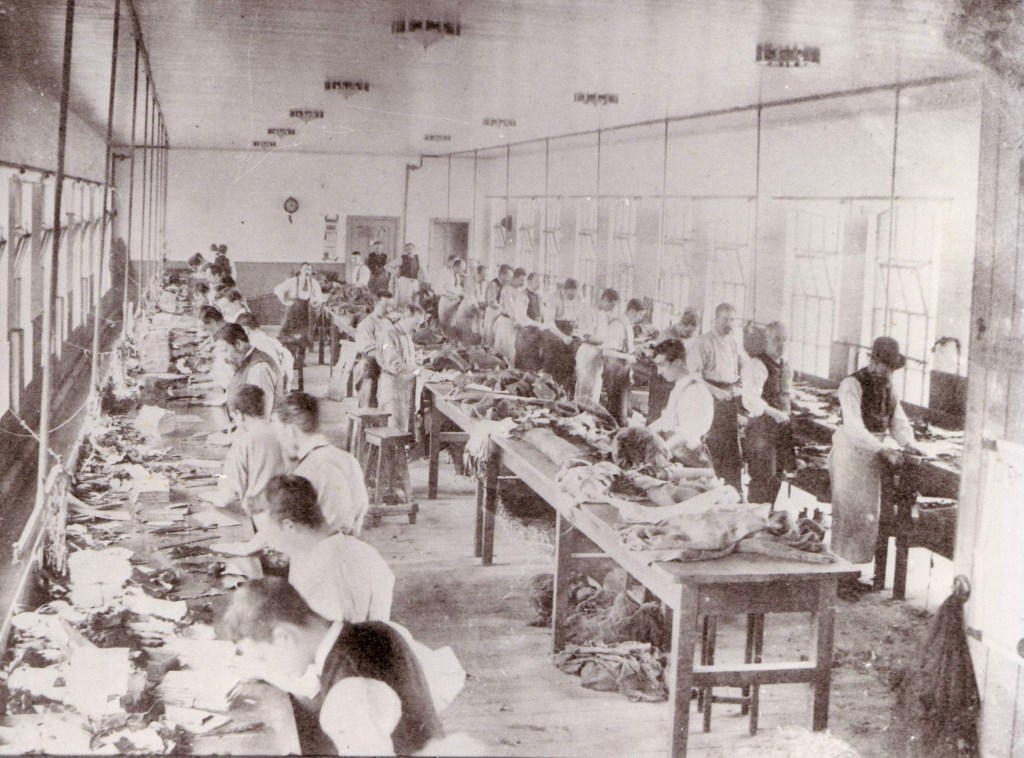
Nash has an encyclopedic knowledge of the people and processes behind Worcester’s glove-making tradition. He explained that there were as many as 50 processes and individuals involved in the making of a glove from the animal being slaughtered to the glove being ready for sale. Processes ranged from the tanning, dressing, and cutting of the leather (see photos above) to the assembly, ironing, lining, and packaging of the gloves.
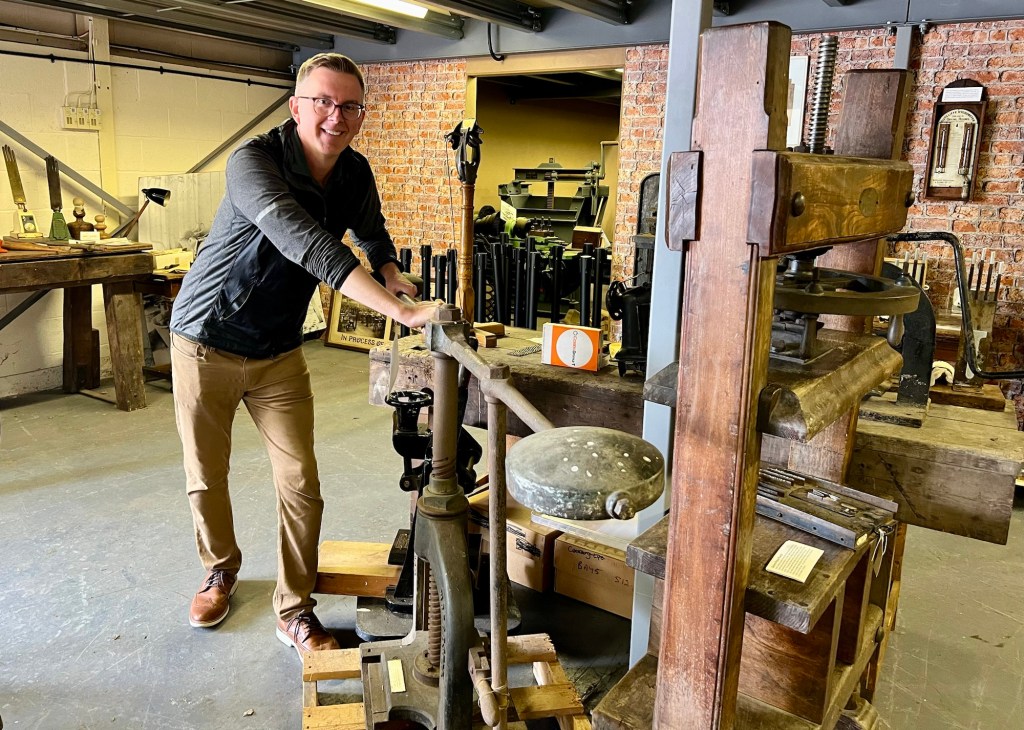
Women and men each had roles to play, and, according to Nash, women were employed in the industry at a rate of 16 women to each man (although they made less money than the men).

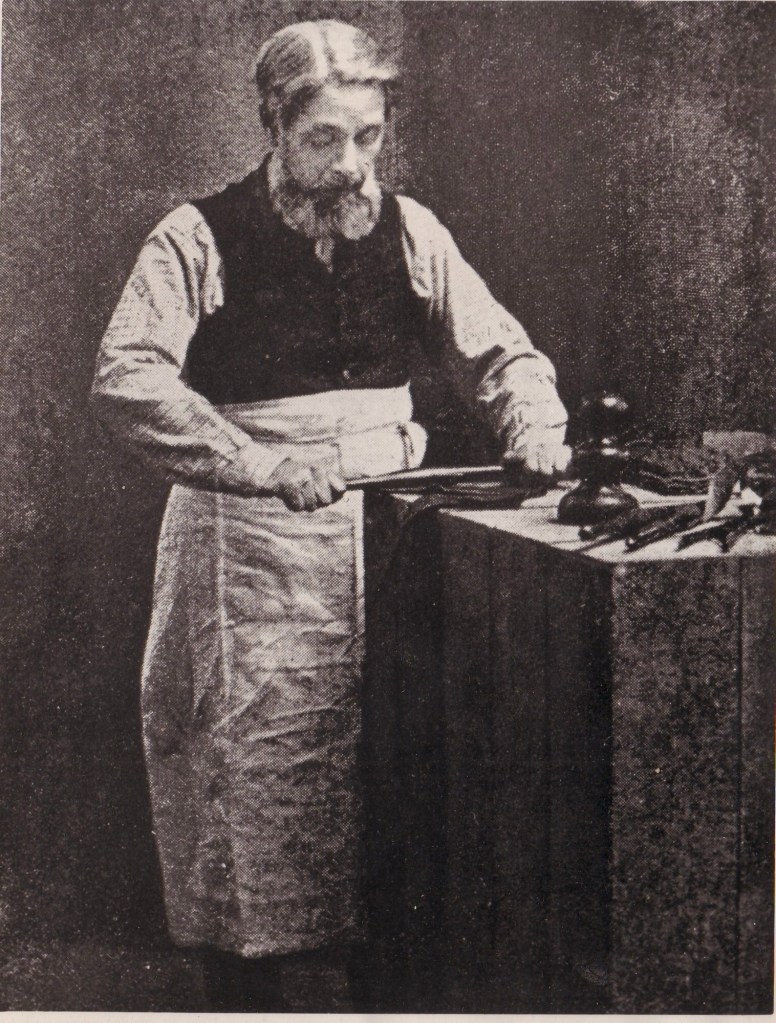
The end product was an exquisitely engineered article of clothing that every person would have owned — from farmhands to royalty — albeit in different quantities and levels of craftsmanship. To this day, in fact, the British royal family have worn gloves made in Worcester.

While the final product may be glamorous, the making of gloves was traditionally a malodorous process. In fact, the stench of the tanneries in central Worcester led to their being moved to the west side of the River Severn in the 15th century (see this post). This was the area of town where the Wells family lived and attended church at St. Clement’s.
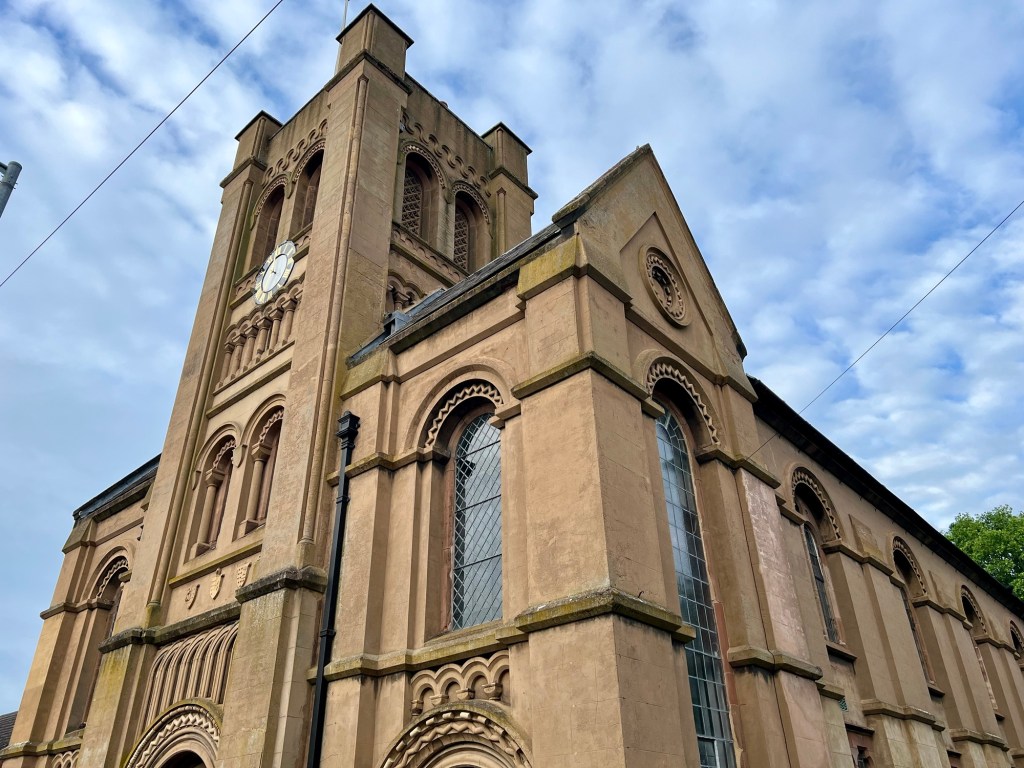
According to Nash, many émigrés from Worcester continued the glove-making trade in the United States. Towns such as Gloversville, New York became home to skilled tradespeople from Worcester and other glove-making centers around the world.
To my knowledge, my ancestors left this craft behind when they emigrated. Maria and William bought a farm, raised dairy cattle, and pursued a life on what was then the American frontier. We have evidence, however, that William’s brother Josiah stayed in Worcester and continued working in the glove-making industry – an industry that persisted here until the 1970s.
The Wellses’ association with this highly skilled occupation is something that their descendants should be proud of. And as one of their descendants, I am also humbled by the sacrifices they made to secure a future for successive generations by leaving behind both the industry and the country they knew so well.
* * *
I want to thank Museums Worcestershire, particularly social history curator David Nash, for providing most of the information about glove-making in this post. Mr. Nash’s enthusiasm for this subject is infectious, and he has helped me appreciate my ancestors’ lives in a new way.
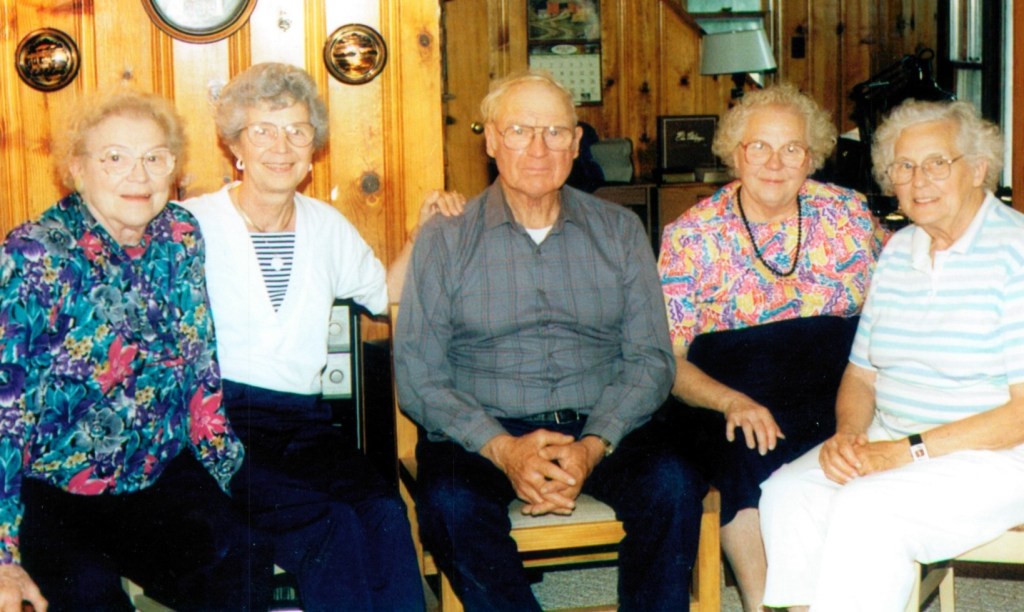
I also wish to thank my great-aunt Helen Reiner Reed, who originally kindled my love of family history and who continues to encourage my research.
[1] Reed, Helen A. Reiner. 1984. Ancestors and Descendants of Johann Jacob Reiner and Elsbeth Hitz and Allied Lines. The Anundsen Publishing Co.: Decorah, IA, p. 96.
[2] Ibid, p. 91.
[3] Redwood, Mike. 2016. Gloves and Glove-Making. Shire Publications: Oxford, UK, pp. 36-37.

 Deep Roots
Leave a comment