

Christmas trees look even more out of place in Costa Rica than I do. Michael and I don’t have one at the AirBnB that we’ve rented, and it’s probably for the best. Christmas itself seems slightly out of place here.
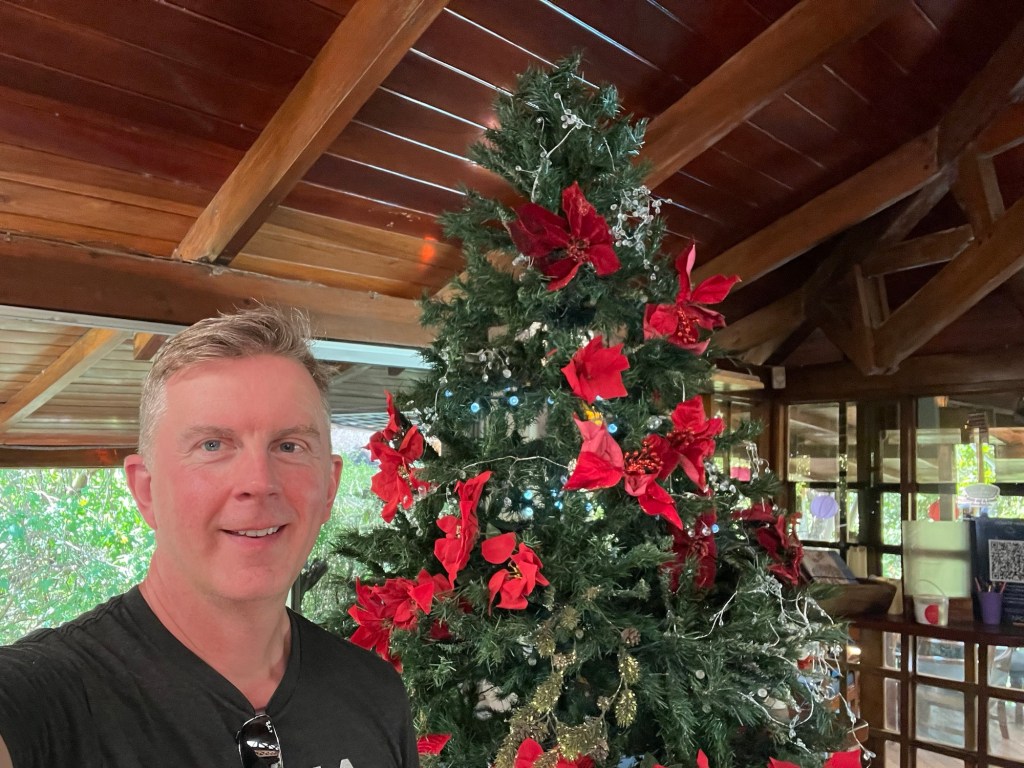
Back in our Minnesota living room, our own Christmas tree is undoubtedly bone dry by now. I can already picture the trail of pine needles I’m going to make as I drag it to the curb. Even though I knew we’d be away for the holidays, I could hardly wait to get a tree. I bought one as soon as they popped up in front of the grocery store — with Mame’s “We Need a Little Christmas” playing on repeat in my head.
Our first stop on this trip was a small resort in Drake Bay perched high on a hill overlooking the Pacific. The resort is slightly worn around the edges, but the fact that it’s run by two gay Frenchmen ensures a certain level of fabulousness. Besides us, there were only two other groups in residence: a quiet couple from the U.S., and a trio from London consisting of a middle-aged woman and a rather elderly husband and wife.

The Frenchmen had arranged our daytrip into the wilds of Corcovado National Park. “Are you sure you don’t want a private tour?” one of our hosts had asked me. “No, we’re happy to share a guide,” I replied. And thus it came to pass that Michael and I would be trekking into the jungle with the three Londoners.
Our guide Jairo peppered us with jungle trivia throughout the day, some of which turned out to be slightly off-base (according to later Google searches). But what he may have lacked in precision, Jairo made up for in patience. The five tourists in his care turned out to be quite a handful. First, there were the two Minnesotans (that’s us!) who kept wandering off trail to take photos of every damned flower, toadstool, leaf and twig.

Then there was the elderly couple, Monika and Peter, who were quite fit for their age, but nonetheless struggled through the mucky jungle terrain. Peter was still attempting to regain his strength after a near-fatal bout of COVID and pneumonia this past year. Monika, a retired herbalist and acupuncturist, looked to be a touch older than her husband, and she flagged in the midday heat. But when engaged on a topic she enjoyed (e.g., the evils of processed foods), Monika would suddenly spring to life. Michael made the mistake of giving her his undivided attention, resulting in her chatting him up for the duration of the tour.
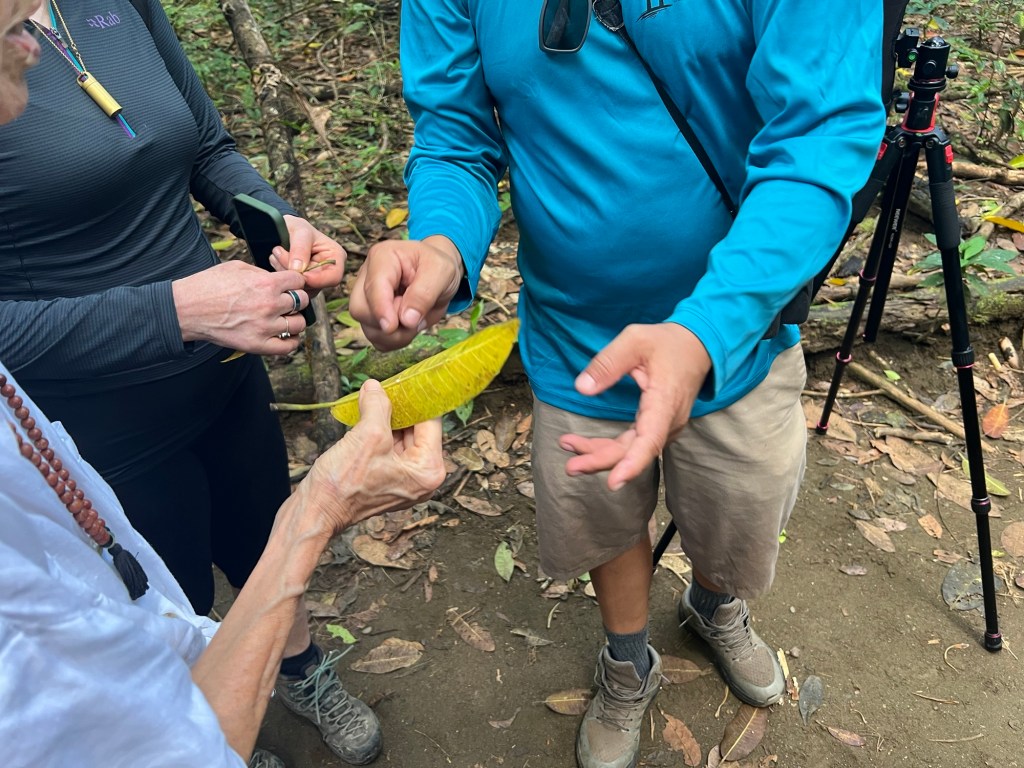
And then there was Louisa — Monika’s friend and former acupuncture client — who, as the day wore on, seemed increasingly likely to become some creature’s supper.
“You probably don’t want to go any closer than that,” Jairo would warn, and then Louisa would advance a couple yards towards the animal in question. If this were Charlie and the Chocolate Factory, I thought, Louisa was our Veruca Salt. “But I want a closeup of the viper!!”

At the edge of a lagoon full of crocs, Louisa lobbed a stone into the water. “I just wanted to see if one would move!” she sputtered, as an irritated ranger escorted us out of that section of the park. Louisa protested that Jairo had done the same thing a moment earlier. The rest of us hadn’t seen Jairo do that, but then again Jairo’s capacity for discretion probably surpassed Louisa’s. Either way, the park ranger wasn’t having it.
The episode made me think of my mom’s older brother, Glenn. On a hike some 40 years ago, Uncle Glenn had scolded me for picking up a daddy long-legs spider by one of its spindly appendages. I was copying an older cousin who had done the same thing not five seconds before. “That’s no excuse,” Uncle Glenn told me. “How would you feel if someone did that to you?” How would I indeed. The lesson stuck, especially since my uncle had never spoken sharply to me before.
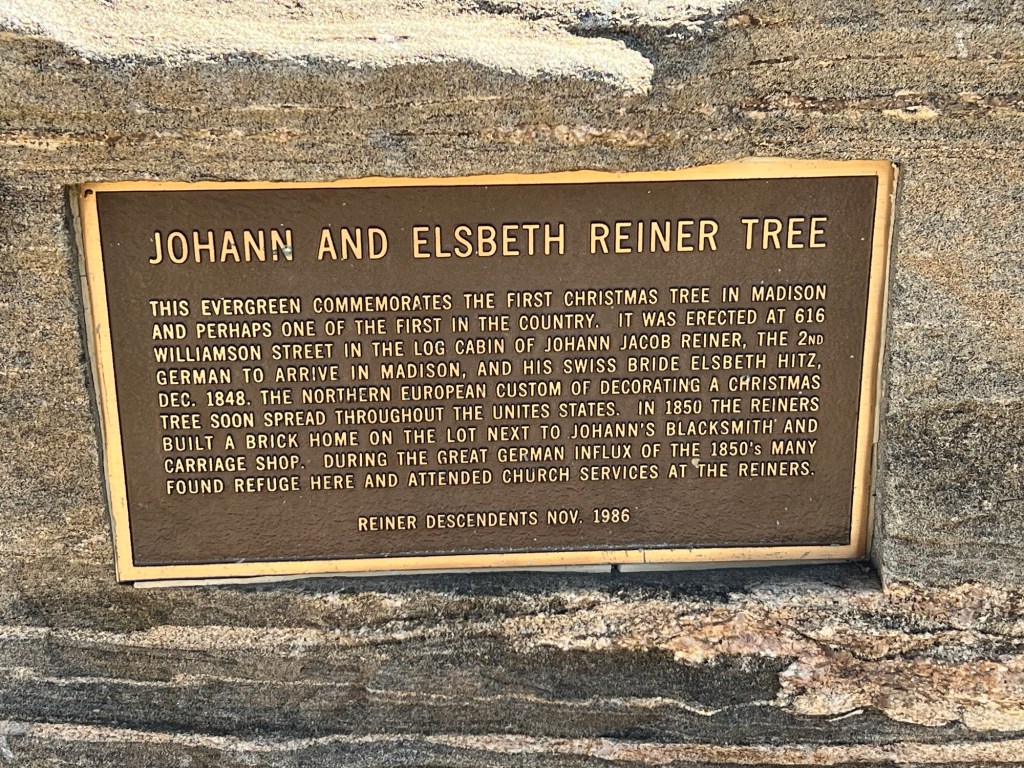
I met up with Uncle Glenn this past June in Madison, Wisconsin, right after he’d finished a workout at his CrossFit gym on Williamson Street. Frankly, I don’t think I’d survive more than 10 minutes of CrossFit, but my uncle barely looked winded. The gym is located right over the spot where my great-great-great grandparents, Johann Jacob and Elsbeth Reiner, built their home and blacksmith shop in the 1840s.
Glenn and I chatted as we walked my dog Spence around the neighborhood, stopping of course to visit the Reiner Tree. This is the evergreen that was planted to commemorate the Reiners’ footnote in Madison history. A plaque beside the tree describes J.J. and Elsbeth’s funny German custom of bringing a conifer indoors and decorating it for Christmas — a sight their Madison neighbors had never seen before.




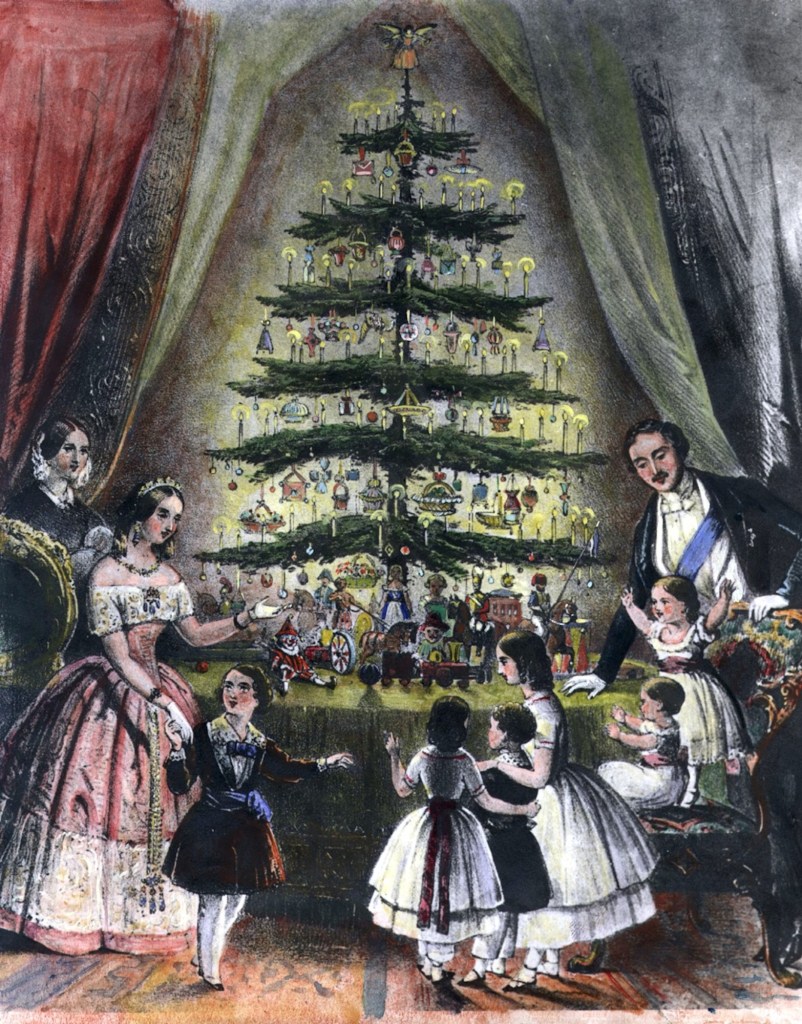
It’s hard to imagine Christmas without Christmas trees, but they were virtually unheard of in America before 1850. It wasn’t until Queen Victoria and Prince Albert put one up in Windsor Castle in 1848 that the tradition started to take off in the English-speaking world. But the practice of bringing evergreens inside in December is much older, dating back to pagan celebrations of the winter solstice and its promise for rebirth.
Intuitively, it makes sense to me that piney branches should hold promise for people in northern latitudes. While everything else looks dead, the boreal forest persists. Its roots spread in a more or less continuous circle across the global north — from Scandinavia through the whole of Russia, from Alaska to the shores of Labrador. Having a piece of this greenery indoors during winter’s darkest days is a reminder that, despite all appearances to the contrary, life will return.
O Tannenbaum, O Tannenbaum, we learn from all your beauty
O Tannenbaum, O Tannenbaum, we learn from all your beauty
Your bright green leaves with festive cheer, give hope and strength throughout the year
O Tannenbaum, O Tannenbaum, we learn from all your beauty
— translation of the third verse from “O Tannenbaum”
Here in Costa Rica, however, the lines between birth, death, and rebirth are not so stark. Everything is in constant flux, and the seasons are governed more by the coming and going of the monsoon rains. An evergreen doesn’t hold the same value in a place where things stay more or less green year round.
Jairo led our eccentric little group through a part of the jungle thick with towering ficus trees. Normally chatty, the five gringos grew quiet at the feet of these giants. “The roots of the ficus,” Jairo explained, “stretch out in every direction so that they touch all of the other ficus in the area. If one of the trees needs more nutrients, they pass those nutrients along to the one in need. If one is in trouble, the others come to its aid.”
Here was a different tree with a different lesson — one that I think each of us realized we needed to hear.
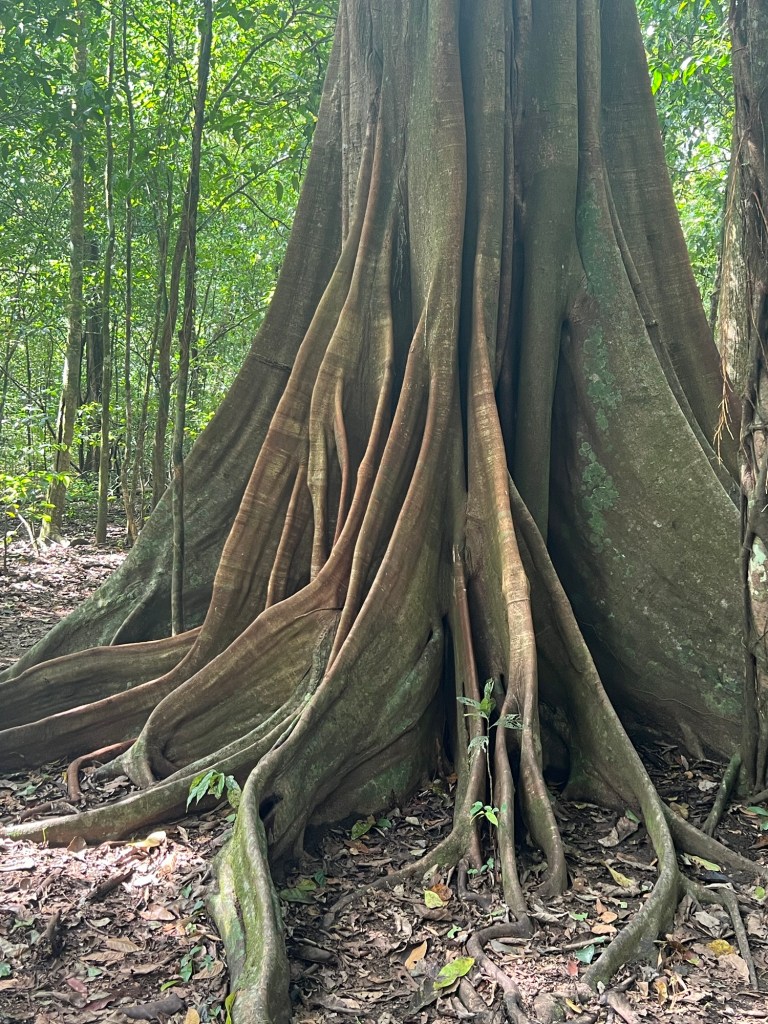


 Deep Roots
Leave a reply to Gary Frank Gleason Cancel reply