My grandmother’s Aunt Glenrose – my great-great aunt – was a beloved character, full of stories, jokes and poems. A spinster for life, she was always taking care of others in the family: nursing parents and siblings through sickness and old age, looking after one and then the next generation of children. My parents sometimes left me in Aunt Glenrose’s care when they were busy with work or school, and I can still picture my dear, white-haired auntie sitting in her chair, launching into a recitation of a poem she knew by heart.
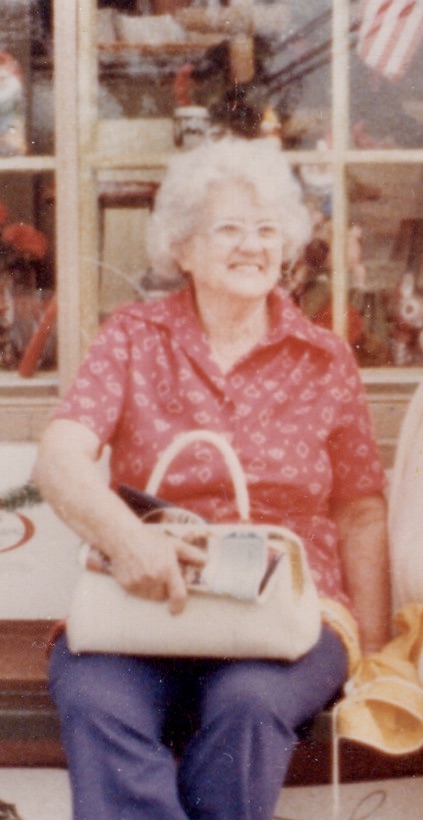
Some of her favorite stories were about her own family. Glenrose Johnson was the last of 11 siblings, and before her mind clouded over with dementia, she could regale you for hours with funny episodes from her youth. She would giggle recalling when she introduced herself at school as yet another Johnson sibling. “Oh, those Johnsons,” a local gossip had remarked, “They are so prolific!”

And it’s true. We are! When I was a child, I knew about Glenrose’s siblings and the large generations of Johnson descendants that followed. What I didn’t know was that Glenrose’s father Albert had four siblings and one half-sibling, and Albert’s father Ole – our immigrant ancestor – had at least seven siblings.
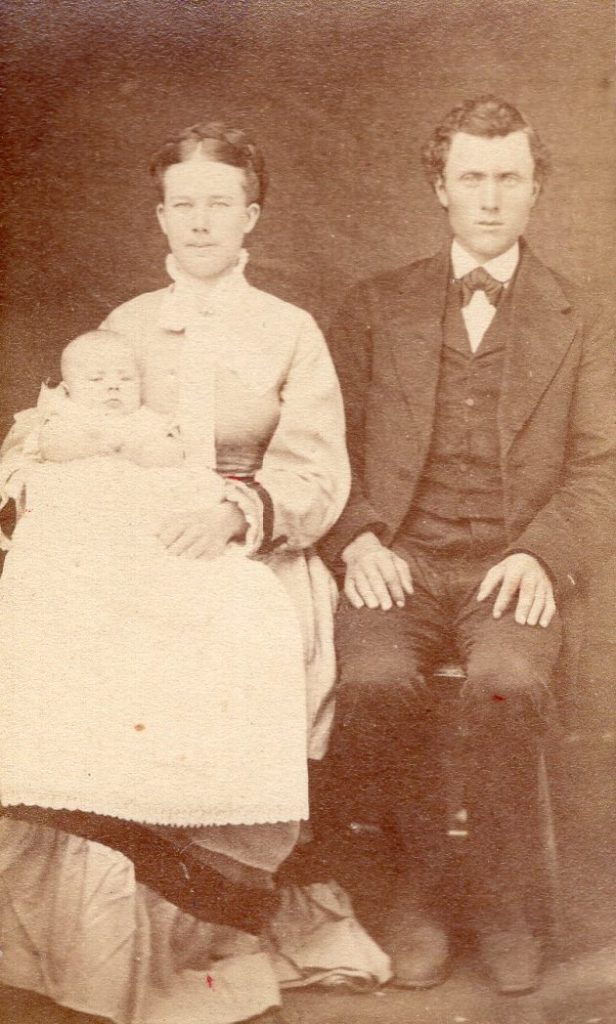
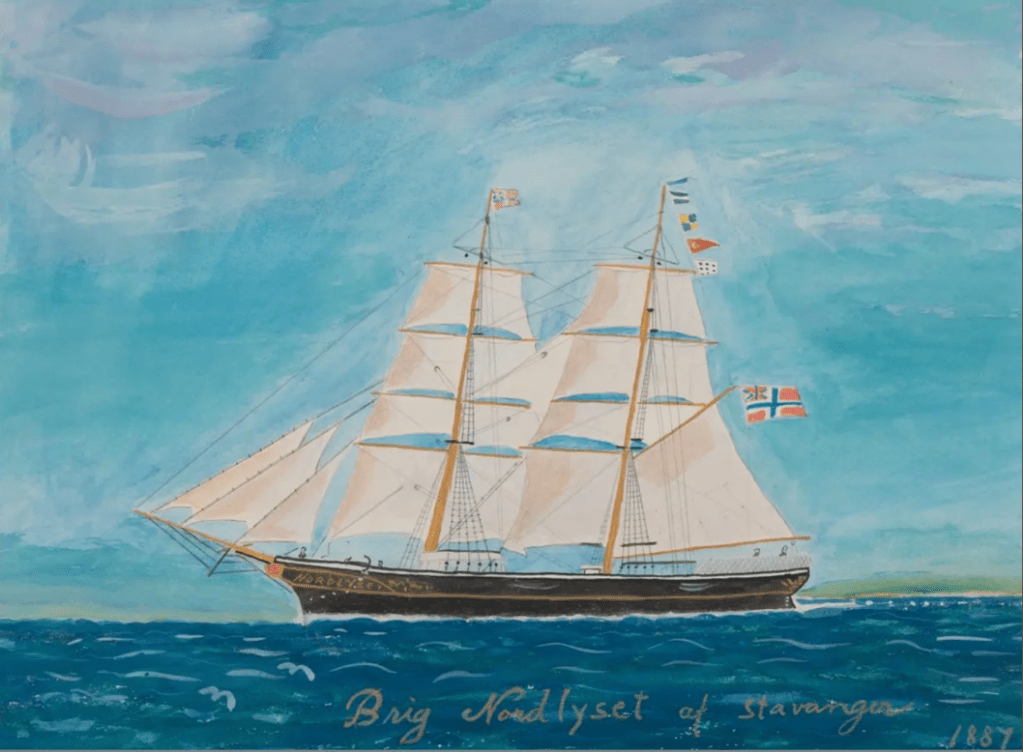
Ole’s origins had been a mystery for quite a long time. According to the family history that Glenrose wrote in the 1970s, Ole Jensen Hauge was born in Bergen, Norway in 1826, immigrated to Wisconsin in 1850 with Malene Olsdatter (his bride-to-be), and operated a farm in the area of Deerfield, Wisconsin. He changed the family’s name to Johnson at some point, probably to seem more American. Glenrose had listed Ole’s parents’ names in her book – Jens and Marie – but we knew nothing about them.
Right before my trip to Norway in 2022, I discovered the records I’d been looking for; I found Ole’s baptism record in the church book for Haus Parish (located just outside Bergen) and his parents’ names matched up. I rushed to locate the Hauge farm in Haus and made sure to drive by it when I arrived in Bergen (see this post). But a few months ago I discovered a problem: Haus had more than one Hauge farm, and I had gone to the wrong one.[1]
Today I corrected that error.

Today I had the pleasure of speaking with a local historian named Ole Johan Hauge, who met me for coffee and gave me tour of the Arna Valley — a beautiful valley that lies just east of Bergen and stretches from Arna in the north to Fana in south. Towards the middle of that valley is a kind of side valley called Langedalen. This is the area where my Hauge ancestors were living.
In an act of kindness I will never forget, Ole Johan took the time to write a detailed local history for me, and I’ve translated it (see this post).

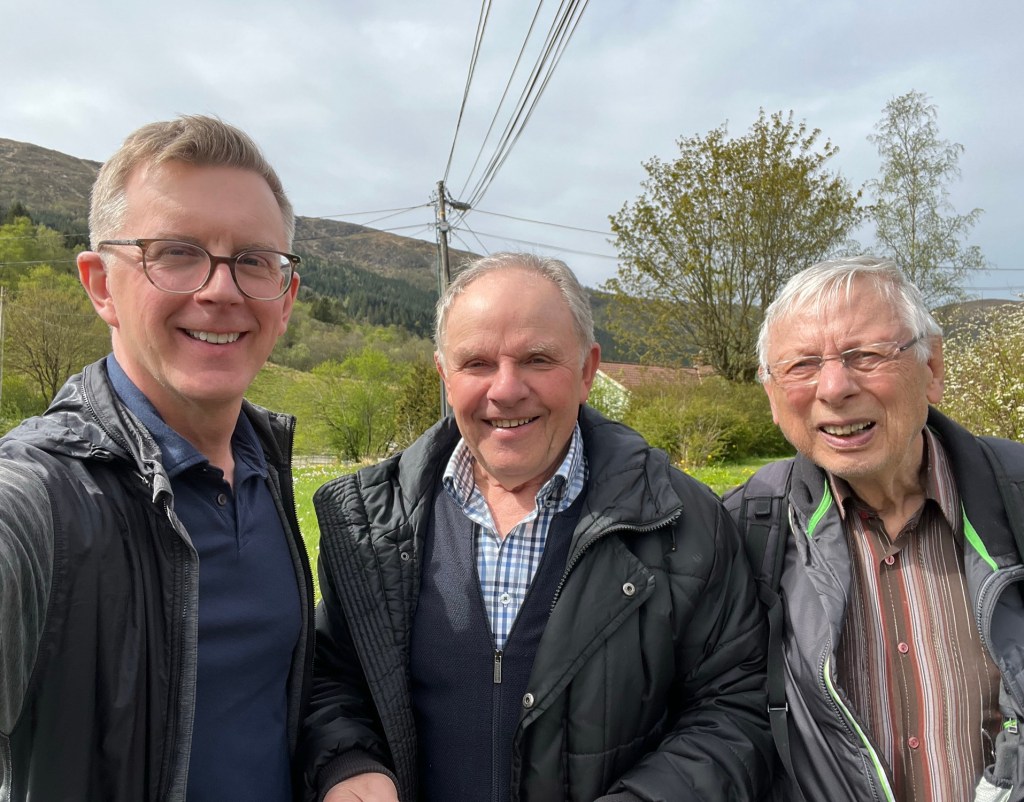
After giving me a tour of the area, Ole Johan delivered me to the Hauge farm itself, where one of my relatives, Arne Storlid, was waiting for us. Arne is the great-great grandson of Marta Jensdatter Hauge, who was the sister of my great-great-great grandpa Ole Jensen.

(To understand how this fits with my family tree, see Chart B on this page.)
After figuring out how we were related, Arne and I met up with a cousin of the local historian — also named Ole Hauge! — who currently lives on one of the Hauge farms.
I say Hauge farms (plural) because like most farms in Norway, Hauge was broken into several smaller landholdings (bruk). The one that my ancestor grew up on was called Det Jensane, but there was also Det Framme, Det Kauppane, Det Borte and Det Nære. Before about 1900, all of the houses were clustered together in what was called a klingetunet, with their respective farmland surrounding the homes.
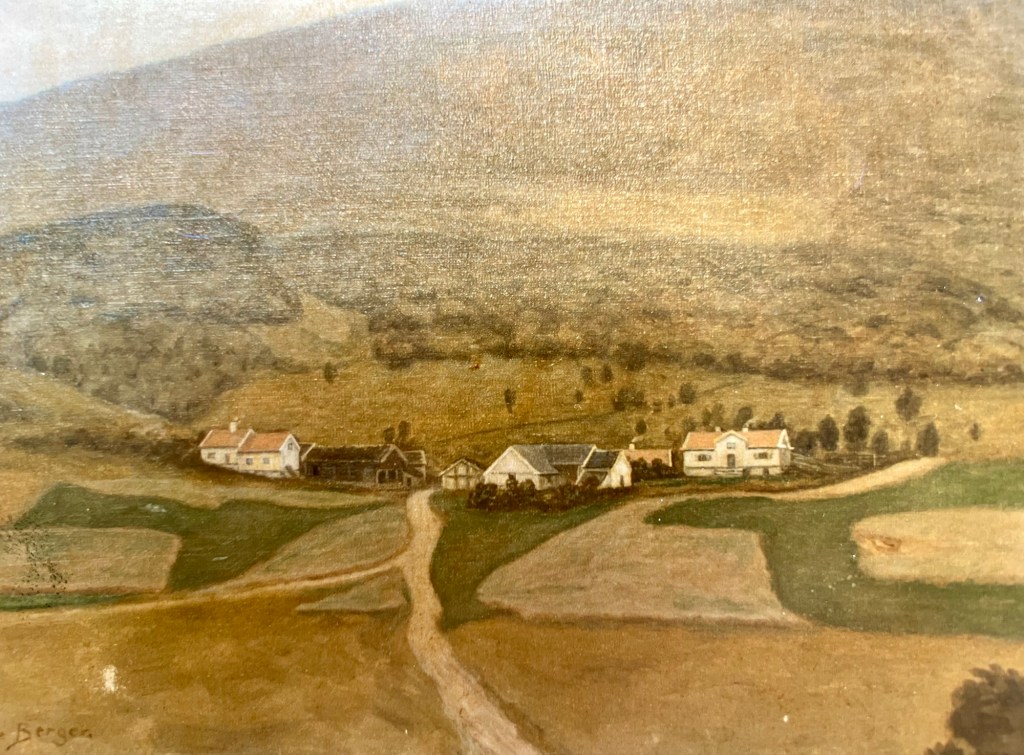
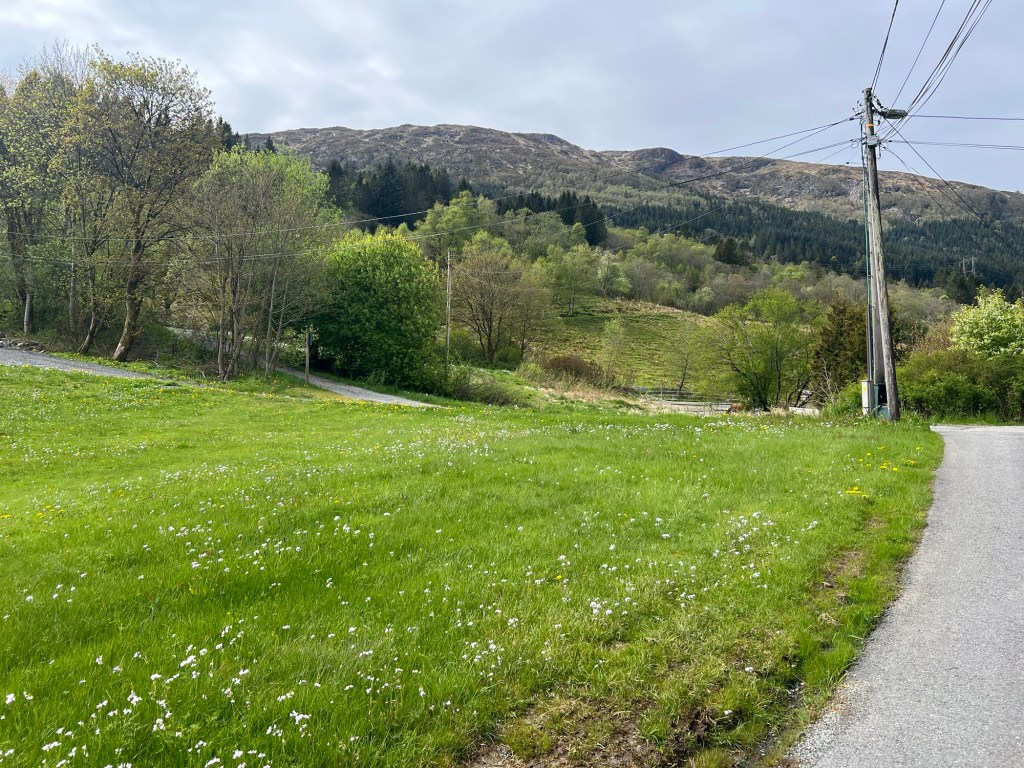
Over coffee and cinnamon rolls, these gentlemen engaged me in a fascinating discussion of what life was like in the days of our common ancestors. I only wished my poor Norwegian comprehension didn’t get in the way!
But I am left with the overall impression that life in Langedalen hasn’t always been easy. While the land in the valley is relatively fertile, the fields are fairly small by American standards, and very few owed their own land in the 1800s — they were tenant farmers (husmenn). The prospect of large and mostly flat farmland that one could own outright must have been enticing enough to risk that journey across the Atlantic.
According to the bygdebok for Arna, my ancestor Ole had two other brothers — Mons and Johannes — who made that journey as well. But what became of them, I have yet to discover. Curiously, my own ancestor didn’t go directly to the U.S. The church records indicate that he left for Bergen in 1849. From there, we think he must have gone north to Førde (in Sunnfjord), perhaps looking for work. And I am grateful for that! If he hadn’t, he would never have met his future wife, my great-great-great grandma, Malene Olsdatter Bruland. It’s her story that I’ll turn to next.

[1] More precisely, Haus Clerical District (prestegjeld) had been divided into three parishes (sokn): Ådna, Haus, and Gjerstad. Our family was actually from Ådna sokn and lived on the Hauge farm located there – not the Hauge farm in Haus sokn. The relevant source is Lars Martinusson Ådna’s (1964) bygdebok — Haus i soga og segn. 17 3 : Ætt og æle : (ættarbok) Ådna sokn.
Hope you enjoyed this blog post. Feel free to subscribe!



 Deep Roots
Leave a comment