As I mentioned in a prior post, my biological great-great grandfather, Erik Veum (1864-1942), made a journey back to Norway in 1921 with two of his daughters. Erik’s wife Bertha (1864-1937) did not accompany them. Perhaps she had less reason to travel. Unlike Erik, who had left many family members behind when he emigrated, Bertha brought Norway with her.
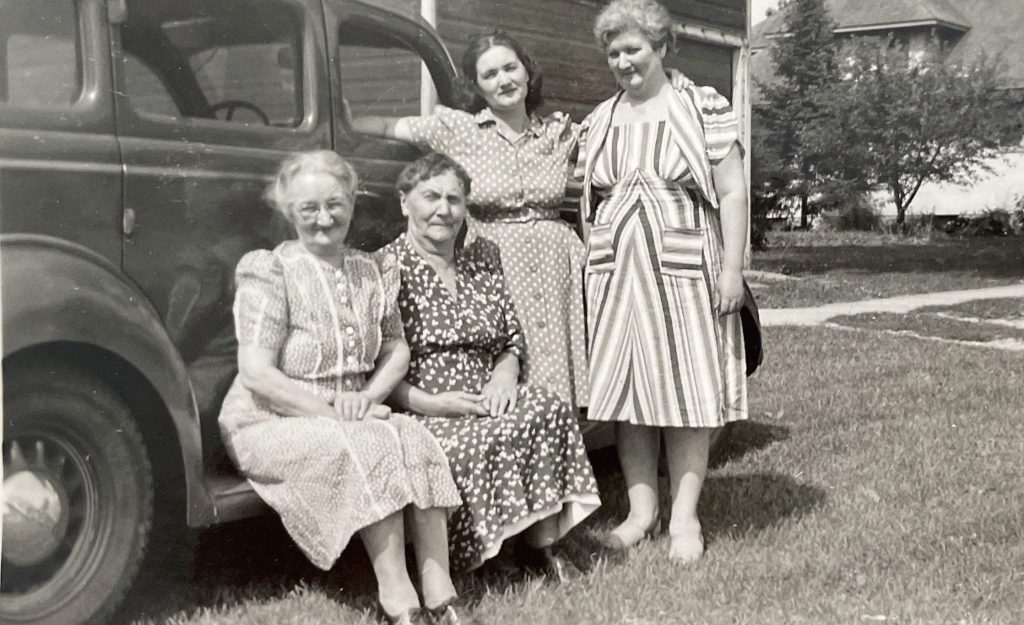
Bertha was one of seven daughters born in Nes Parish to Agnete Kristiansdatter (1831-1930) and Augustinius Bredesen Thorpe (1834-1912). In order of birth, they were: Dina, Mathea, Bertha, Gina, Andrine, Caroline and Anna. All seven of Agnete and Augustinius’s daughters emigrated as young adults to Wisconsin’s Rock and Dane counties in the 1880 and 90s. Agnete and Augustinius joined their children there in 1891. I believe that Bertha’s sister Mathea was the first in the immediate family to begin this chain migration, arriving in 1882, but other relatives preceded her in 1880 (see below). Around 1882, Erik Veum left Nes for Kristiania (Oslo) and probably departed for the US in 1883. It seems likely that Bertha followed in 1884, and they married in Wisconsin in 1885.
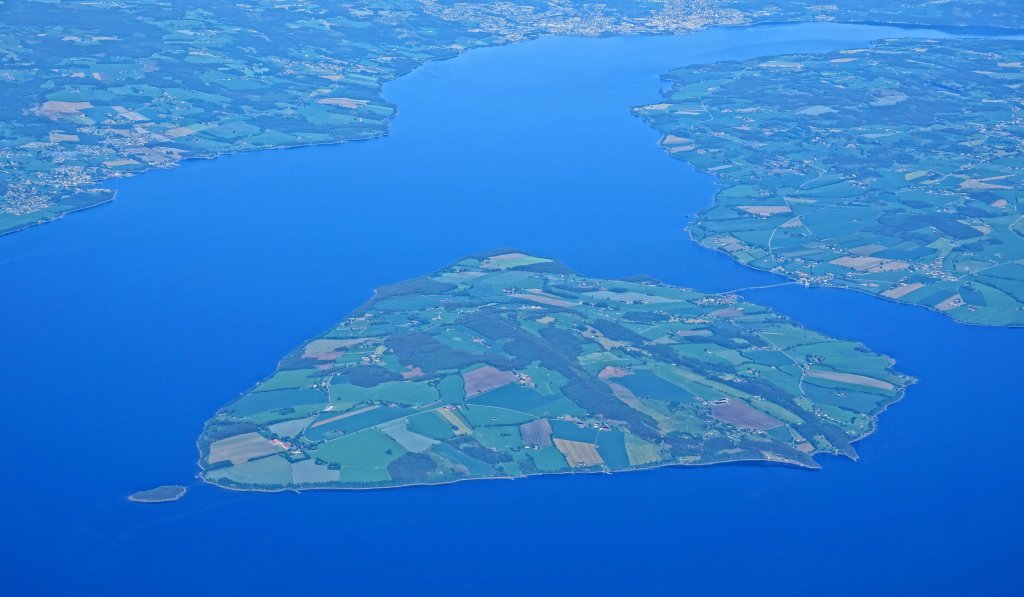
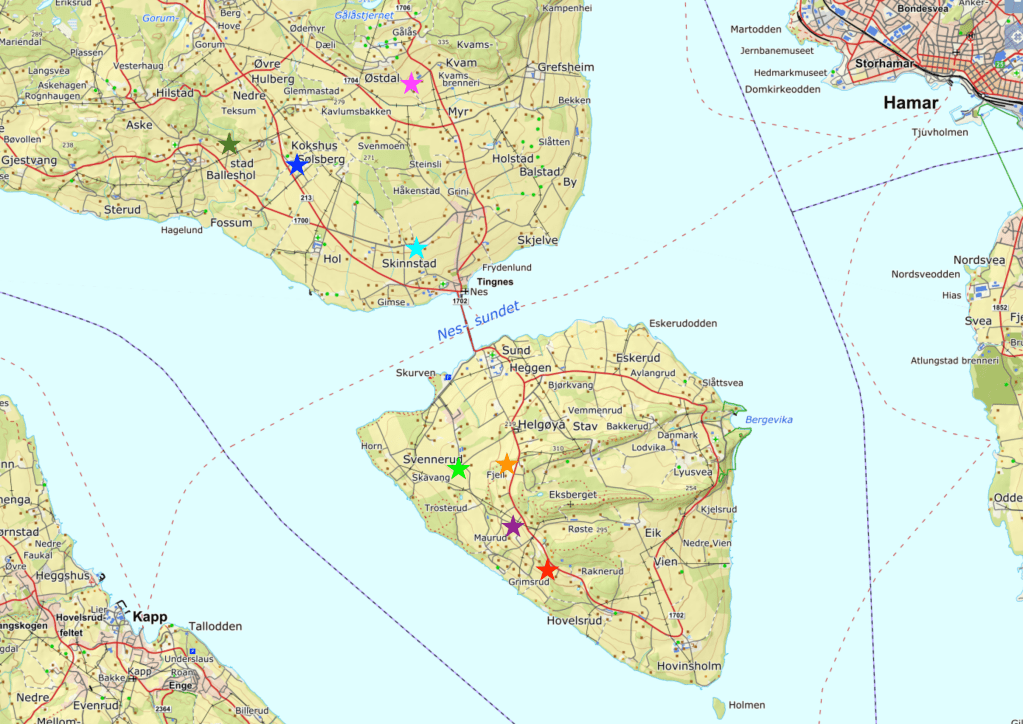
Bertha’s father Augustinius was a husmann (tenant farmer) and kvegrøkter (cattle rancher) who grew up on Helgøya – the island in Lake Mjøsa. We do not know much about either Augustinius or Agnete,[1] but the fact that their seven daughters were born on four different farms suggests to me that they struggled to find consistent employment. Their first daughter, Dina, was born two years before Agnete and Augustinius married in 1860. But Dina was not Augustinius’s first child; in the year before Dina was born, Augustinius fathered two children by two other women.[2]
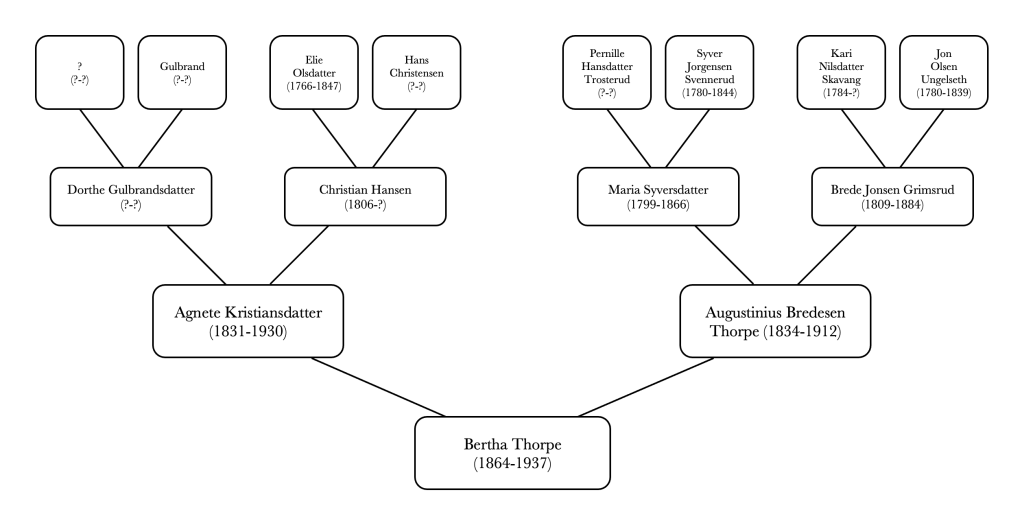
(To see where this fits into my family tree, see Chart J on this page)
The historical record tells a similarly complicated tale for Augustinius’s parents, Maria Syversdatter (1799-1866) and Brede Jonsen (1809-1884). Both Maria and Brede were born and raised on Helgøya. Maria was widowed after only three years of marriage to her first husband, Tor Andersen, and qualified to receive flour rations to support herself and her two young sons. She gave birth to a third child two years after Tor died. In 1830, Maria married Brede Jonsen, who had served as a soldier and apprenticed to be a shoemaker.
Maria and Brede went on to have seven children together, including Augustinius (Bertha’s father). Augustinius was born on the Maurud farm, but some of his siblings were born on the Grimsrud and Fjeld farms. After Maria died in 1866, Brede remarried and had two more children with his second wife, Tolline Jonsdatter. In 1883, Brede and Tolline qualified for poverty relief, and a year later Brede hanged himself. Tolline died the following year.
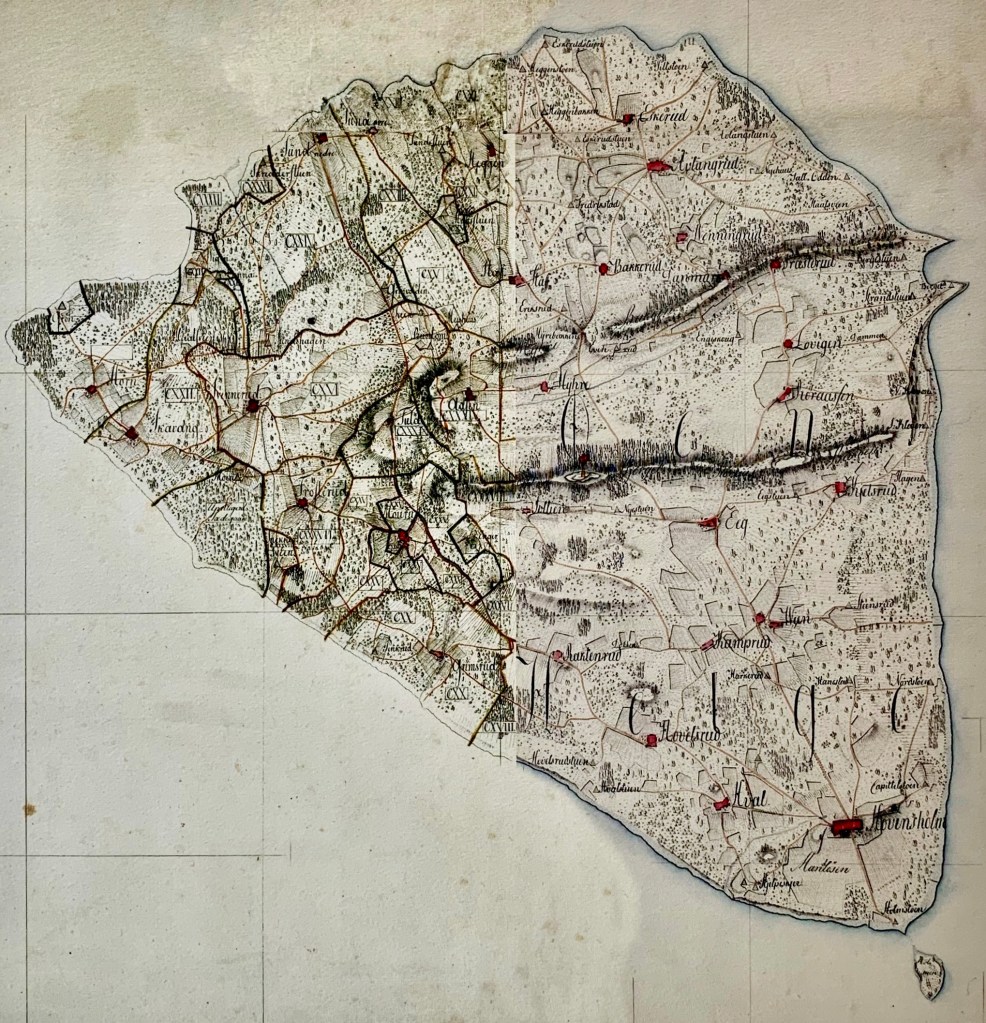
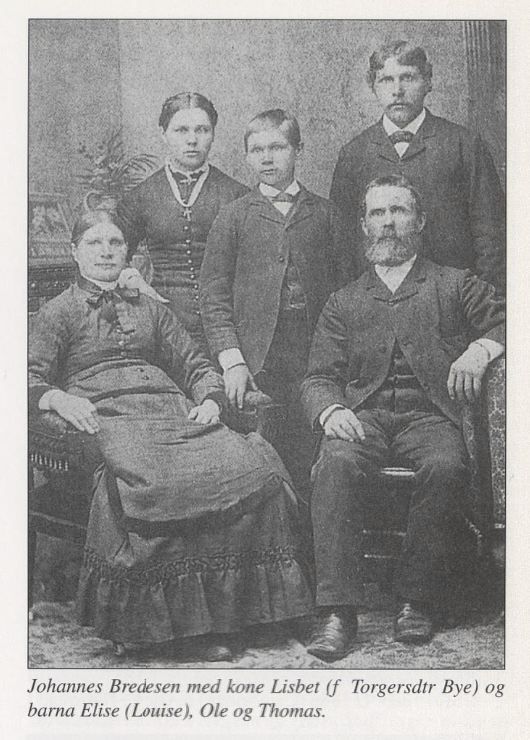
If you have followed this so far, I commend you. It’s a confusing story. Details from those last three paragraphs were pulled from Kolstad’s Nes bygdebok, which provides a surprisingly comprehensive account of the family’s history. But the bygdebok actually missed one of Brede’s children. A year before he married Maria in 1830, Brede had a child out of wedlock with a woman named Pernille Iversdatter. This child, Johannes Bredesen, went on to marry Lisbeth Torgersdatter and have seven children of their own. Three of those children settled in or near Edgerton, Wisconsin – i.e., the same area where Erik and Bertha Veum settled. And the first of these to emigrate was Johannes and Lisbeth’s daughter Amalie, who came over in 1880. Johannes and Lisbeth ended up emigrating in 1886 and brought their two youngest children with them.[3] Thus, Bertha had several cousins (as well as sisters) living in the area when she and Erik established themselves in Wisconsin.
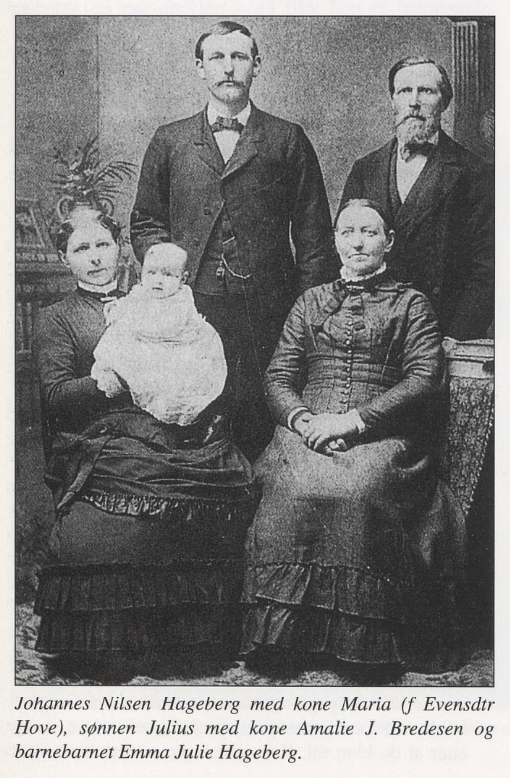
There is so much that is unknown to me about Bertha Thorpe’s family, including why they chose the surname Thorpe upon arrival in the US. I haven’t found evidence that they had lived on a farm of that name in Nes, but there is a bruk called Torp on the Østdal farm. It’s possible some family members worked there before emigrating; although the 1875 Census shows the family living on the bruk called Ramsberg on the Sølsberg farm.
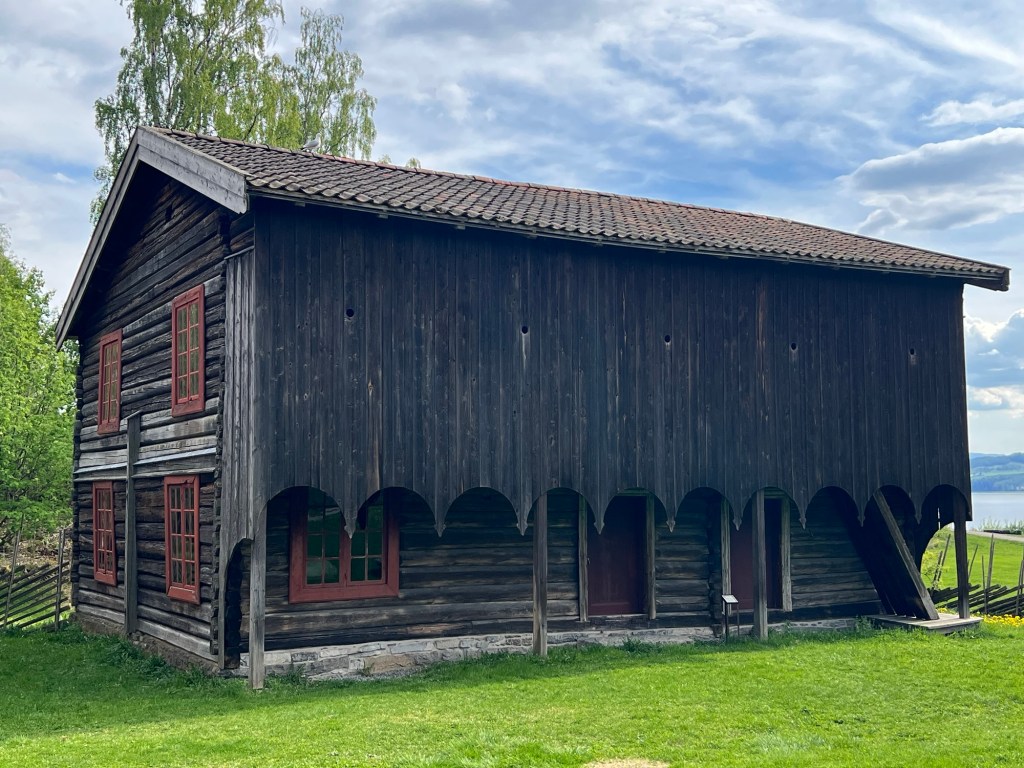
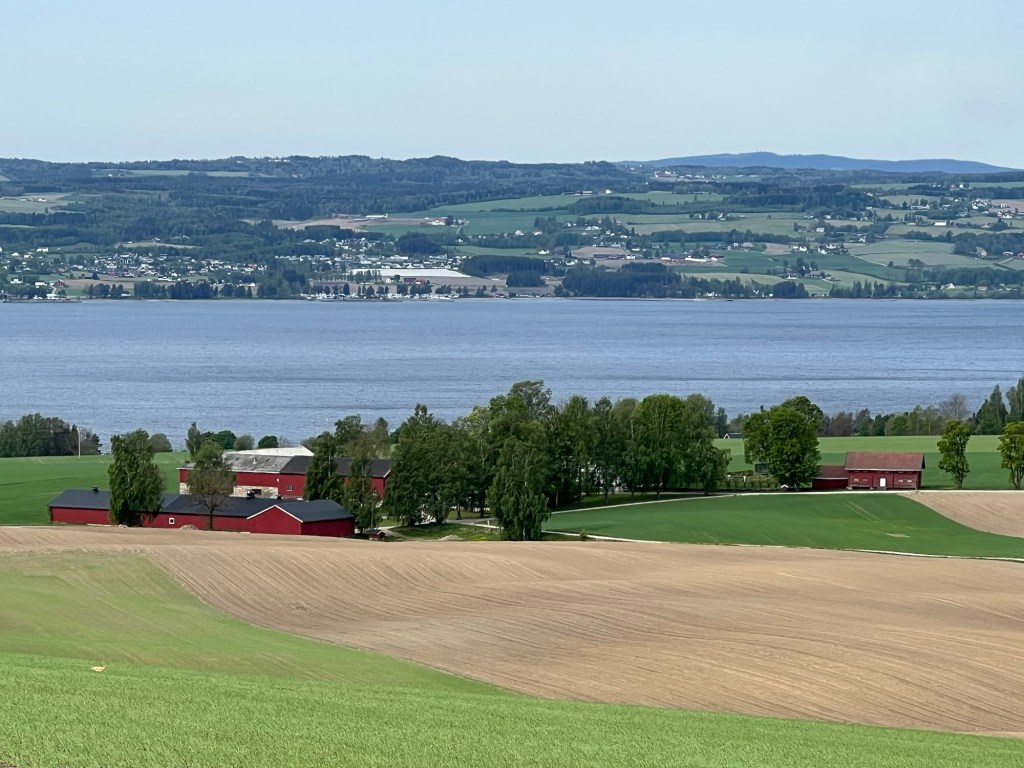
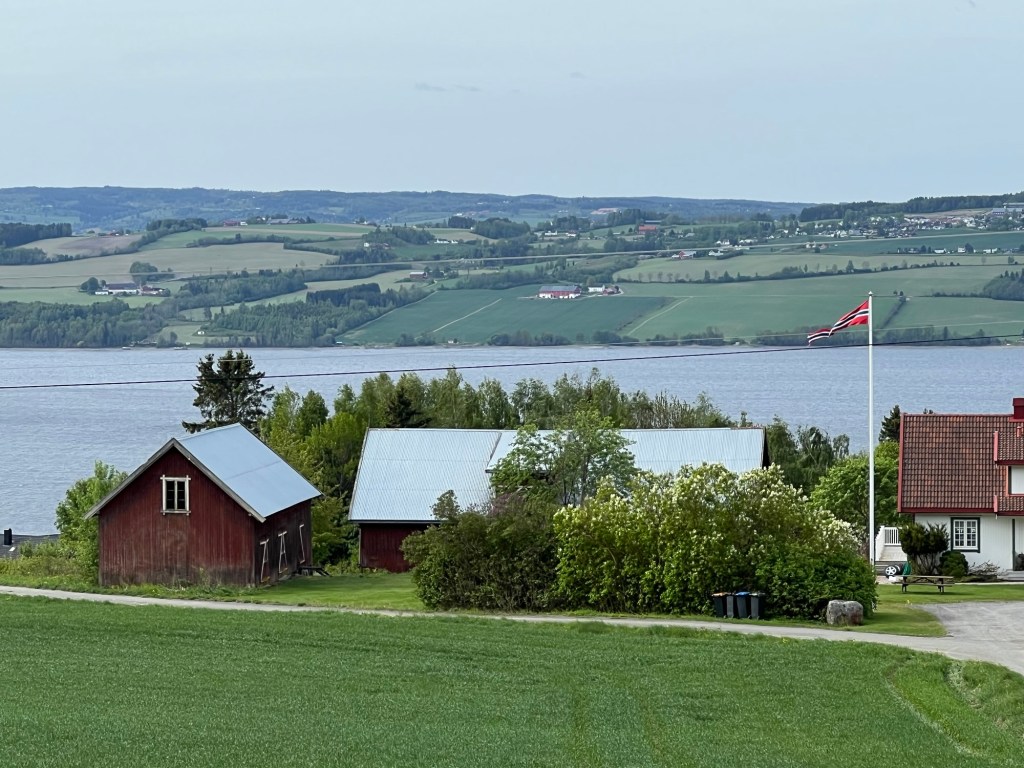
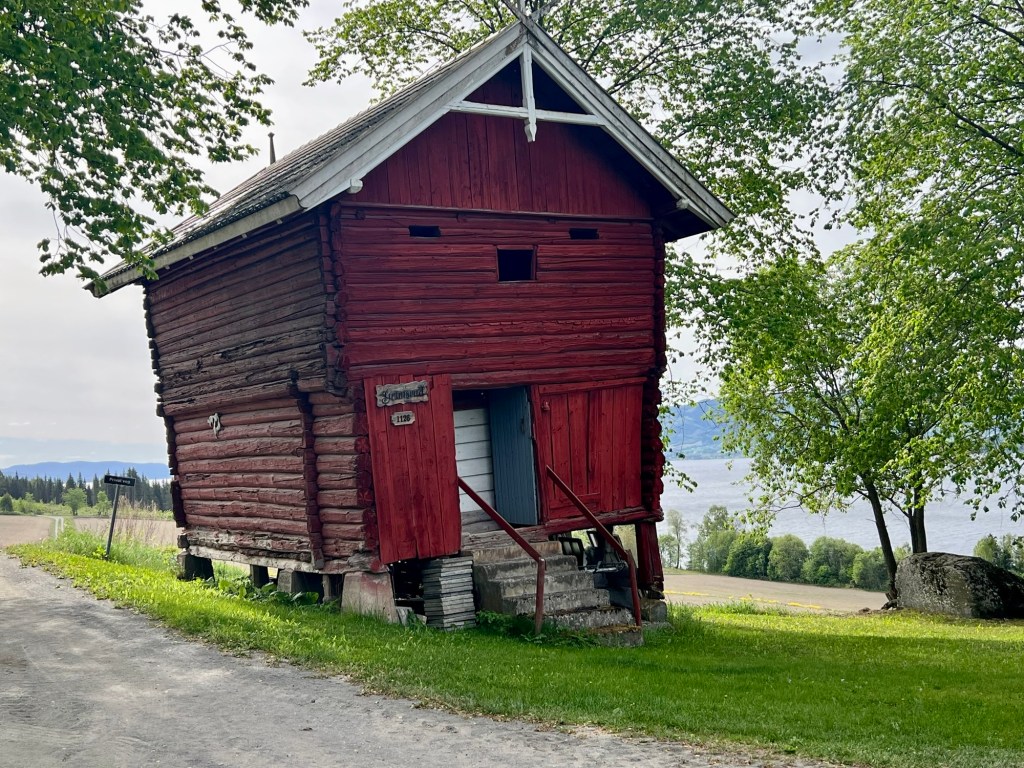
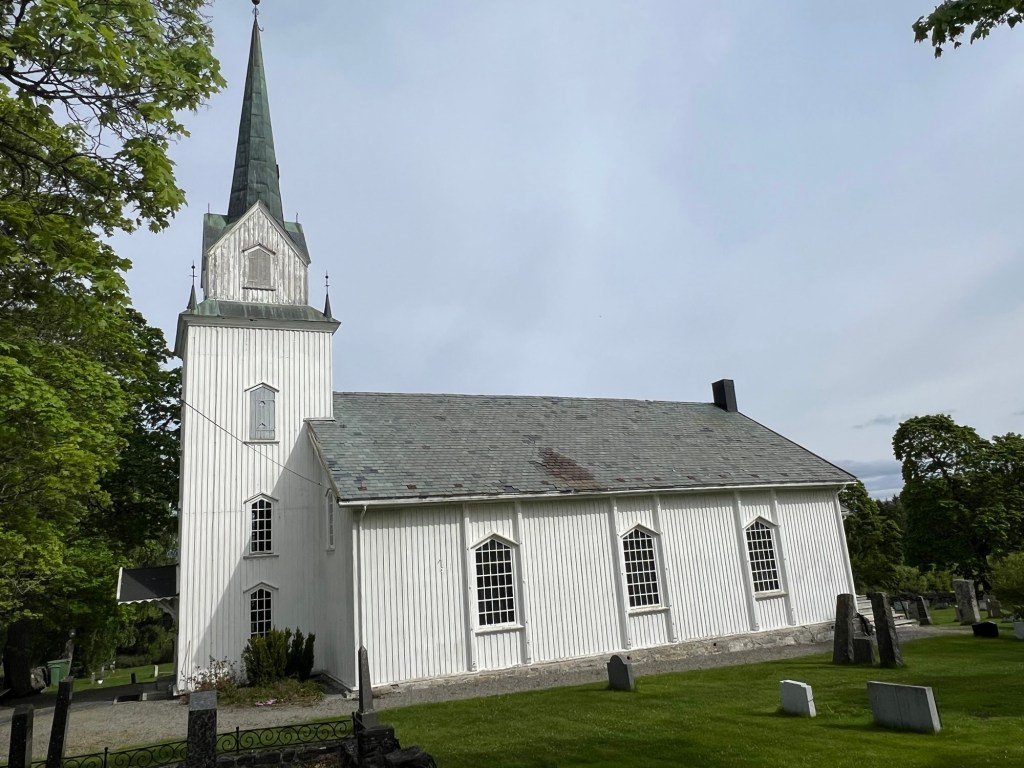
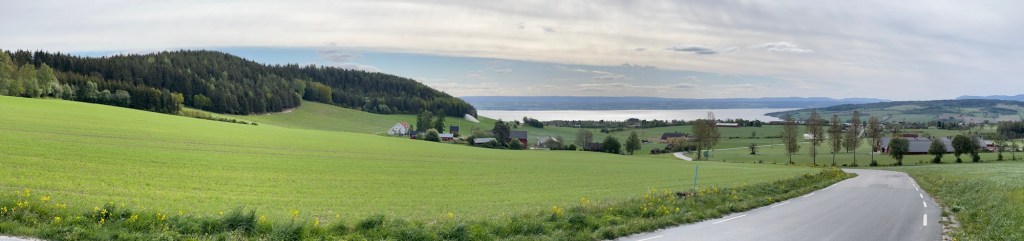
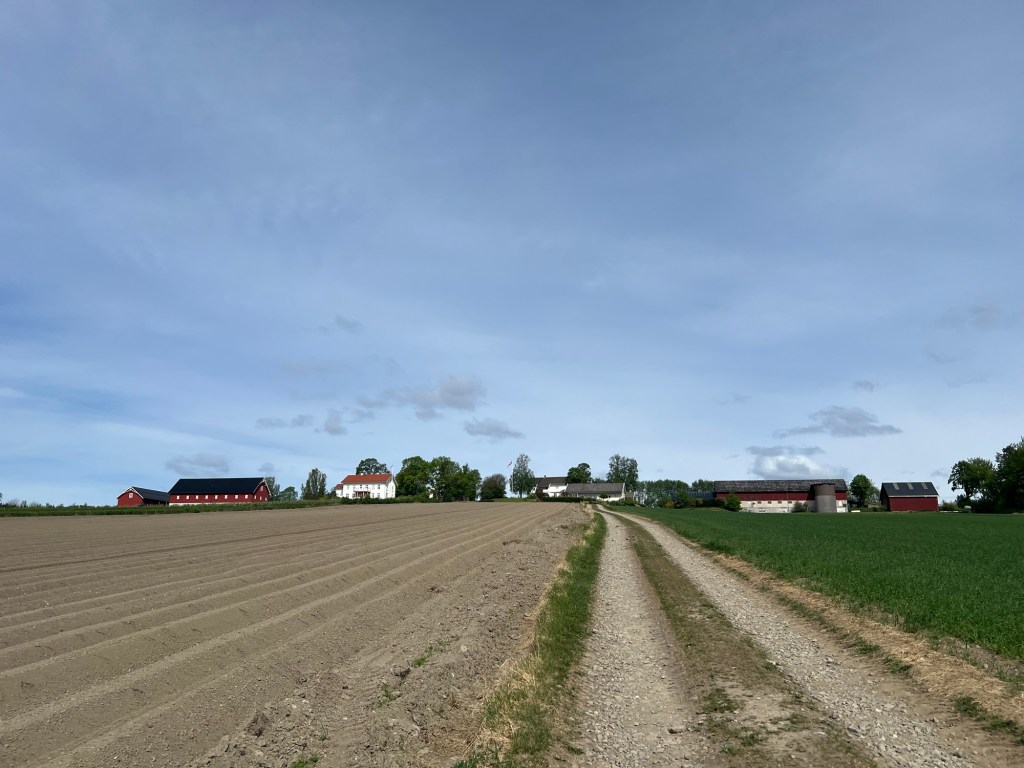
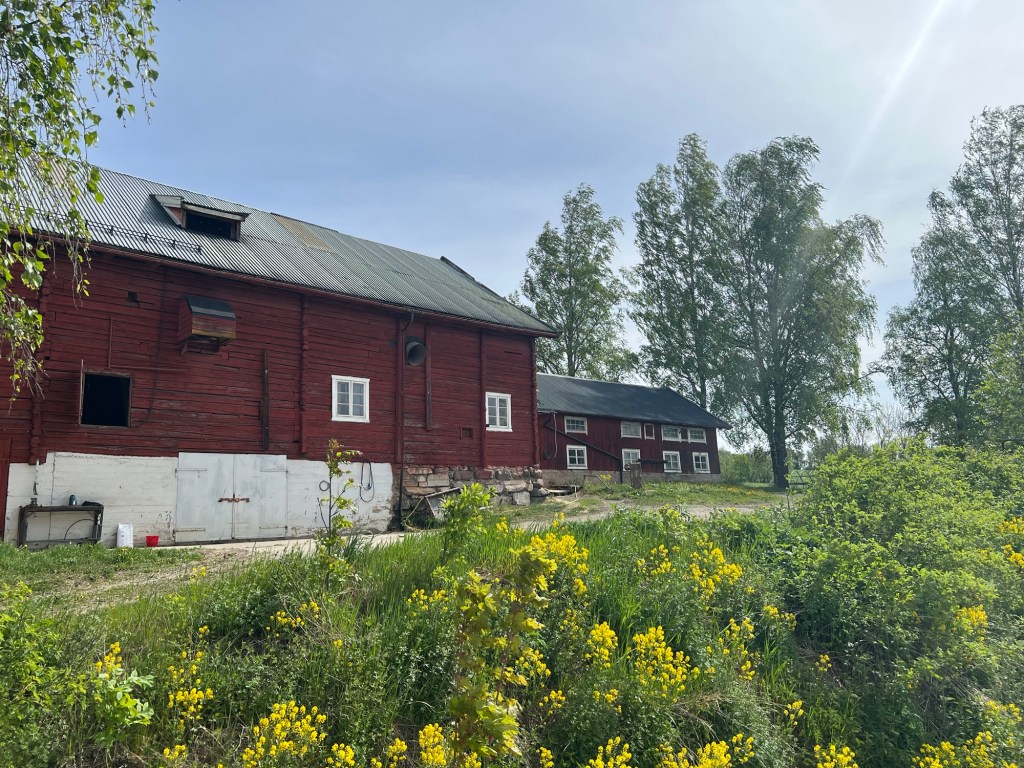
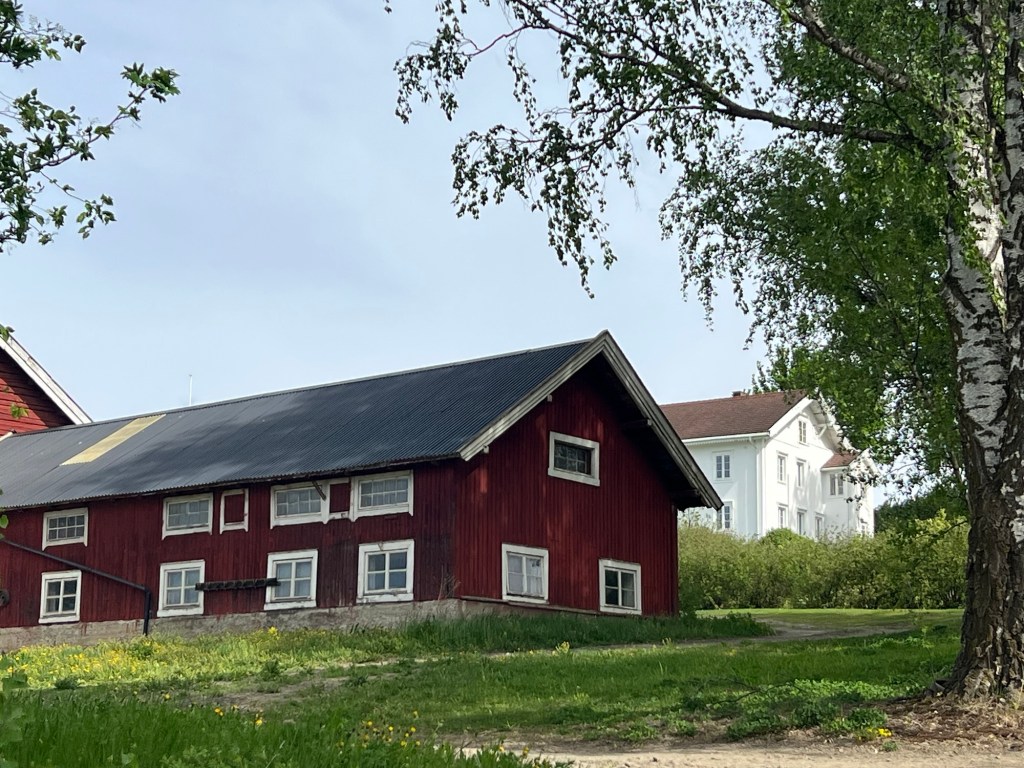
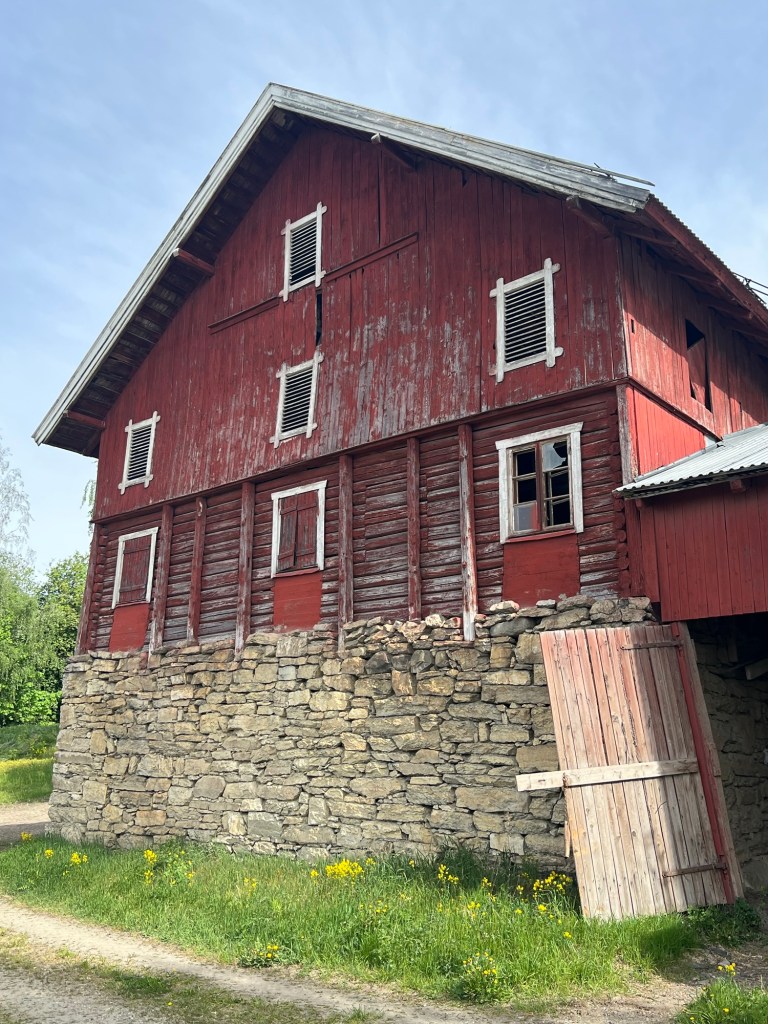
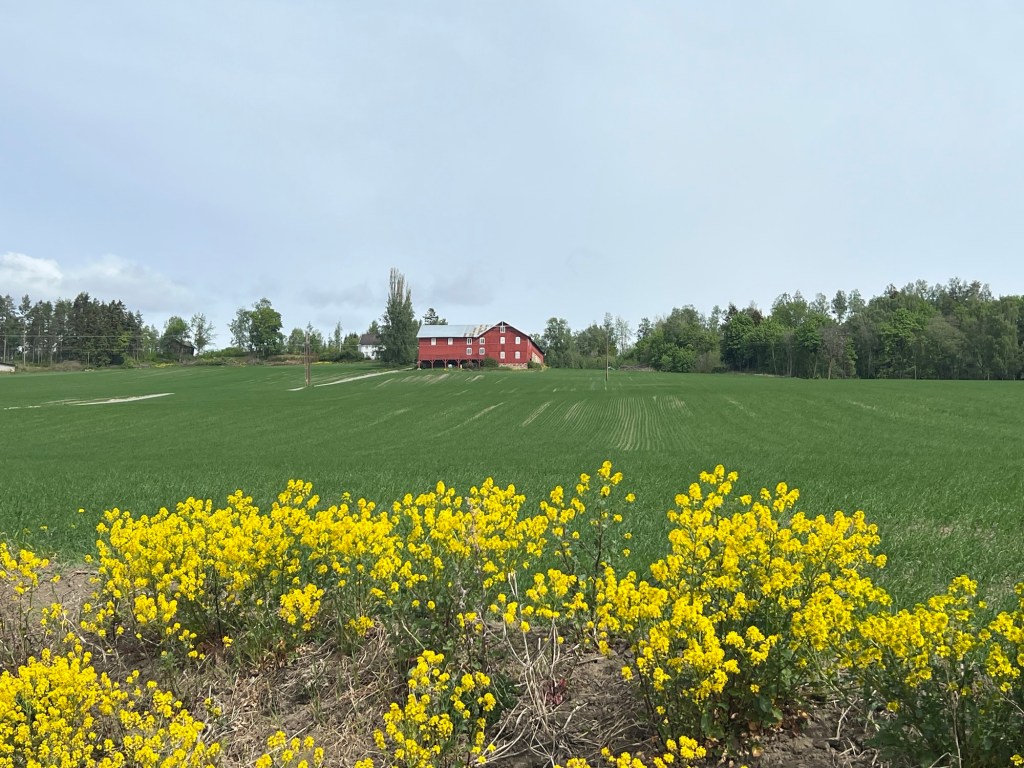
I drove through this area earlier today (May 14, 2025) and took some photos of the countryside. Explorations like this don’t typically yield genealogical insights for me, but they do give me a sense of the place folks came from. Most of the buildings here appear to have been built in the last 100 – 150 years, but it’s not hard to picture what life was like before that. The local economy remains solidly agricultural. If they could see it today, Bertha Thorpe and her ancestors would be amazed by the changes in Norway’s farm technology, but they might be comforted to see that the pace of life in Nes and Helgøya hasn’t changed too drastically.

[1] Agnete’s family remains a mystery to me. Agnete’s parents were Dorte Gulbrandsdatter (1805-1869) and Kristian Hansen (1806-?), who married at Nes Church on December 4, 1830. Agnete was born on the Mølstad farm the following year. By 1835, the family lived at Nordre Østdal and had a son, Johannes (Agnete’s only known sibling). The 1865 Census shows Dorte living with Agnete and Augustinius on Kolden, a bruk (small land holding) under the Bjørnstad farm. Kristian had probably passed away by then; although Dorte is listed in the census as married, not widowed.
[2] Most of the information in this post comes from Gunhild Kolstad’s Nes bygdebok: Bruks- og slektshistorie, volume 2, section 1 (Helgøya, published 1990) and section 3 (Midtfjerdingen, published 2000).
[3] Details about the Johannes Bredesen family come from pp. 121-122 of Nes og Helgøya: Utvandring til USA og Canada i tekst og bilder, published in 2002 by the Nes historielag.


 Deep Roots
Leave a reply to drude007 Cancel reply