
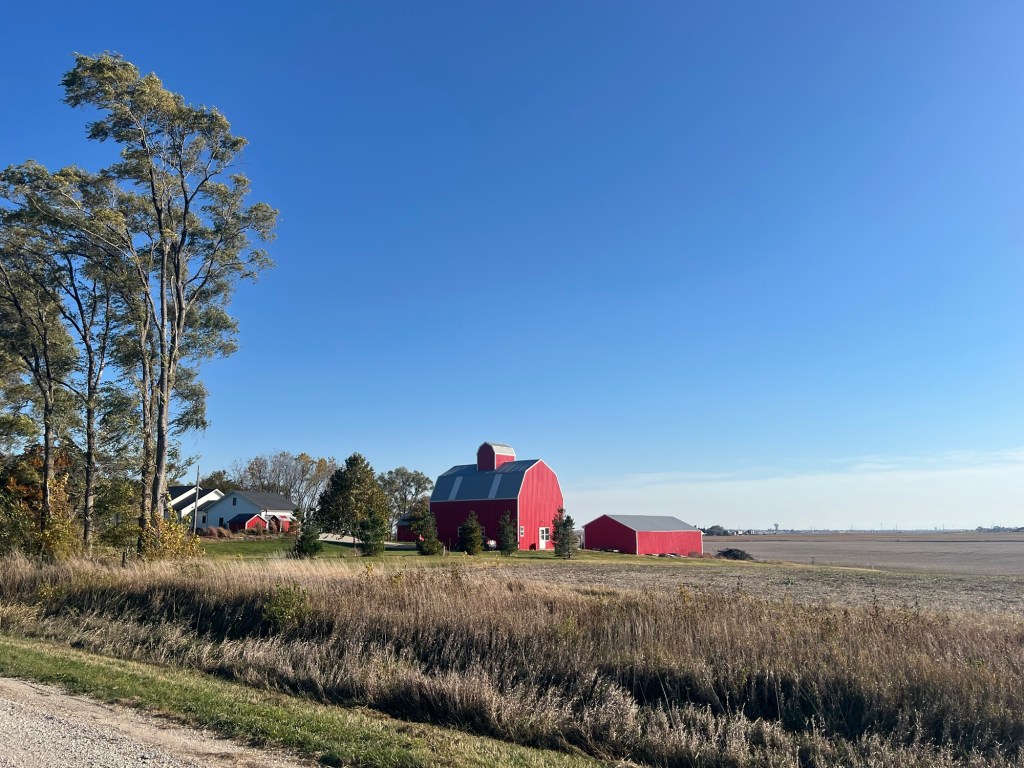
I’m on a kind of pilgrimage through America’s heartland with my trusty companion, my six-year-old Golden Doodle, Spence. This isn’t your average road trip; we’ll be traveling through time as well as space. We have a destination — my brother’s home in Fort Worth, Texas for our family’s off-schedule Thanksgiving (what we call Rudesgiving) — but the destination is only part of the story.

It is good to have an end to journey towards; but it is the journey that matters, in the end. — Ursula K. Le Guin, The Left Hand of Darkness (1969)
In studying my family’s history, I’ve been especially interested in the migration stories. My branch of the family is unusual in the sense that my direct ancestors, by and large, stayed put after initially settling in southern Wisconsin. But this wasn’t always the case for my settler ancestors’ siblings, many of whom fanned out across the expanse of the North American continent. For these family members, the Atlantic crossing was merely the first in a series of migrations.
Alleman, Iowa
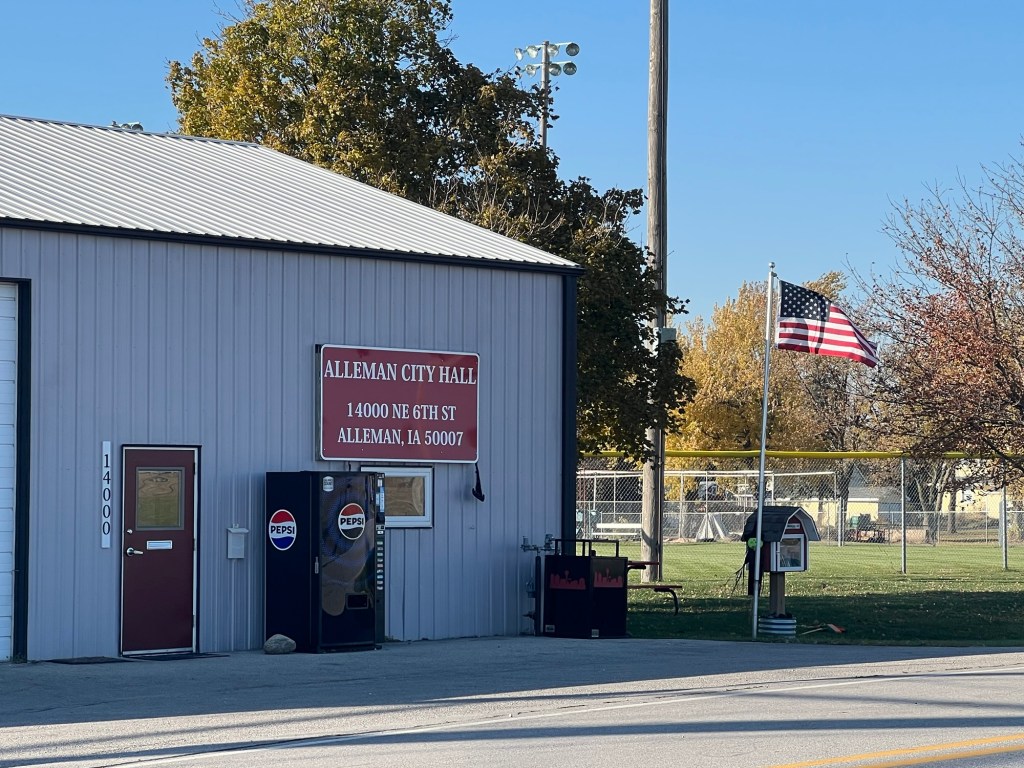
Our first stop on this trip is a rural community called Alleman, located a few miles north of Des Moines, Iowa. Home to only about 400 residents, Alleman is the kind of town you could easily drive past without noticing. But it’s the final resting place of one of my direct ancestors, my 4x great-grandmother, Maria Tontz Hitz, and so we’ll pause here to pay a visit.


Maria Tontz was born in Seewis im Prättigau, a small village in the Davos/Prättigau region of Switzerland in 1800. In 1857, four years after her husband Felix Hitz’s death, Maria sailed from Le Havre, France to New York with three of her adult children: John (Hans), George, and Burga. Her son Christian had arrived two years earlier, and her daughter Elsbeth (my 3x great-grandmother) had arrived in 1848 to join her fiancé, Johann Jacob Reiner. The entire family settled in or near Madison, Wisconsin — the small capital of the newly minted state. Maria lived with her sons John and George on a farm in the town of Burke, just east of Madison.
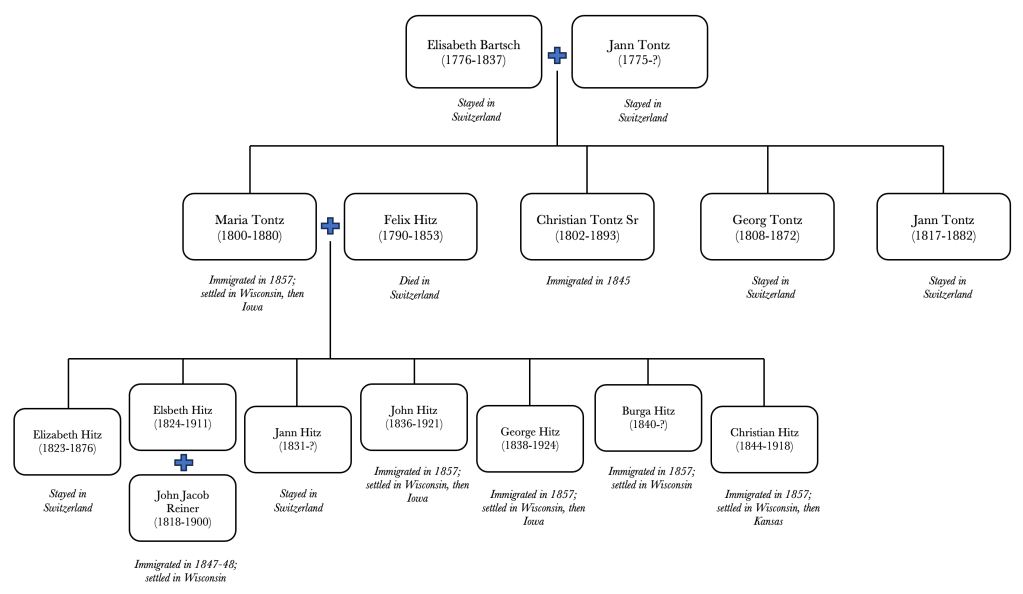
The Civil War swept the Hitz family up like it did so many families of the era. Two of Maria’s sons, Christian and George, enlisted in the Union Army, and fortunately both of them made it home. After the war, Christian headed to Kansas (more on his journey later), while John, George and their families headed to Iowa. Maria migrated to Iowa with her sons around 1870 and lived there until her death in 1880.
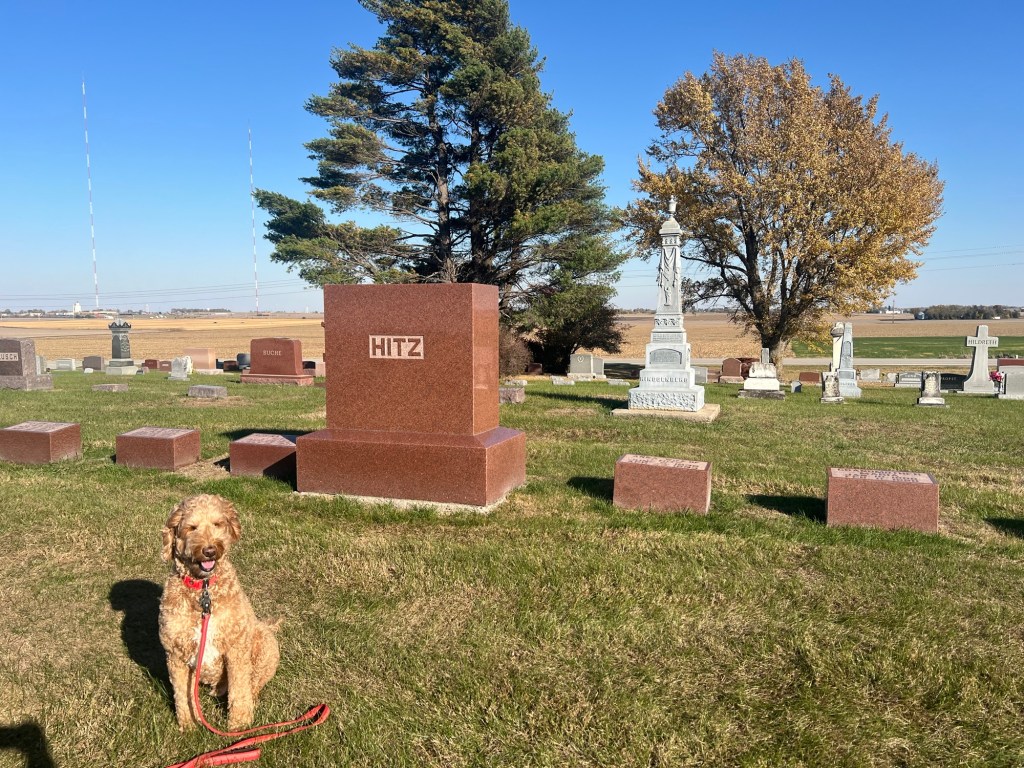
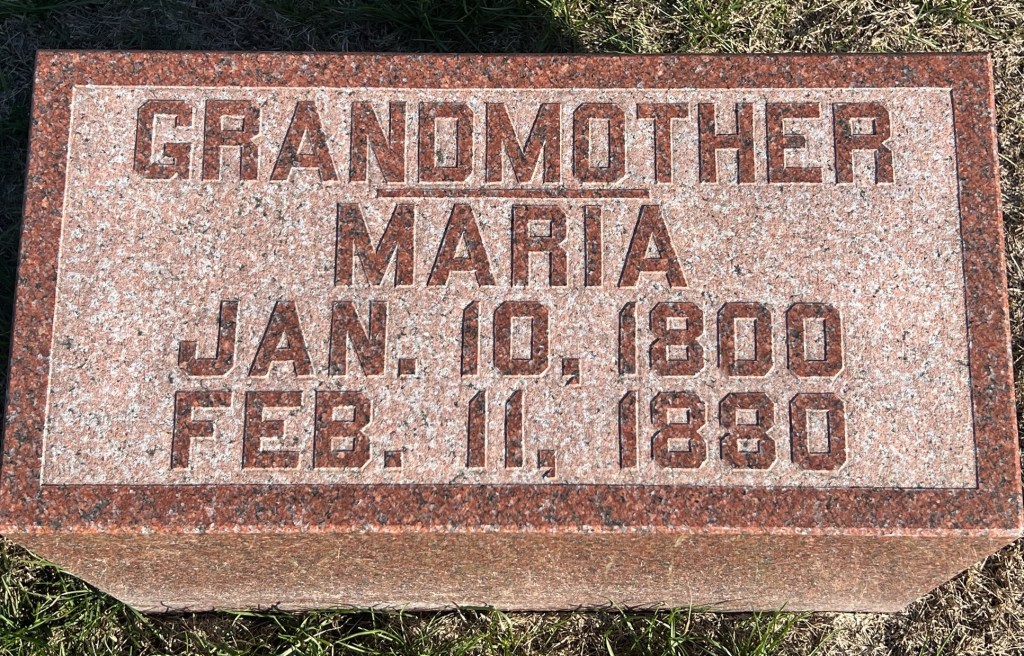
The Hitz brothers most likely moved to Iowa in order secure cheaper land. The Homestead Act of 1862 opened up vast tracts of farmland west of the Mississippi River, which homesteaders could claim if they paid a fee and made improvements to the land. Indeed, a 1937 letter written by Elizabeth Reiner Reinking (niece of John/Hans and George Hitz) notes the price: “They lived on my father’s farm for several years before moving to Alleman, Iowa where he (Hans) bought a farm at $2.50 an acre. This was in Civil War times and later became so valuable.”*

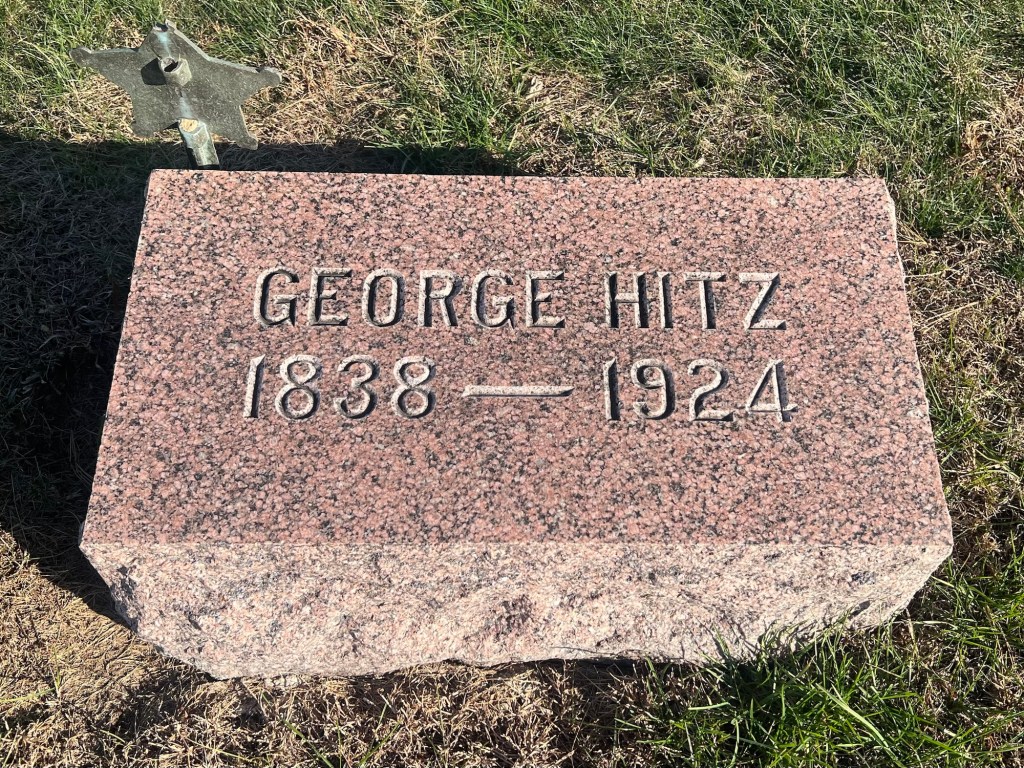
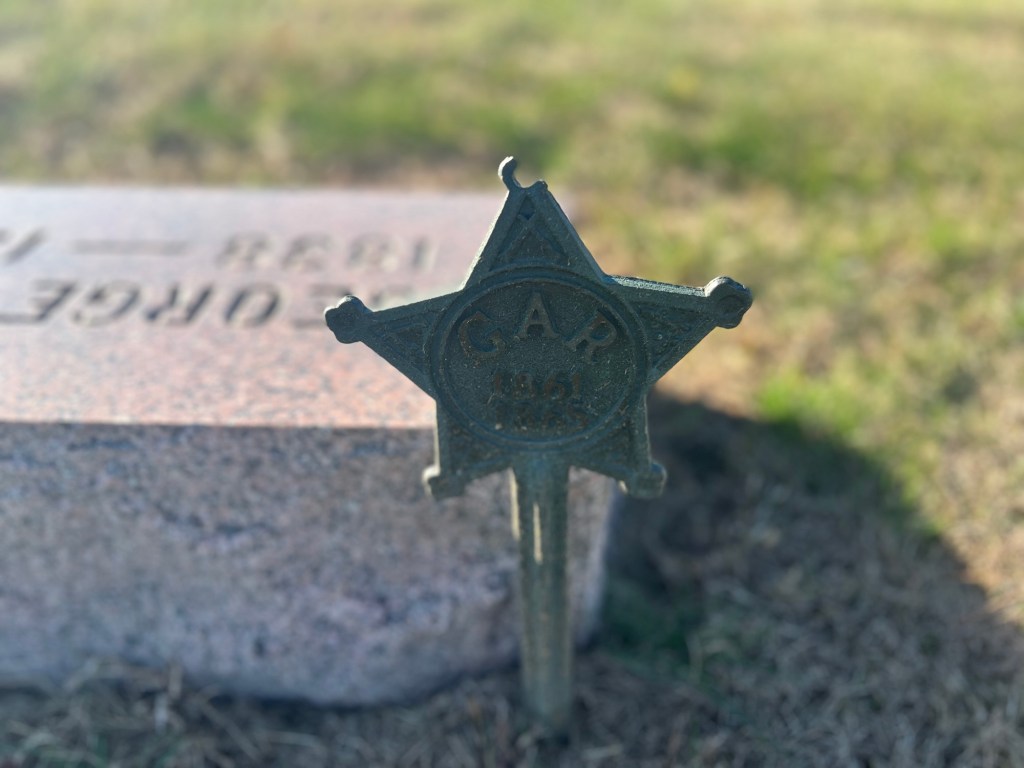
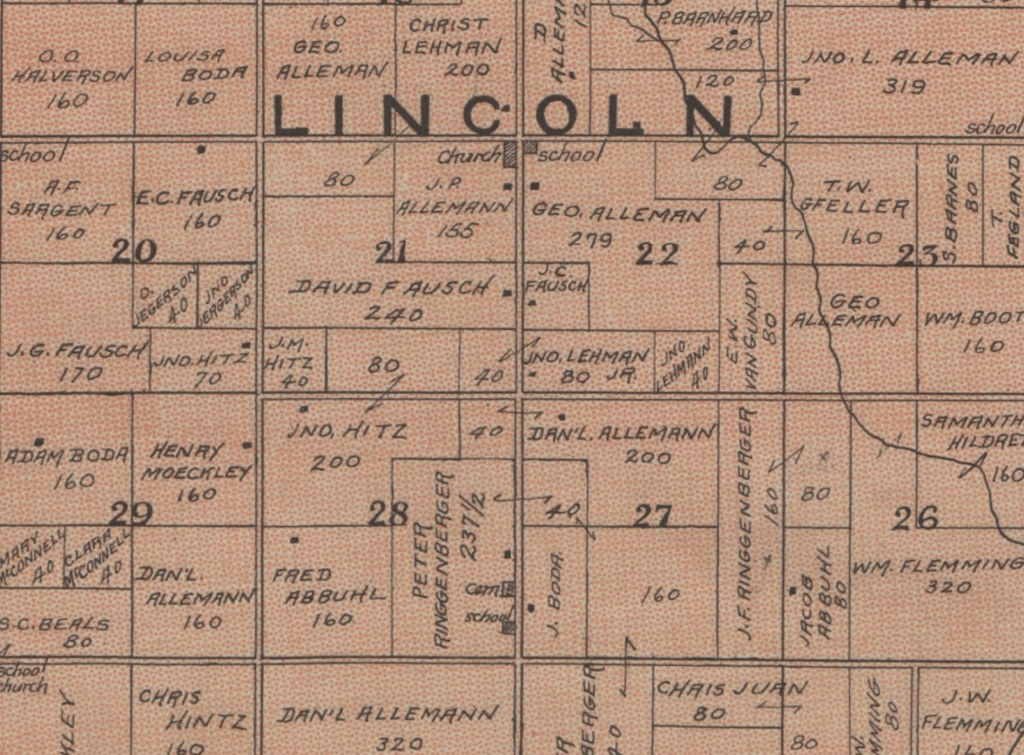
https://digital.lib.uiowa.edu/node/100697)
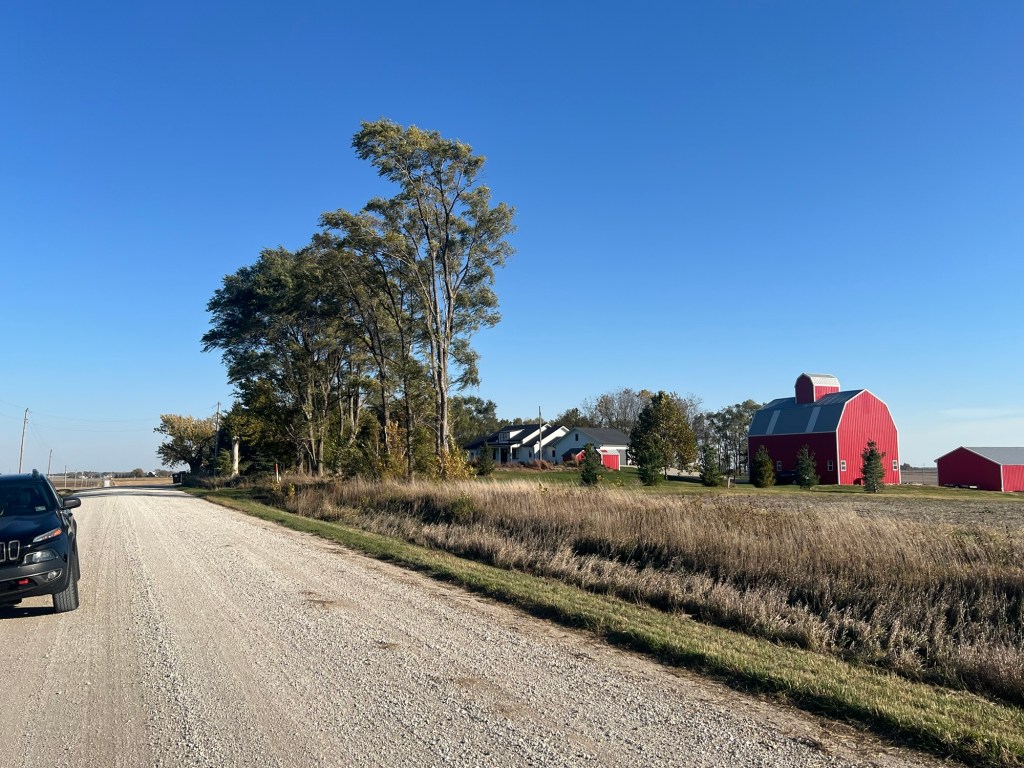
Both John and George ended up having large families, and many of their descendants are undoubtedly living in the area today. It would be fun to meet some of them one day, but now it’s time for Spence and me to get back on the road.
* Much of what we know about this branch of the family comes from the hard work of my great-aunt, Helen Reiner Reed, who conducted extensive archival research and preserved many family documents, such as the letters of her great-aunt, Elizabeth Reiner Reinking (1854-1945). The excerpt quoted here is found on page 30 of Aunt Helen’s genealogy, Ancestors and Descendants of Johann Jacob Reiner and Elsbeth Hitz and Allied Lines, published in 1984.


 Deep Roots
Leave a reply to Samuel Rude Cancel reply