
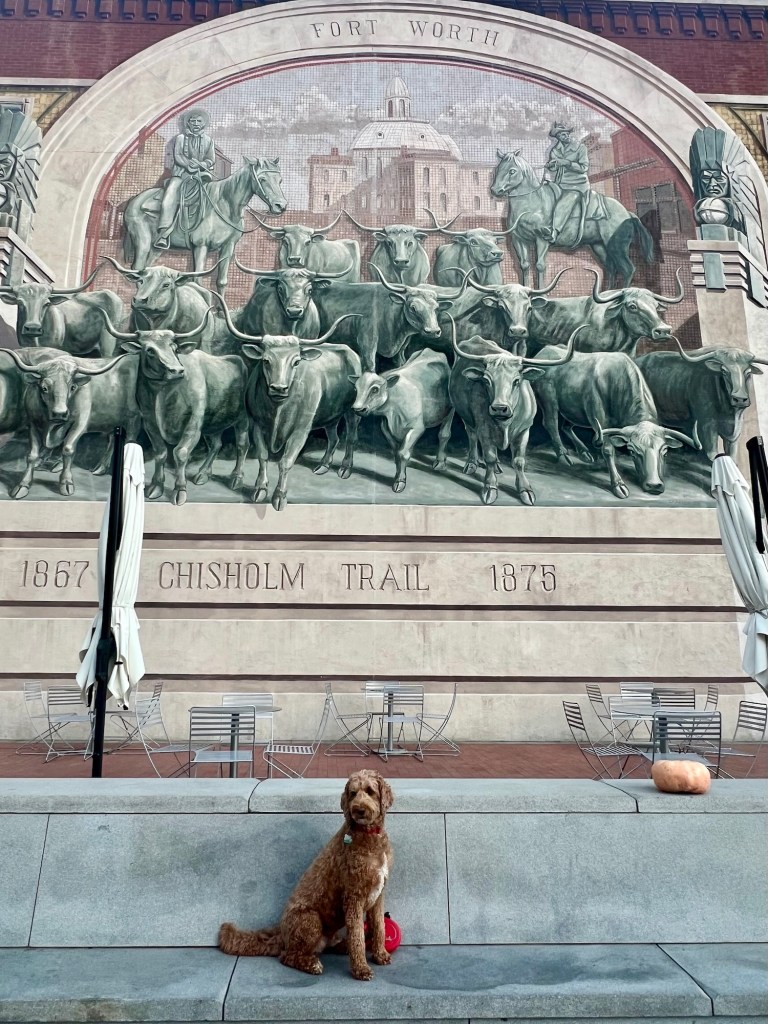
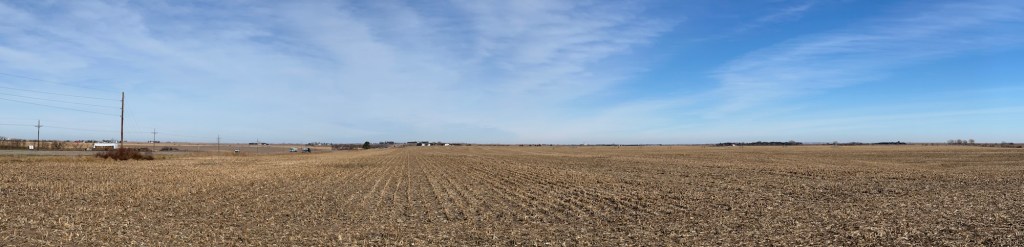
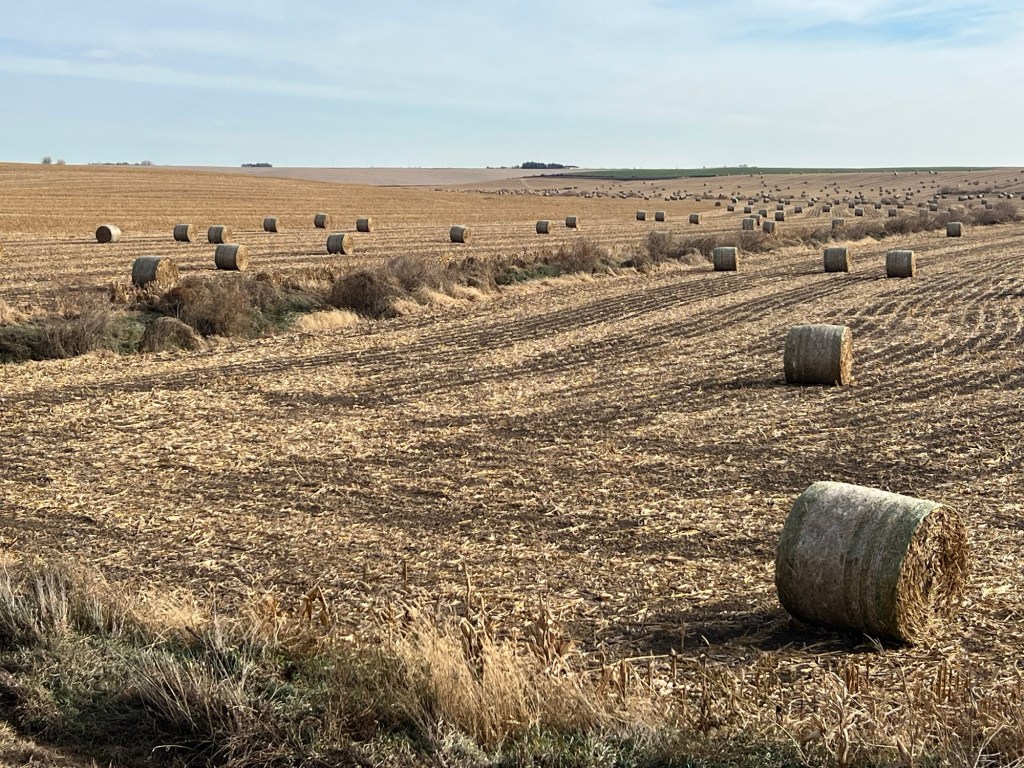
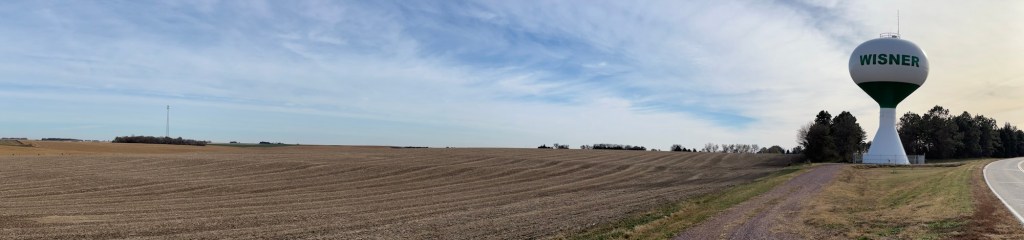
Starting out from Fort Worth yesterday, my canine companion and I traced the Chisholm Trail up to where it peters out near Salina, Kansas. From there we headed due north on a lonely stretch of US 81 into the endless plains of southern Nebraska. Between the Platte and Elkhorn rivers, the terrain changes to gently rolling hills. The farms are so large here that it can be hard to spot a building on the horizon. Post-harvest, these fields could almost be mistaken for sand dunes. Eventually we reached our destination, a tiny town called Wisner.
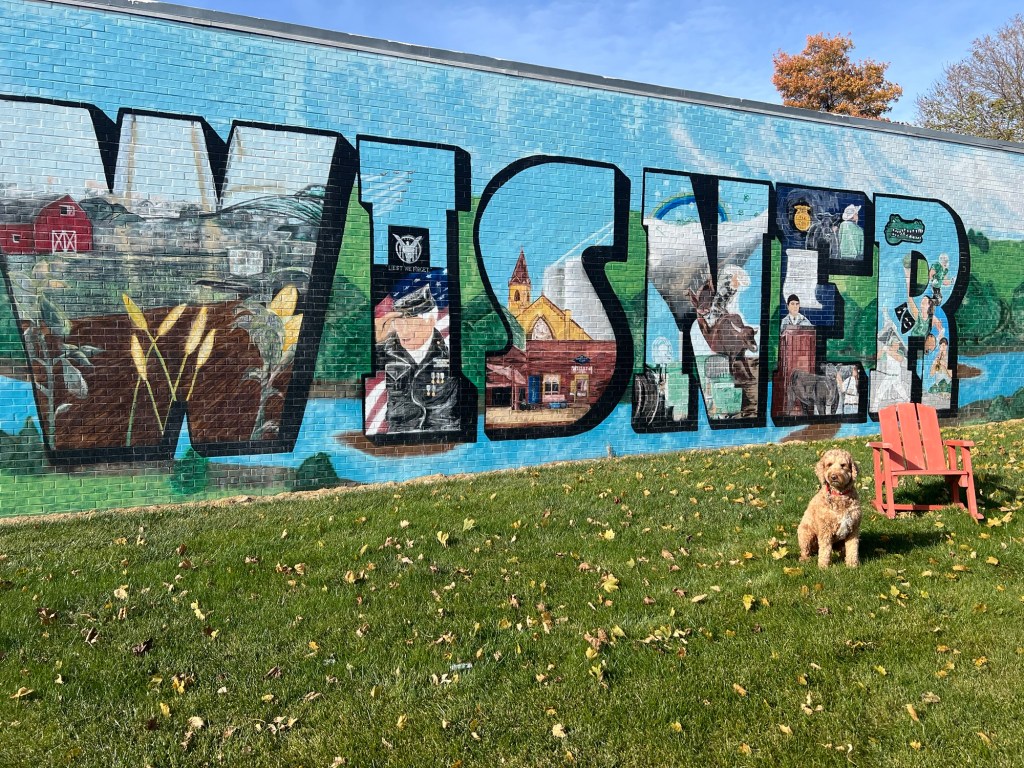
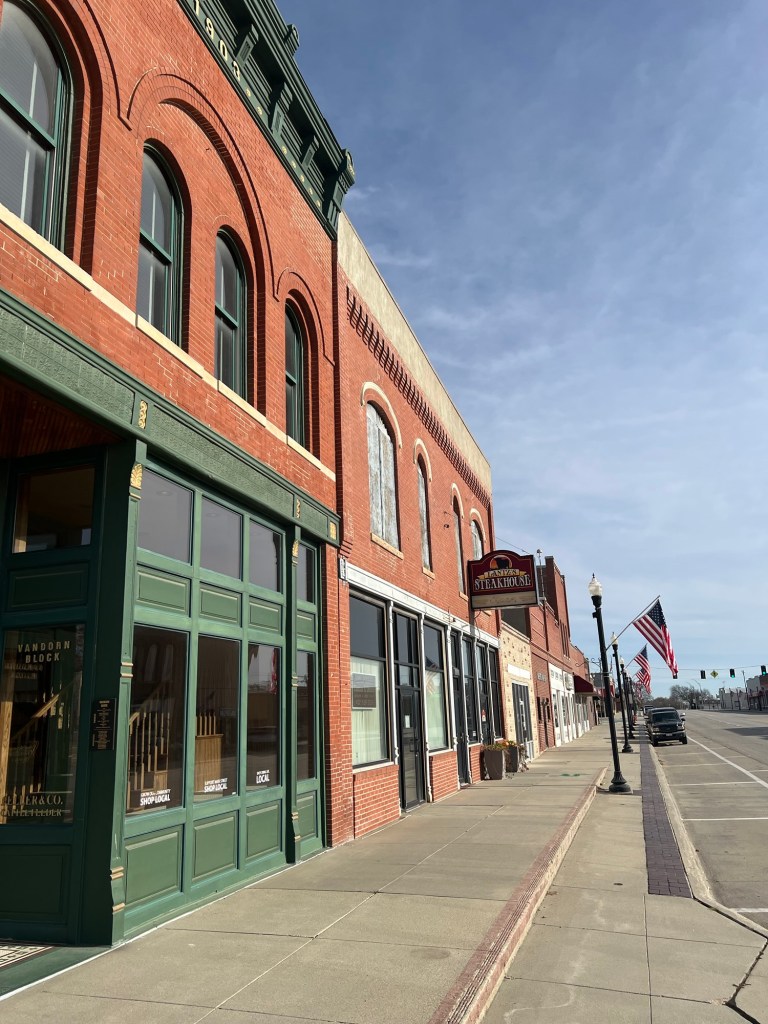
Walking along Wisner’s quiet streets, my dog Spence looks at me as if to ask, “Why are we here?” You may be wondering the same thing. To explain, I need to take you back to the early 1870s.
My great-great grandparents, Albert Jens Johnson and Julia (Guri) Anne Torbleau, were part of the first generation of my family to be born on American soil (see Chart B on this page). Albert’s parents had come to Deerfield, Wisconsin in 1850 (see this post) and Julia’s had come in 1849 (see this post) — both couples originating in small communities in Western Norway. Albert and Julia came of age in the aftermath of the U.S. Civil War, when America’s westward ambitions were reaching their zenith. Steeped in this culture of western expansion and growing up on their parents’ stories of forging a new life in a new land, is it any wonder that Albert and Julia dreamed of doing the same?
A family history written in the 1970s by Aunt Glenrose (Albert and Julia’s youngest child) records that Albert and Julia met at one of the socials or house parties put on each weekend by the community’s Norwegian residents. The 1870 Census shows Albert and Julia still living in their respective homes. Albert is 17 and listed as a carpenter’s apprentice. Julia is 15 and listed as “at home”, though Glenrose’s history states Julia worked in the household of Dr. Fox in her youth.
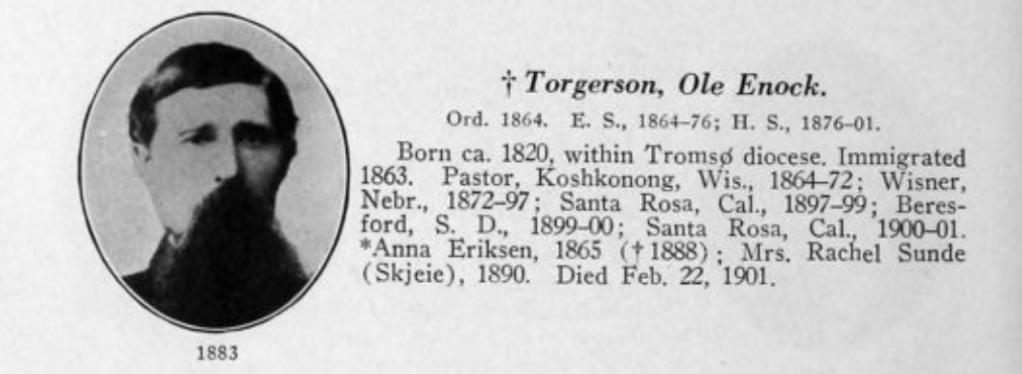
According to a newspaper article from the Newman Grove Reporter, a large group of Norwegians left Deerfield, Wisconsin for eastern Nebraska in 1872, traveling together in a convoy of prairie schooners.* They comprised “a train of ten wagons, seven horse teams and three ox teams, and arrived at Wisner, Nebraska on June 25, 1872.” The group included Ole E. Torgerson, a Lutheran pastor in the Haugean tradition, who “had great influence not only as a spiritual teacher but as a business man, advisor and promoter of the welfare of the pioneers…” I’m inclined to believe that Albert Johnson was among the pioneers who joined this wagon train.
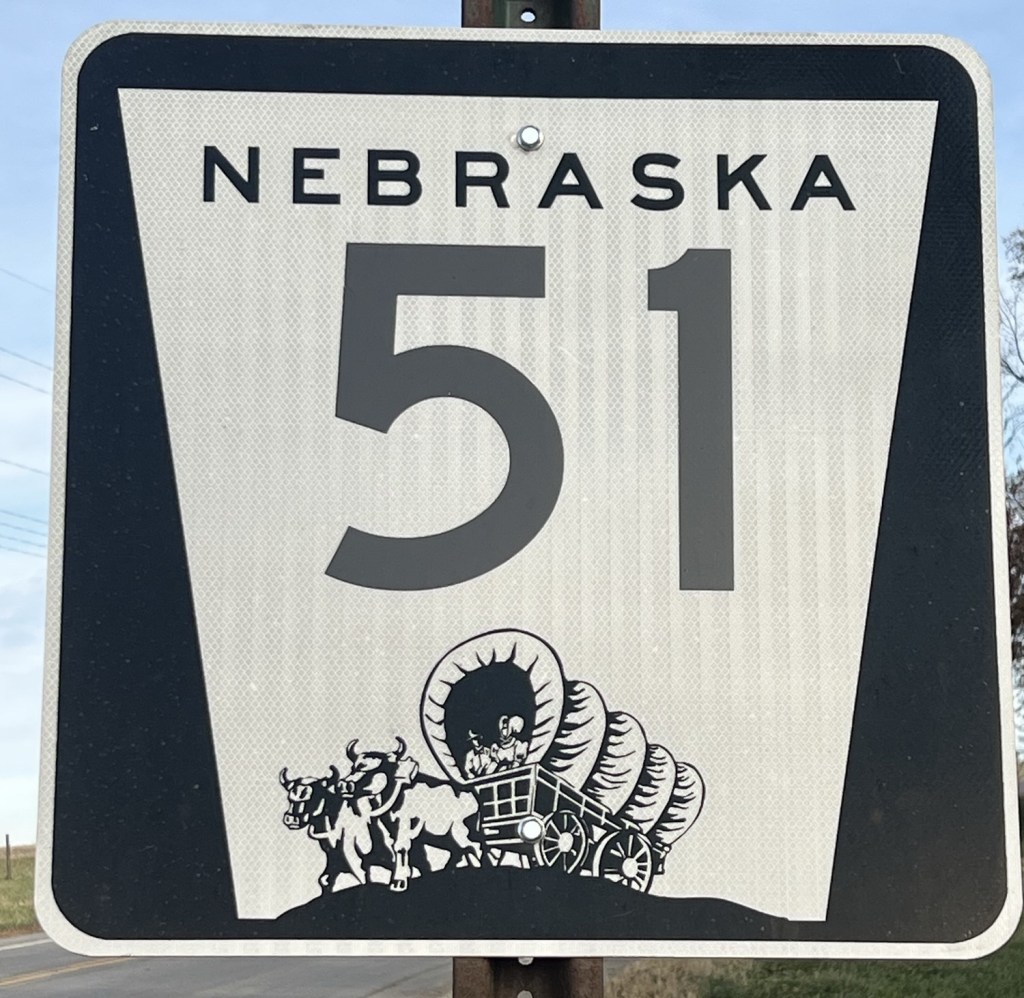
Glenrose wrote that “[Albert] went to Wisner, Nebraska and worked as a carpenter. He built a house and wrote for my mother to join him.” They married soon after Julia arrived, on December 7, 1873, at the ages of 20 and 18, respectively. My guess is that Albert accompanied Rev. Torgerson and the others from Deerfield in 1872 and that Julia arrived the next year, perhaps via the newly built railway. Evidence linking Albert and Julia to the group of pioneers in the newspaper article is slim: it’s simply that the timing seems too perfect to be a coincidence, and the man who officiated Albert and Julia’s marriage in Wisner, Nebraska was none other than Ole E. Torgerson.**
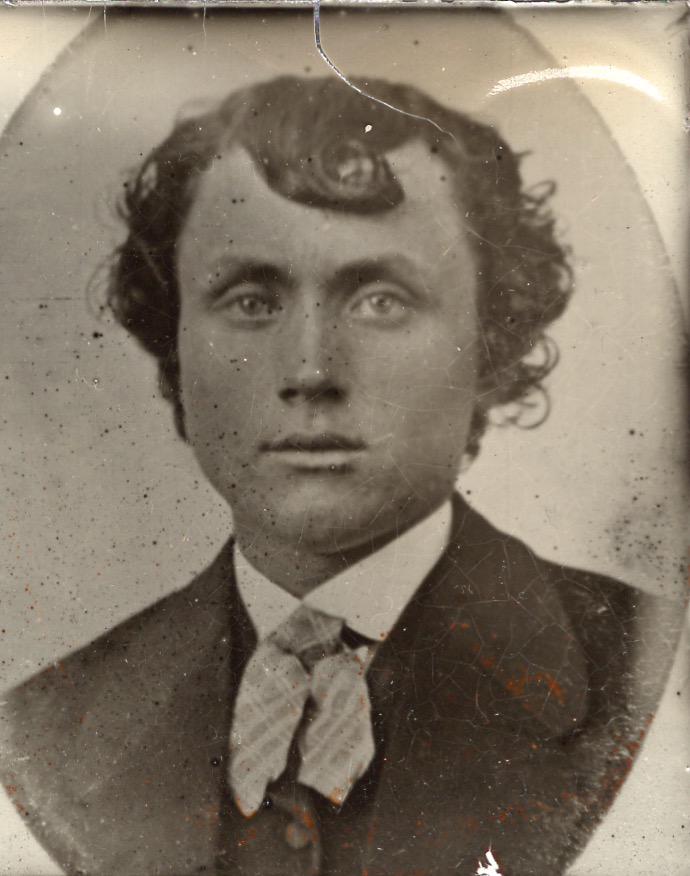

Albert and Julia only lived in Nebraska for six or seven years (1873-1879) and then they packed up and headed back to Wisconsin. Glenrose’s history provides the best information we have as to why:
“The varying prairie weather made crop prospects a gamble every year. Some years were dry and the crops seared in the fields, while strong winds across the prairie never ceased blowing dust. Farms had to be spread miles apart in order for a man to have enough acreage to make a living. With nothing but a sea of wheat between the houses, loneliness was a hardship. Hordes of grasshoppers were always a problem, some years being worse than others. They devoured crops and gardens, stripping the prairie and many farmers were forced to desert their holdings. Albert and Julia Johnson, ruined by a plague of grasshoppers were forced to return to the home of their parents” (Glenrose Johnson’s family history, pp. 7-8).
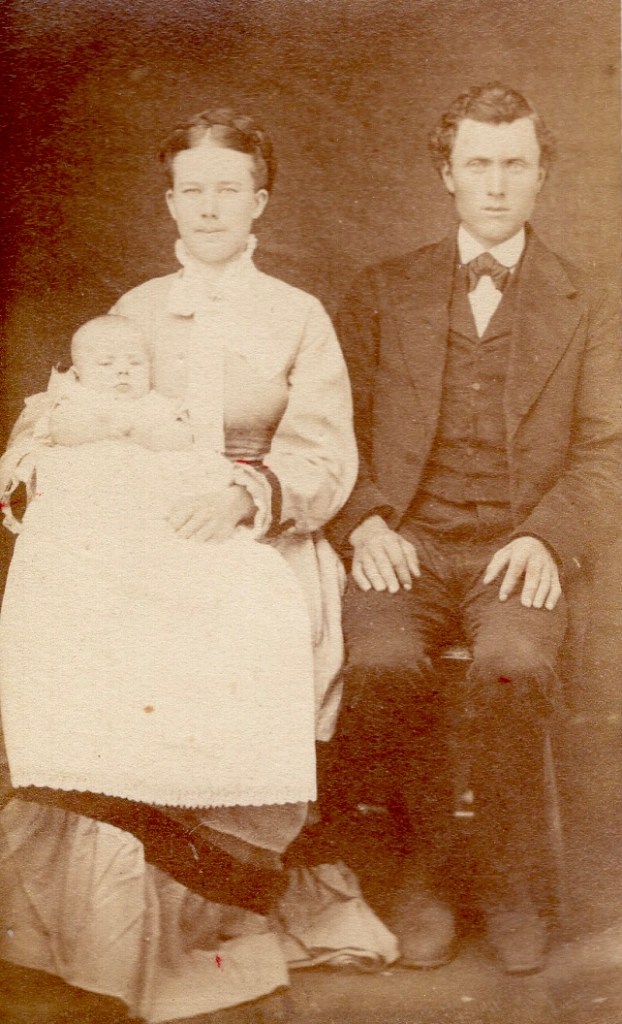
Glenrose’s explanation tracks with historical accounts. An unimaginably large swarm of grasshoppers wreaked havoc across multiple states in the summer of 1874. Nebraska farmers were revisited by smaller swarms in ‘75 and ‘76 (see this link). After having their crops decimated several seasons in a row, Albert and Julia had little choice but to return to Wisconsin. After all, they now had little ones to consider.

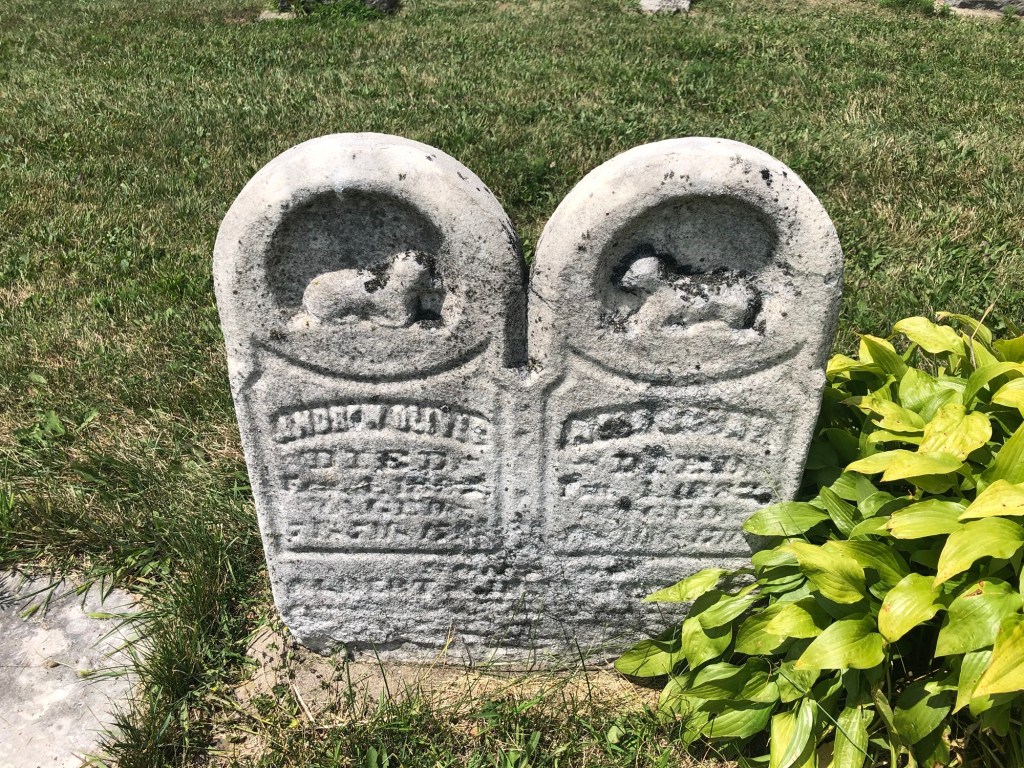
Julia had given birth to their first three children in Nebraska: Andrew, Nels, and Art. Sadly, of these three, only Art would grow to adulthood. A couple years after returning to Wisconsin, both Andrew and Nels came down with a severe case of measles (what Glenrose calls “black measles” in her history). They died within hours of each other on the same day, February 4, 1882. Andrew was six and Nels was four. The family was devastated.
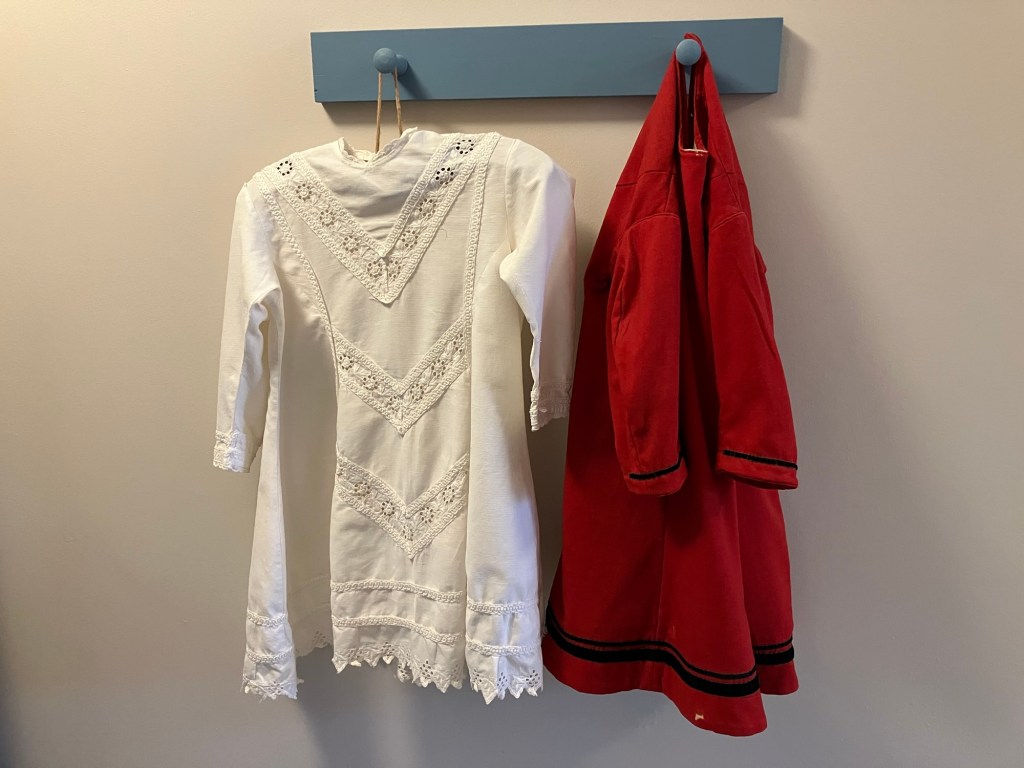
Despite Albert and Julia’s hardships, Albert’s sister Carrie and her Danish fiancé Jens Kringel decided to try their luck in Nebraska. They left in 1881, married, and had their first two children in Wisner. But within five years the Kringel family retreated to Iowa where Jens’s relatives lived. Farming the Nebraska prairie in this era was clearly a struggle.
Albert and Julia went on to be modestly successful farmers and small business owners in Wisconsin, raising eight more children there. Many of these children, like my great-grandma Jessie, would grow up to have large families of their own. Tragically, the Johnsons’ fifth child, named Andrew after their firstborn who died in 1882, passed away at age 25 from a ruptured appendix. Andrew and his brother Art had been keen baseball players in their youth.
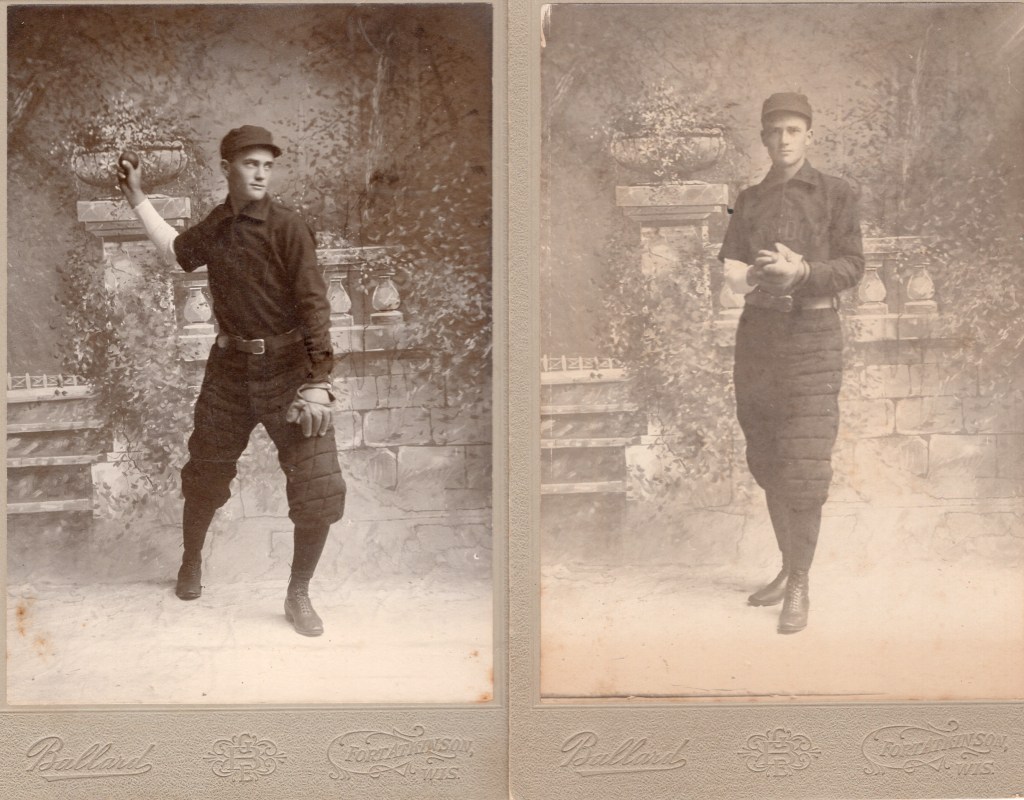
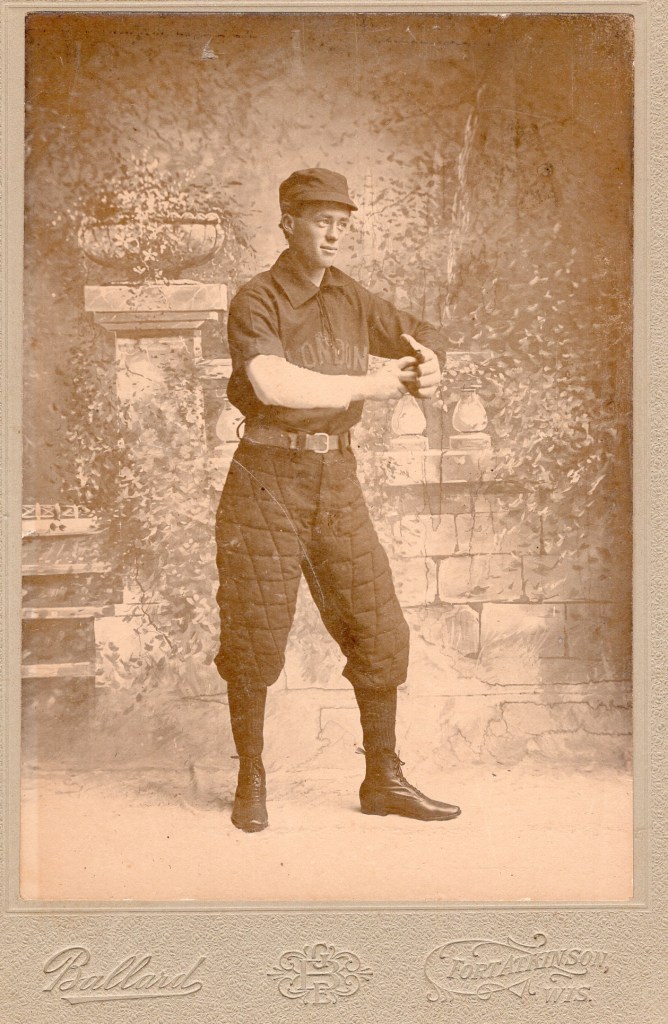
Even though the family had moved back to Deerfield when he was a child, Art ended up marrying Isabel Doxstad — daughter of Ole and Oline Doxstad, who had been part of the same group of Norwegians to settle in northeast Nebraska. So it would appear that despite the Johnsons’ return to Wisconsin, some Nebraska ties were maintained.
When I look at my ancestors’ faces, staring out from old photographs, I see a kind of quiet determination, a resolve to make the best of their lives, no matter what destiny had in store.
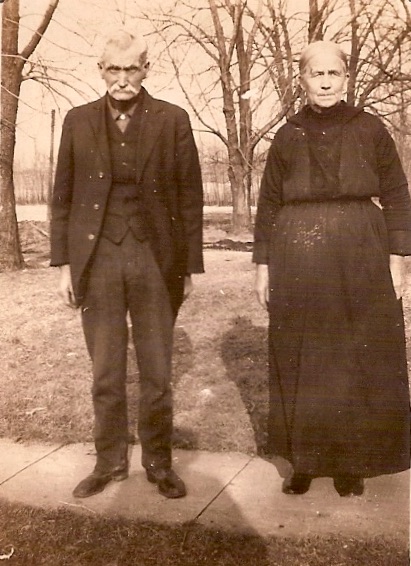
My great-great grandpa Albert Johnson liked to compose poetry, and you can hear this determination to stay positive in his verses. As the sun sets here on the prairie, I leave you with one of the poems that Albert’s daughter Glenrose preserved in her family history. This is “Once in a While”:
Once in a while there comes a joy
Which makes the tired old man a boy
And brings to the patient mother's eyes
The light of a schoolgirl's glad surprise.
Some little pleasure, too sweet for words
Like the June day song of the summer birds.
Then the bitterness of the life we know
The cares, the trials, the sting of woe
Are all forgotten, and glad we smile
Once in a while.

Once in a while life lifts its mask
And laughs us out of the dreary task
And shows us a world for a little time
That is fairer far than a poet's rhyme;
For the sunshine's out and skies are blue
And joy drips down like the morning dew
And never an old man grumbles low
Of aches and pains that are his to know
For the hours are dressed in their richest style
Once in a while.

Once in a while the cares depart
And peace comes into the aching heart
And the old roof rings with a song of glee
And life is glad as it ought to be.
Then we who have struggled and grieved and wept
Rejoice to think that the faith we've kept.
Our friends are near and this life seems good
And much we have doubted is understood,
For we glimpse the goal of the rugged mile
Once in a while.
* History of the Pioneers. Halderson, H. (1930, April 2). Newman Grove Reporter. https://www.familysearch.org/en/memories/memory/181576246
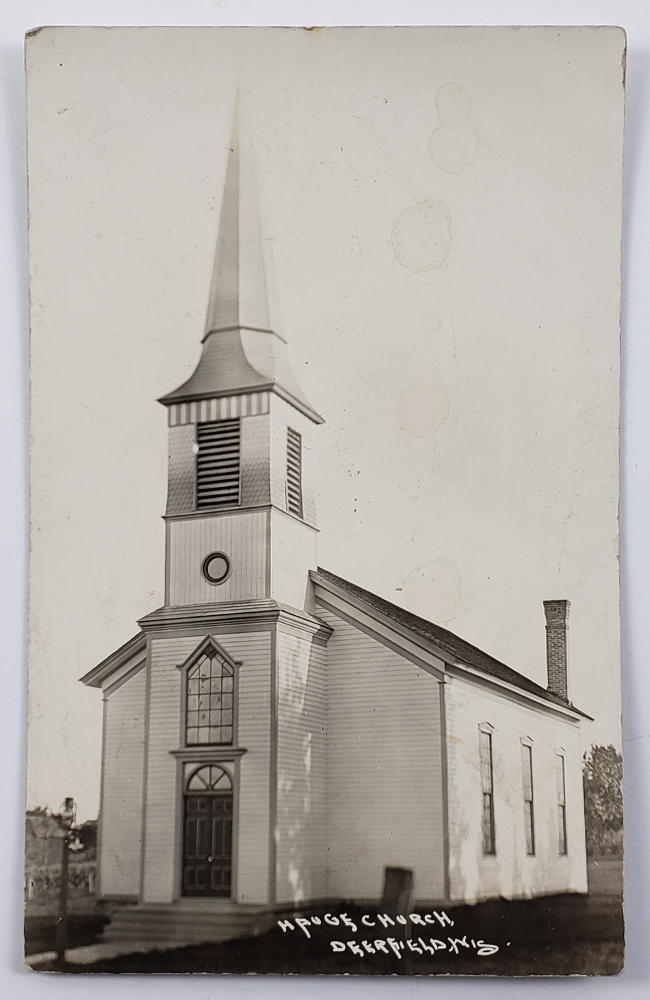
** I think it’s also significant that Albert’s parents chose to be buried in the Hauge Cemetery outside of Deerfield, Wisconsin. We know that Ole and Malene Johnson were early members of the Scandinavian Methodist congregation in neighboring Cambridge (now called Willerup Methodist — see this post), but their choice of cemetery also suggests a tie to the Hauge Church. Haugean Lutheranism was a popular movement within Norway that gained momentum around the same time as mass migration to the U.S. (for more detail, see this article). Haugean Lutherans emphasized piety, thrift, and diligence, and they distanced themselves from the Norwegian State Church, whose formality they believed robbed people of authentic spiritual experiences. The first Norwegian Lutheran minister in the U.S. was a Haugean named Elling Eielsen, who founded a church — and later an entire synod — at the Jefferson Prairie Settlement (Rock County, Wisconsin) in 1846. Eielsen’s impact on the surrounding Norwegian-American settlements was profound (see this link). A Haugean congregation began in the Deerfield area during Albert and Julia’s childhoods. A church building was constructed in 1862 where the Hauge Cemetery exists today (Hwy 12 & 18), which was later relocated to downtown Deerfield. The man who married Albert and Julia in Nebraska, Ole E. Torgerson, was an ordained lay preacher from this congregation.

 Deep Roots
Leave a reply to Notes from the heartland (Part 5: Home) – Deep Roots Cancel reply