

I am home now after my road trip, a road trip long enough to permit some reflection. If you’ve read my previous posts, you won’t be surprised that I’ve been reflecting on our place in history. We Americans are living in a challenging time right now in terms of historical storytelling. Challenging but not unprecedented. In the 1950s, during the Red Scare, Americans who dared point out inconvenient truths about the nation’s historical inequities were labeled socialists, communists, or un-American. Today the ruling faction in Washington and in many states has decided that certain stories about America’s past shouldn’t be told, at least not in their entirety. Historical markers, national museums, and chapters of school textbooks are being revised in the belief that if such stories are fully told, young Americans will grow up hating their country.
I have a different view. Mine is that if young Americans don’t have a clear sense of how events unfolded, they’ll grow up loving an image of their nation that doesn’t match reality. They won’t actually have an opportunity to fall in love with America, only a whitewashed or romanticized version of it. I believe, moreover, that without sharing the breadth of our collective experiences — even those experiences that are uncomfortable or contradict our stated values — our history doesn’t make much sense. And if we can’t make sense of our past, what hope do we have of transcending it?
One such contradiction was embedded in the nation’s fabric from day one and it’s with us today. This contradiction is painfully obvious to anyone who knows their history, and I was constantly reminded of it during my travels through the heartland. I’m not breaking any new ground by pointing it out, but it does run counter to the sanitized narratives that America’s right-wing would have us parrot (e.g., the rewriting of the Wounded Knee Massacre).
The “land of the free” was carved out of other people’s land, people who were systematically excluded from it.
Once we come to grips with the totality of that contradiction, it’s hard to look at America in the same way. Over the past week, I’ve been writing about my American settler roots, and it’s quite possible (as I have done in the last few posts) to write about frontiers, pioneers, and homesteaders, and cleanly skip over this contradiction.
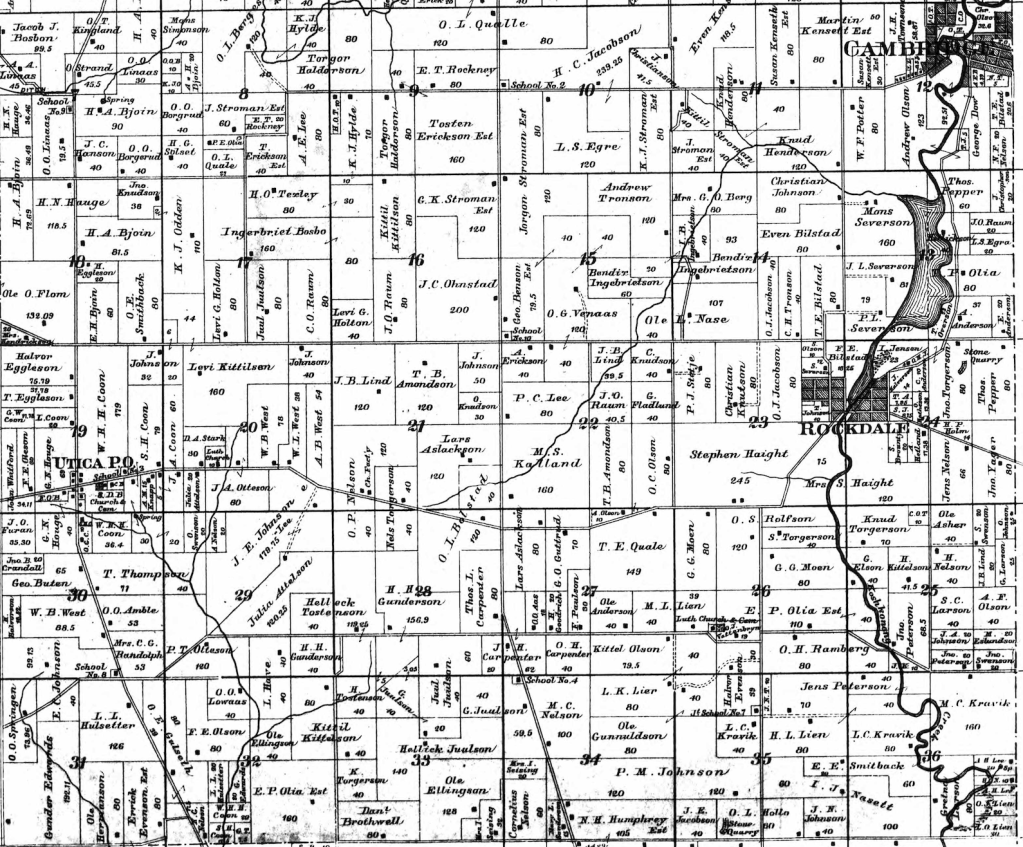
Settler-colonial geography is linear — millions upon millions of acres of neatly surveyed farm land, little squares as far as the eye can see. But this geography was superimposed upon the native geographies that preceded it. Additionally, native geographies from the east were transferred westward by various forms of forced migration. These different geographies interpenetrate one another in America’s heartland, and the history of native land dispossession can be found everywhere you care to look: it’s written into the names of towns and counties, written into forgotten roadside markers, written into the smattering of reservations that break up the settler grid.
My own understanding of these other histories, these other geographies is woefully inadequate. Somewhat belatedly I am trying to rectify that. What follows are a handful of photos and reflections from three stops along my route.
Oklahoma
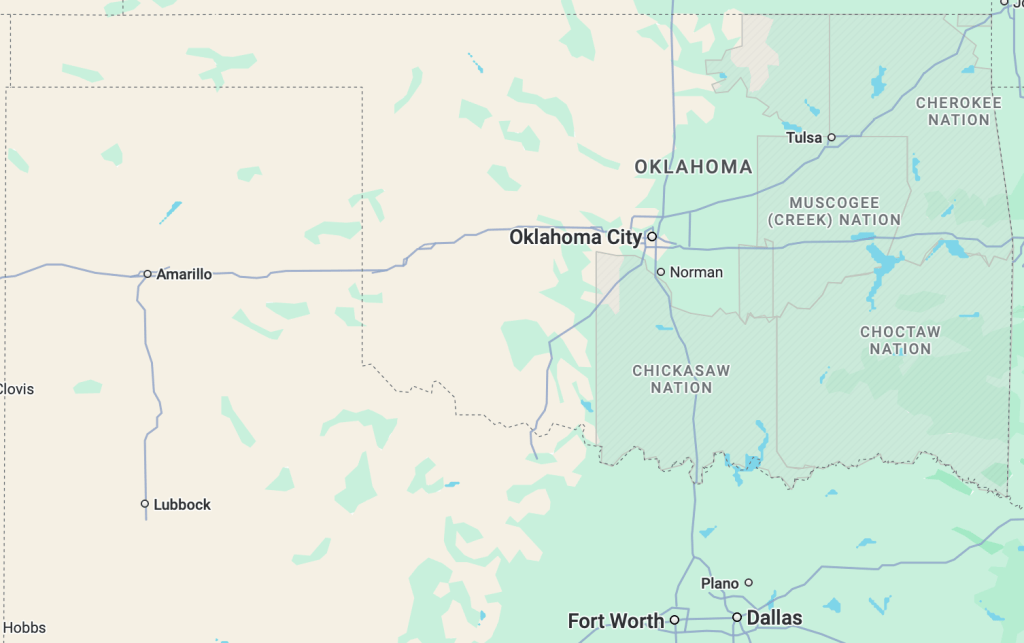
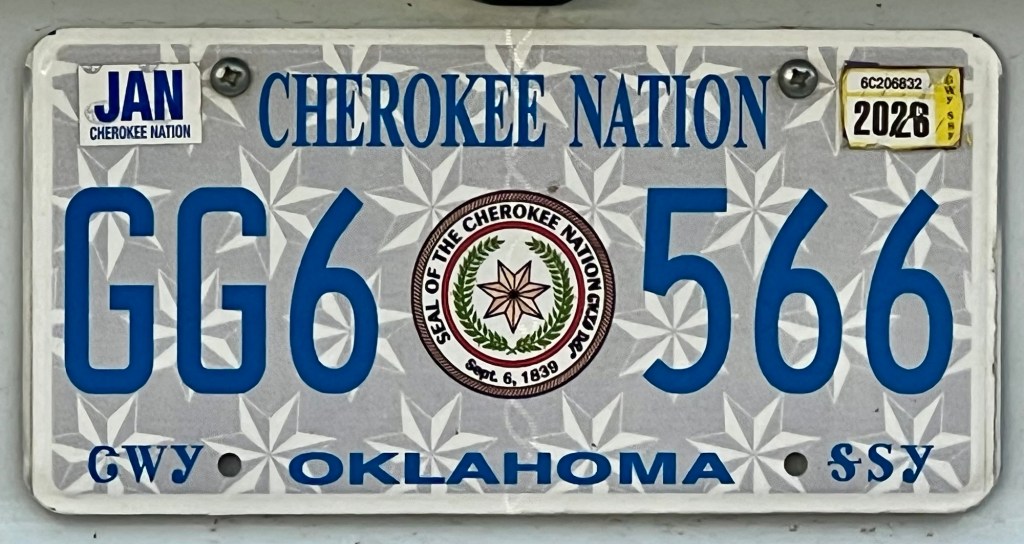
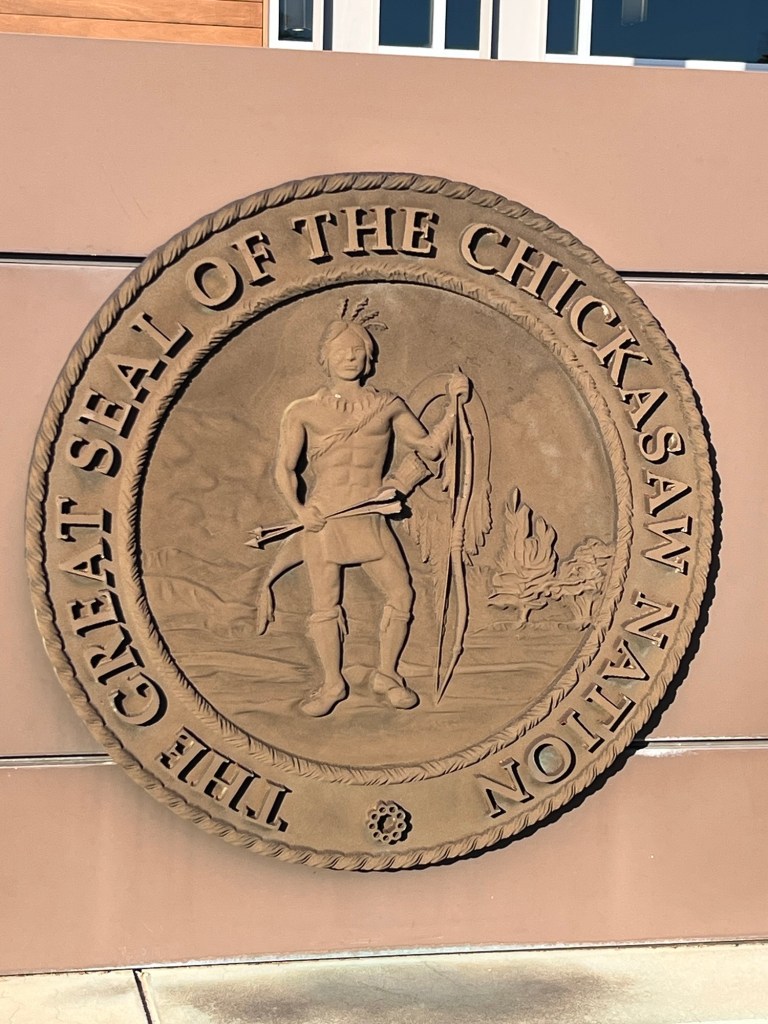
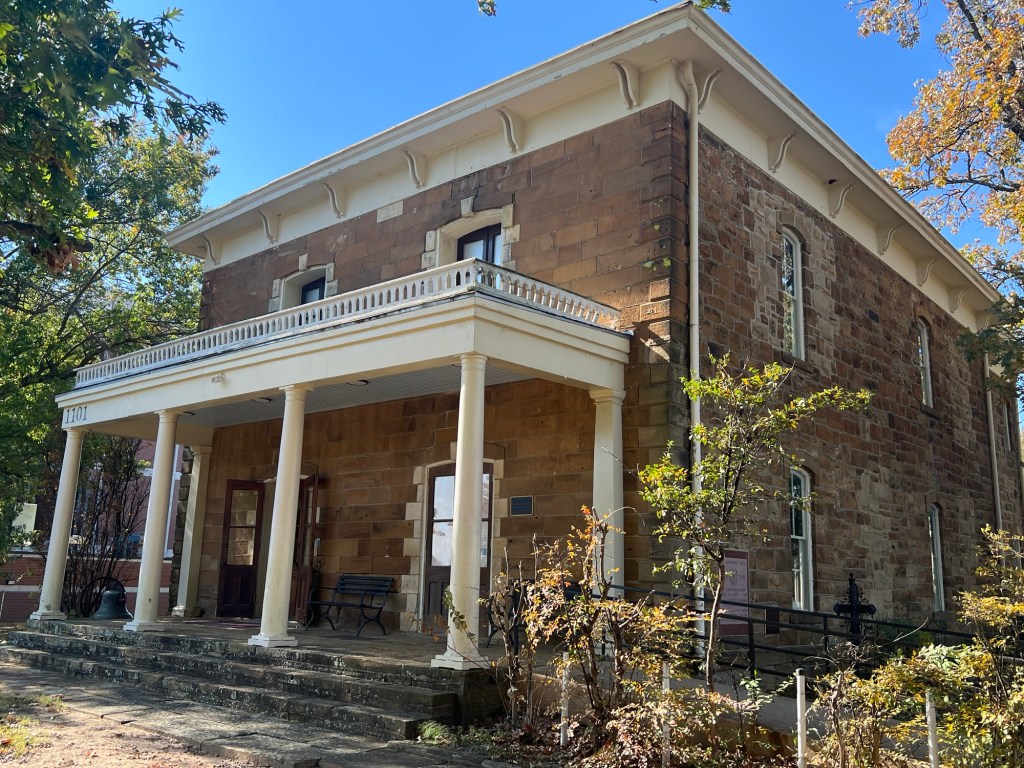
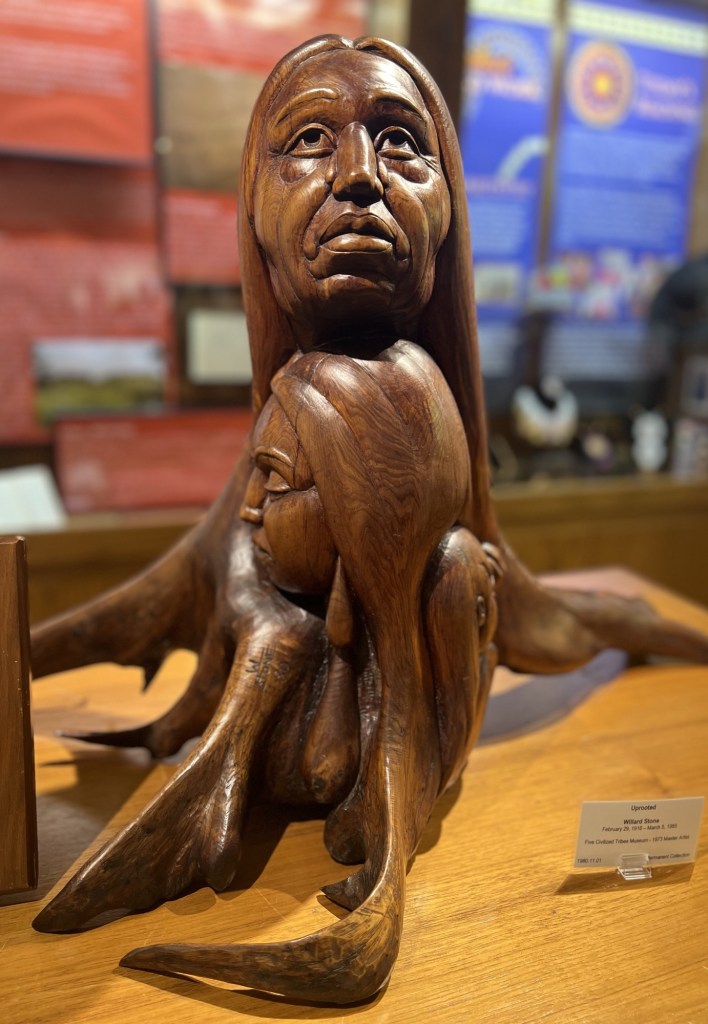
Driving to Texas and back afforded me two journeys through Oklahoma: one from the northeast corner heading southwest (via Tahlequah and Muskogee), and the other headed due north from Fort Worth (via Oklahoma City). In criss-crossing the state, I drove through at least seven reservations. The conglomeration of tribal authorities here is owed to the fact that much of what would become the state of Oklahoma was once “Indian Territory” — lands set aside by the U.S. Federal government for indigenous peoples after being forcibly removed from their homelands out East.
The core of Indian Territory was made up of land granted to what were then called the “Five Civilized Tribes” (Cherokee, Muscogee, Seminole, Choctaw, and Chickasaw) after their dispossession and forced march across the South in the 1830s and 40s — the infamous Trail of Tears. But even this set-aside territory was whittled away by the federal government in the post-Civil War era. Factions of the Five Tribes had sided with the Confederacy, and the Union took a heavy-handed approach to dealings with them after the War. Nationally this was a period in which native children were sent away to boarding schools in order to “civilize” them, and white settler-colonists squatted on native lands with impunity. The federal government also resettled many Eastern tribes on lands belonging to the Five Tribes during this time.
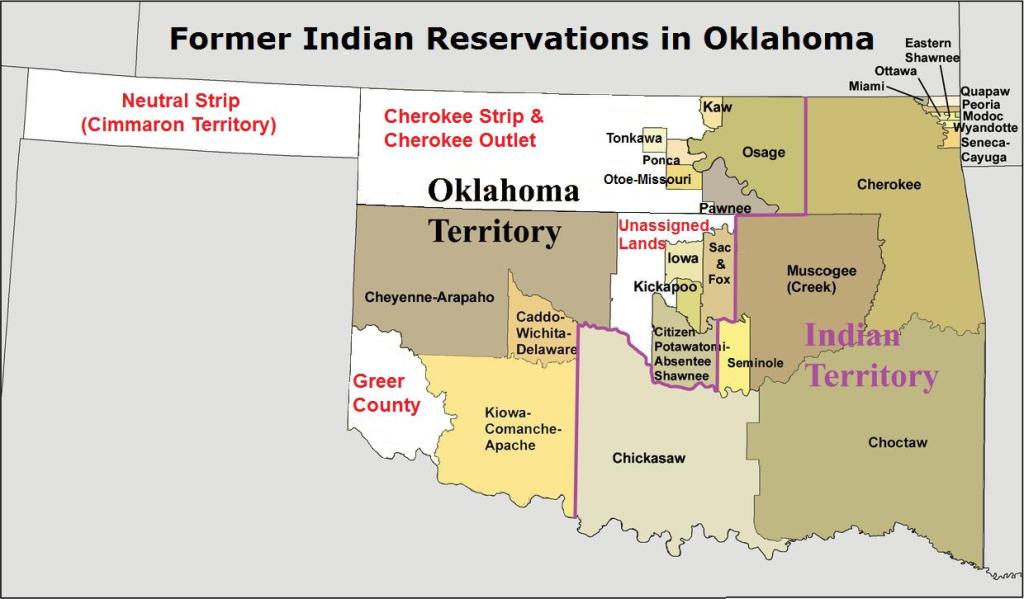
The Dawes Act of 1887 codified the federal government’s assimilationist approach to Native America — communal native lands were to be converted into individual landholdings. This paved the way for the carving of Oklahoma Territory out of Indian Territory in 1890, and eventually — after a failed bid to form the native State of Sequoyah — for the creation of the State of Oklahoma in 1907. The settler grid had been imposed on Indian Territory. (For a more nuanced explanation of all of the above, I highly recommend Ned Blackhawk’s excellent history, published in 2023, The Rediscovery of America: Native Peoples and the Unmaking of U.S. History. See especially Chapter 9, “Collapse and Total War: The Indigenous West and the U.S. Civil War”.)
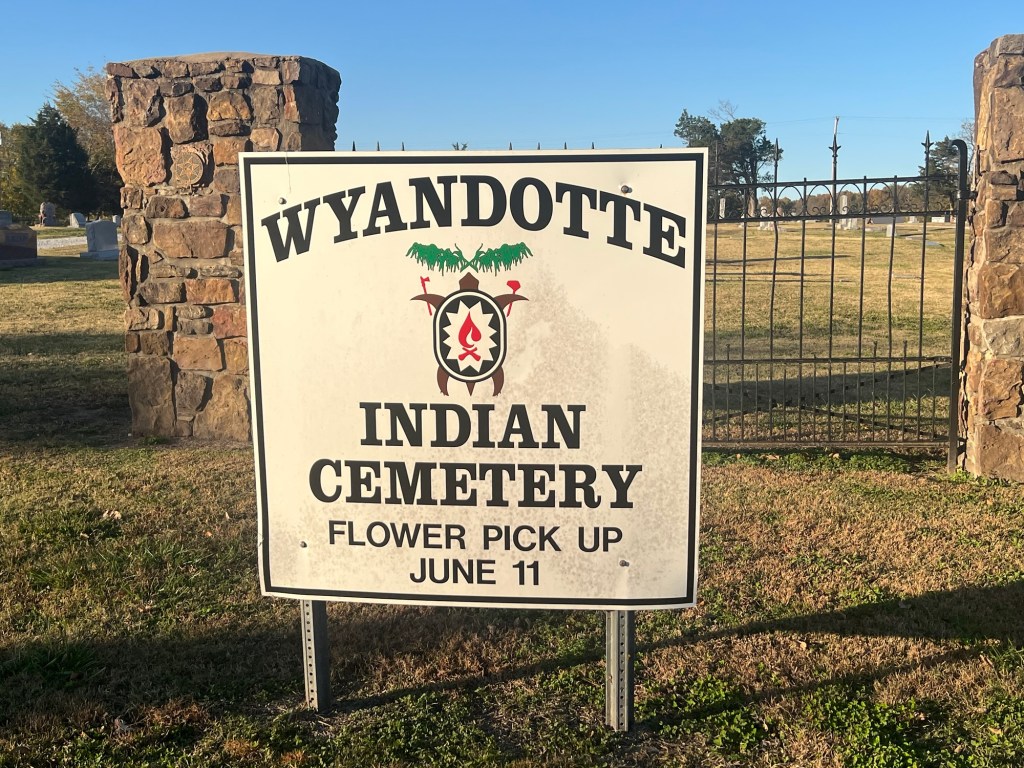




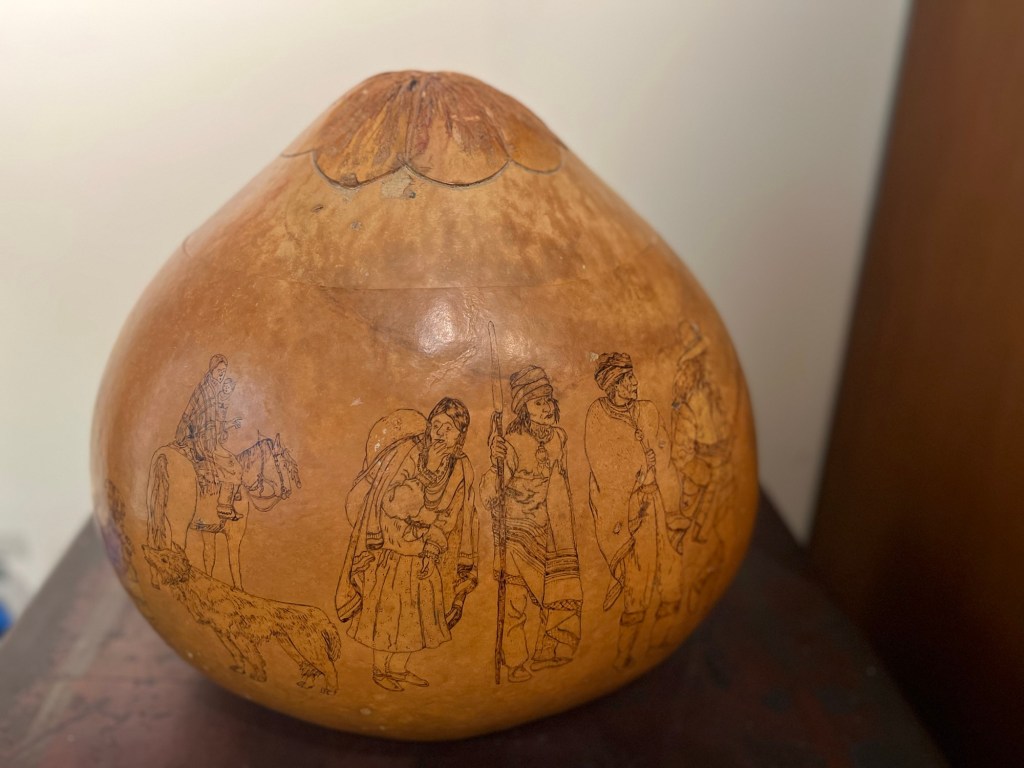
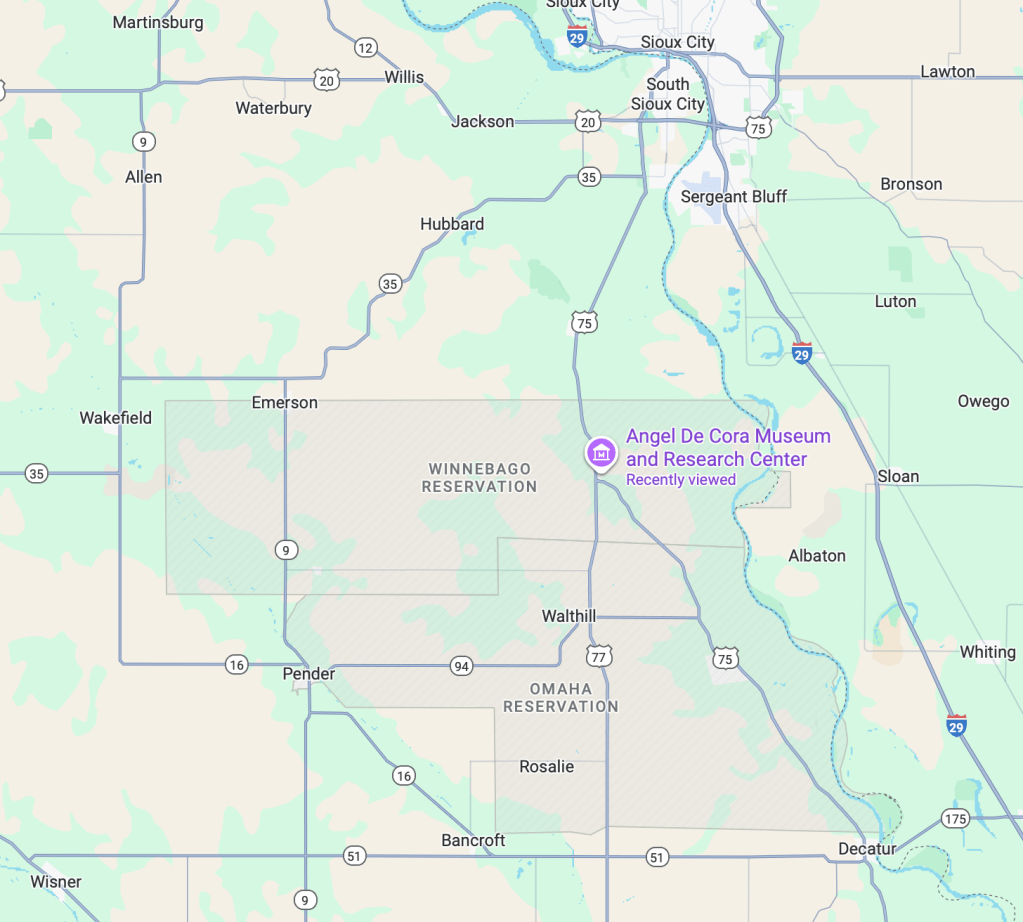
Winnebago Reservation, Nebraska
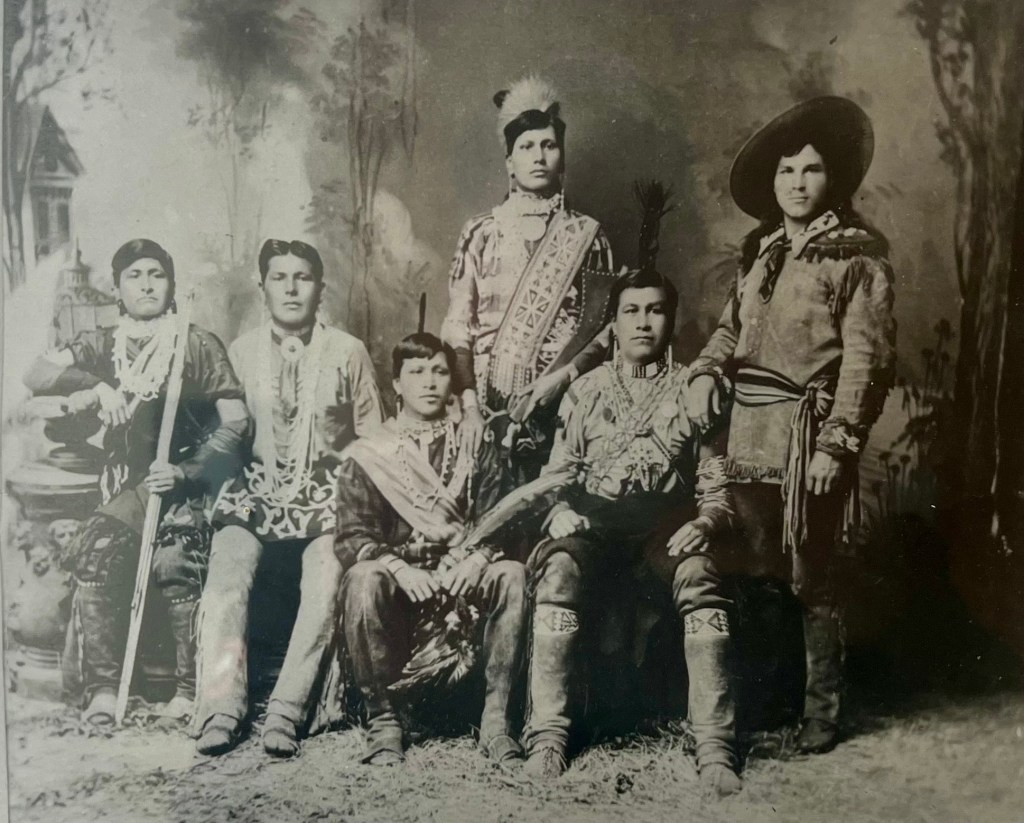
Yesterday I drove through lands belonging to the Winnebago Tribe of Nebraska. Until the colonial period, the Winnebago — also known as the Ho-Chunk — controlled much of southern Wisconsin where my ancestors settled in the mid- and late-19th century. During the 17th and 18th centuries, Ho-Chunk numbers were greatly reduced by disease and by warfare with tribes that had been pushed into their territory due to conflict and colonization in the East.
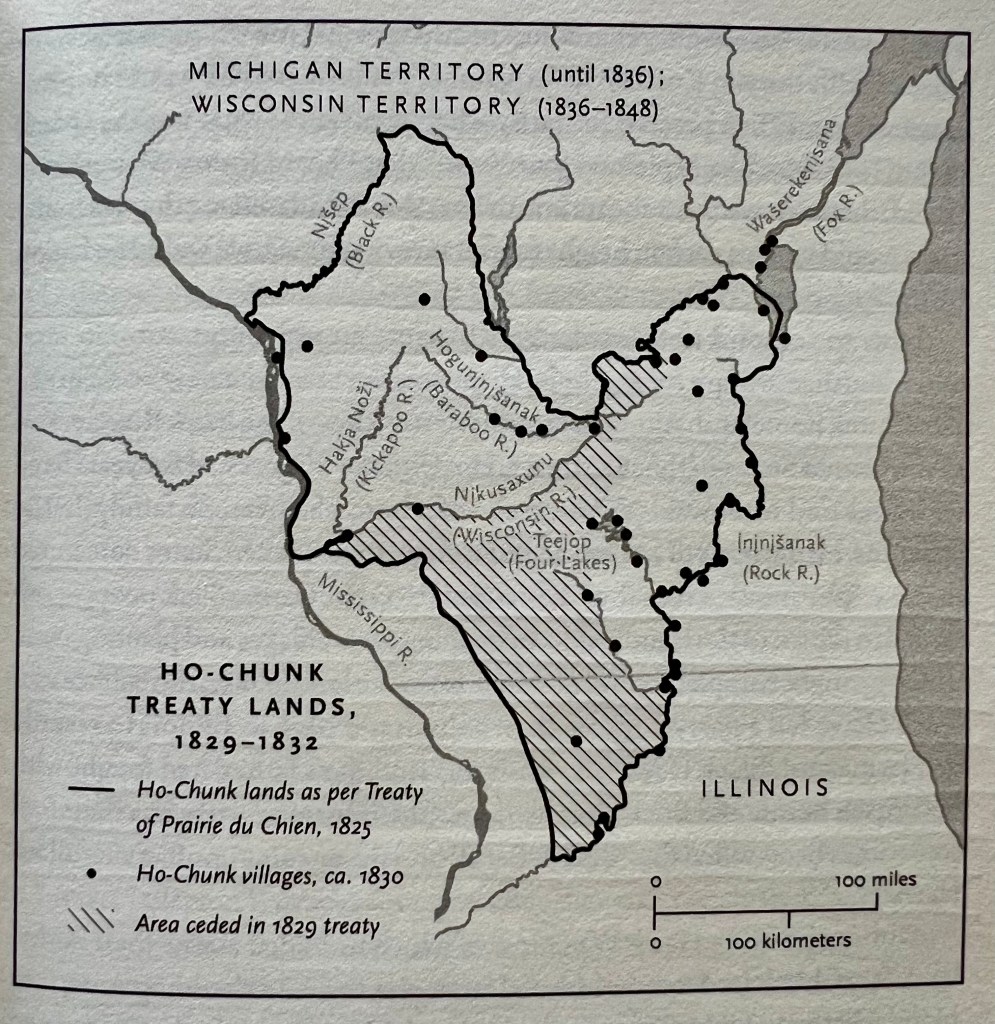
But theirs is a story of great resilience despite a concerted effort on the part of white settlers to sweep them aside. Through a series of unequal treaties, all federally recognized Ho-Chunk lands in Wisconsin were eventually ceded, and the Ho-Chunk were forcibly relocated to a reservation in Iowa in the 1830s. But local white settlers objected to the Ho-Chunk presence and they were again forcibly removed, this time to Long Prairie, Minnesota. The Ho-Chunk were dissatisfied with Long Prairie, and they negotiated a move to Blue Earth, Minnesota, where the topography was more similar to their homelands. After the Dakota War (see next section), the Ho-Chunk were accused of disloyalty, despite not having participated in the conflict. They were exiled to Crow Creek, South Dakota, a dry and desolate camp along the Missouri. Faced with starvation, the Ho-Chunk leadership negotiated with the Omaha people to secure the current reservation in Nebraska.
Each of those forced moves, like the Trail of Tears, disrupted the lives and livelihoods of the Ho-Chunk people and many didn’t survive. The Ho-Chunk refer to these involuntary relocations as the Walk of Death. In spite of the terrible conditions, a group of tribe members persisted, surviving to form the Winnebago Tribe that exists in Nebraska today.

Furthermore, at each stage in this long history of dispossession, there were Ho-Chunk people who nonviolently resisted. Some individuals and families secretly remained in or traveled back to Wisconsin. Some even managed to take advantage of the Homestead Act to become landowners on their ancestral lands. It’s for this reason that a second federally recognized Ho-Chunk tribe exists, headquartered in Black River Falls, Wisconsin, despite not having a reservation in the state.
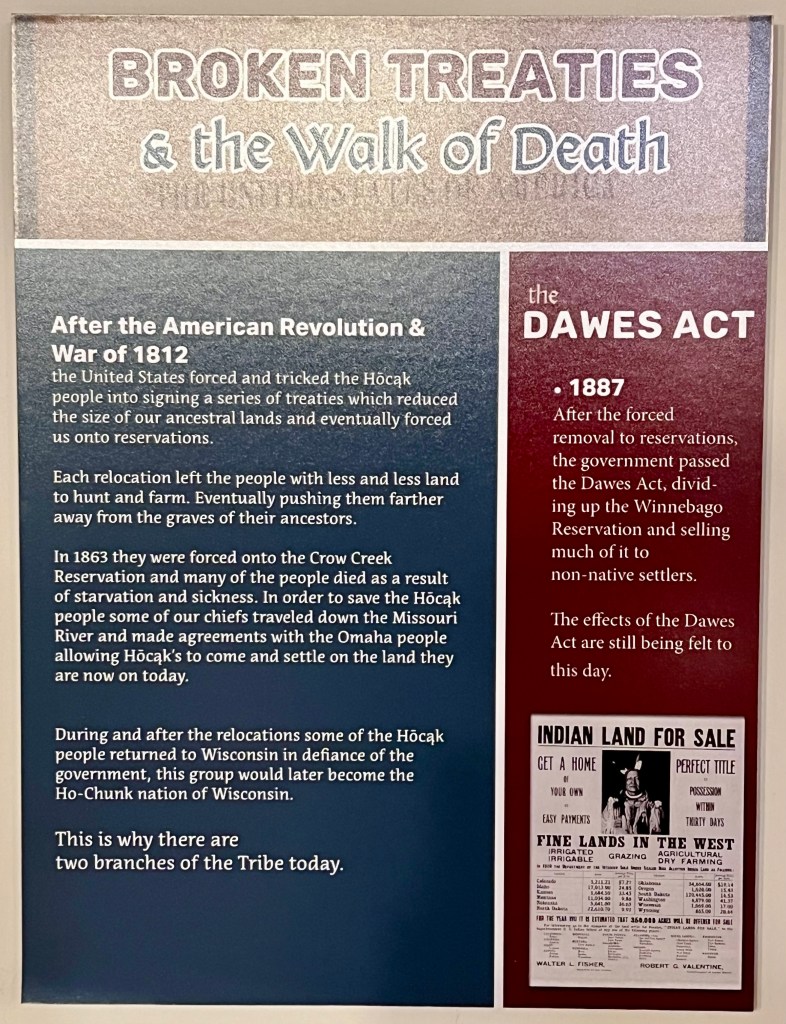
Yesterday I had the opportunity to get to know this history a little at the Angel De Cora Museum in Winnebago, Nebraska. The Winnebago Tribe of Nebraska also provides a brief history of their people at this link. For a detailed account of how the Ho-Chunk people managed to survive the various trials of the 19th century, I highly recommend Stephen Kantrowitz’s (2023) Citizens of a Stolen Land: A Ho-Chunk History of the Nineteenth-Century United States.
Visiting the Winnebago Reservation, I was struck by the irony that my ancestors who had attempted to settle a few miles away (see this post) had been able to pack up and head “home” to Wisconsin when their crops failed. Most Ho-Chunk, however, did not have this luxury.


Mankato, Minnesota
A couple months ago, I wrote a little about the Dakota War of 1862 and the imprisonment of the Dakota people at Fort Snelling in the wake of the conflict (see this post). The Dakota people are indigenous to large parts of what is now Minnesota and western Wisconsin. After the uprising, the Dakotas were stripped of their lands in Minnesota and exiled to Nebraska, North and South Dakota, and Canada. This was contrary to multiple treaties signed by the Dakota tribes and the U.S. government, which had promised the Dakotas land in Minnesota and economic assistance — in the end, they got neither.
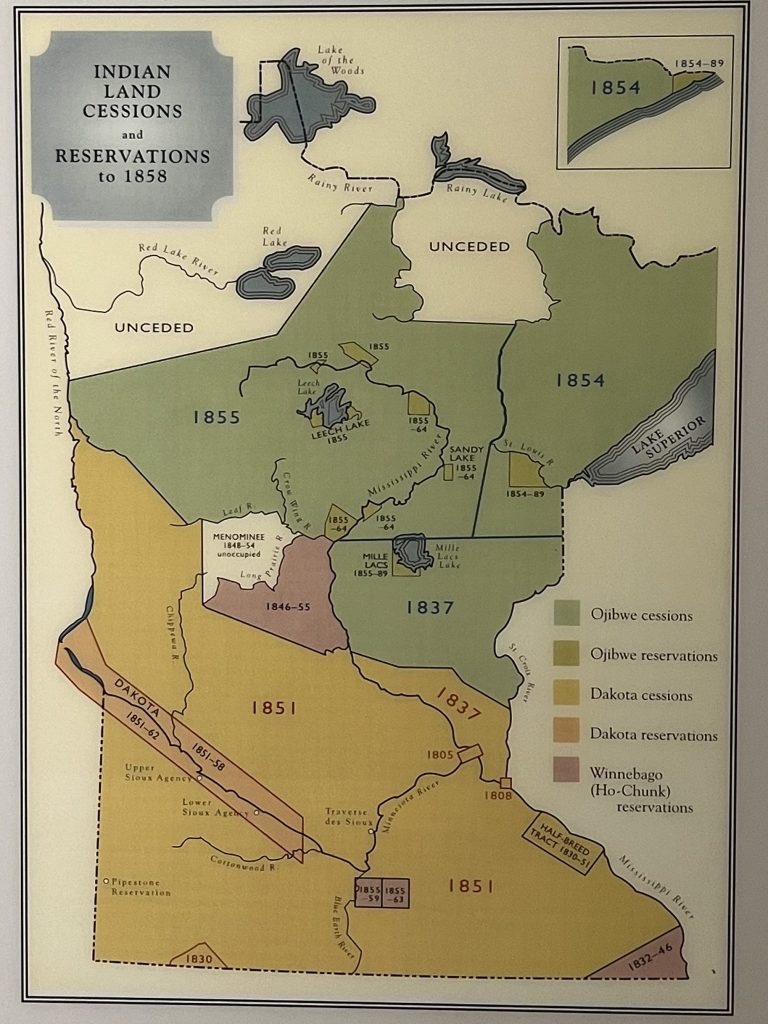
But to their credit, many Dakota people, similar to the Ho-Chunk, found ways back into their ancestral lands, and Minnesota is today home to four federally recognized Dakota tribes: the Shakopee Mdewakanton, Prairie Island Indian Community, Upper Sioux Community, and the Lower Sioux Indian Community.
I made a stop in Mankato today to visit the site where 38 Dakota men were publicly hanged in 1862 for their alleged involvement in the Dakota War. This was the largest mass execution in U.S. history. You feel the weight of history in a place like this, revisiting an episode from our past that we’re rarely taught. (For an excellent reflection on how this history has come to be remembered, I recommend this essay.)


History like this can be unsettling for Americans such as myself who are the descendants of the first white settlers in the Midwest. For me, fully seeing this history means coming face to face with the fact that my ancestors and I have been beneficiaries of “Indian removal” — policies and practices that were at best unfair and at worst genocidal.
But feeling unsettled isn’t always a bad thing. It can open us up to nuance, clarity, and insight. A deeper understanding of how Native America intersects with settler-colonial America doesn’t make me hate my ancestors. It expands my perspective of them beyond the two-dimensional pioneers we meet in old Westerns and Disney films. When we start seeing indigenous peoples and their histories as intimately connected with the histories of those who colonized America, we can imagine new possibilities for historical storytelling — possibilities that honor the complexity of the American past.

 Deep Roots

Leave a comment