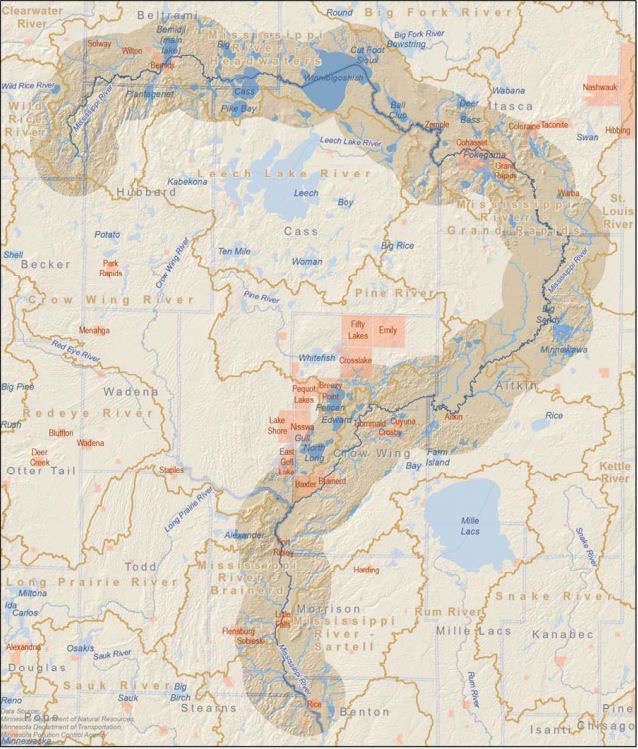
For most of its course, the Mississippi River runs from north to south. But things are different at the headwaters. Here the Mississippi is a meandering stream that arcs vaguely north and east before turning south. Through marshes, woodlands and glacial lakes, this little river forms a giant question mark across north central Minnesota.
Part 2: A Little Mystery
My dog Spence and I traveled to the headwaters this past week to find out what lies at the end of the question mark. It’s an age-old quest, and we’re hardly the first to do it (for a brief history, see Part 1 of this post). But our little expedition seemed to produce more questions than answers.
For instance… Where does a river begin? It’s a simple enough question, but for individual rivers the answer is dictated as much by history and tradition as it is by hydrology. Hydrologists tell us that the difference between a river’s main stem and a tributary is that the main stem is longer. That is to say, where two rivers come together, the one with the more remote source should be the main stem. But in approximately 0% of the world’s rivers was a river fully mapped out and then named accordingly. Rivers often have traditionally designated tributaries, main stems and sources that don’t meet the standards of hydrologists. The Mississippi falls into this category, as its main tributary, the Missouri River, has the more remote headwaters.1 But the Mississippi gets away with this because it contributes a larger volume of water than the Missouri at the confluence and, well, it just looks like the main stem. The Missouri flows in from an odd angle.
Other rivers provide other excuses. The traditionally designated sources of the Nile, the Ganges, and the Thames are all, by hydrological standards, wrong. But no one pays the poor hydrologists much heed.
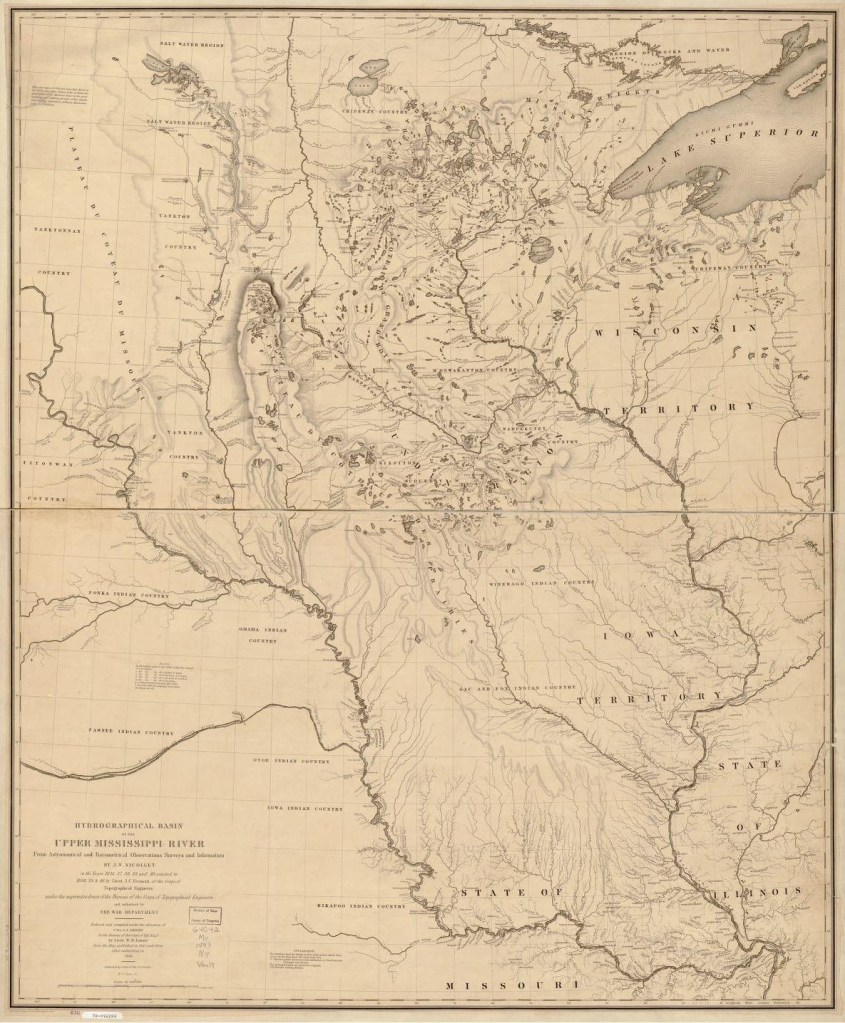
After Schoolcraft’s 1832 expedition, a variety of characters explored the Mississippi headwaters and asserted competing claims to the “true source”. My favorite is Joseph Nicollet. Having lost his fortune in France, Nicollet emigrated to the U.S. and obtained work as a cartographer. In his all-too-brief life he completed three expeditions to the Upper Mississippi and created the first accurate maps of the region. On his 1836 expedition, he mapped the headwaters, retracing Schoolcraft’s route and confirming Itasca as the source. But he did note that a small stream flowed into Itasca from the south, which he referred to as an “infant Mississippi”.2
While not the officially designated headwaters, that little stream — today named Nicollet Creek — is curiously marked on Google Maps as the “Start of the Mississippi”. On Monday, our first full day in Itasca State Park, Spence and I hiked towards this point on the map. I wrote in my journal later that day:
This was the most beautiful and peaceful moment of the morning. The trail led us to the east side of Nicollet Lake. The wind in the tall pines sounded like waves crashing on a beach. No people, only the occasional squirrel or grouse. I realized I wouldn’t get to the point on my map by staying on the trail, so we ventured off in what I hoped was the right direction. After much scrambling over hills and through dense underbrush, we found a little creek trickling into Nicollet Lake. Is this you, Mississippi? It seems as good a spot as any to start a river.
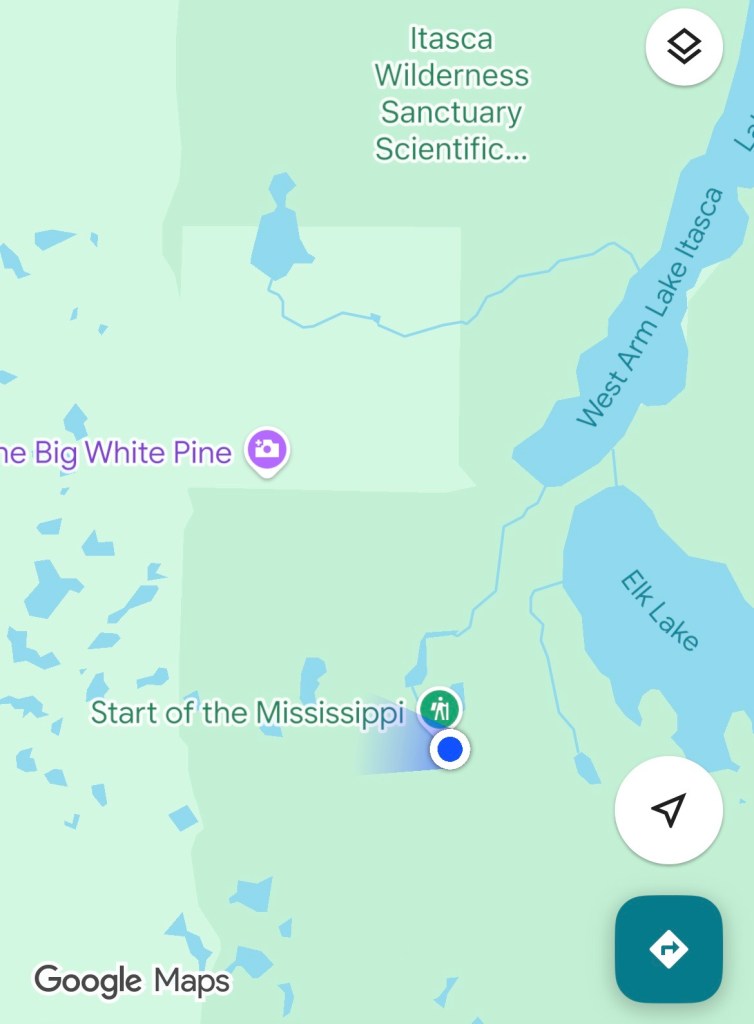
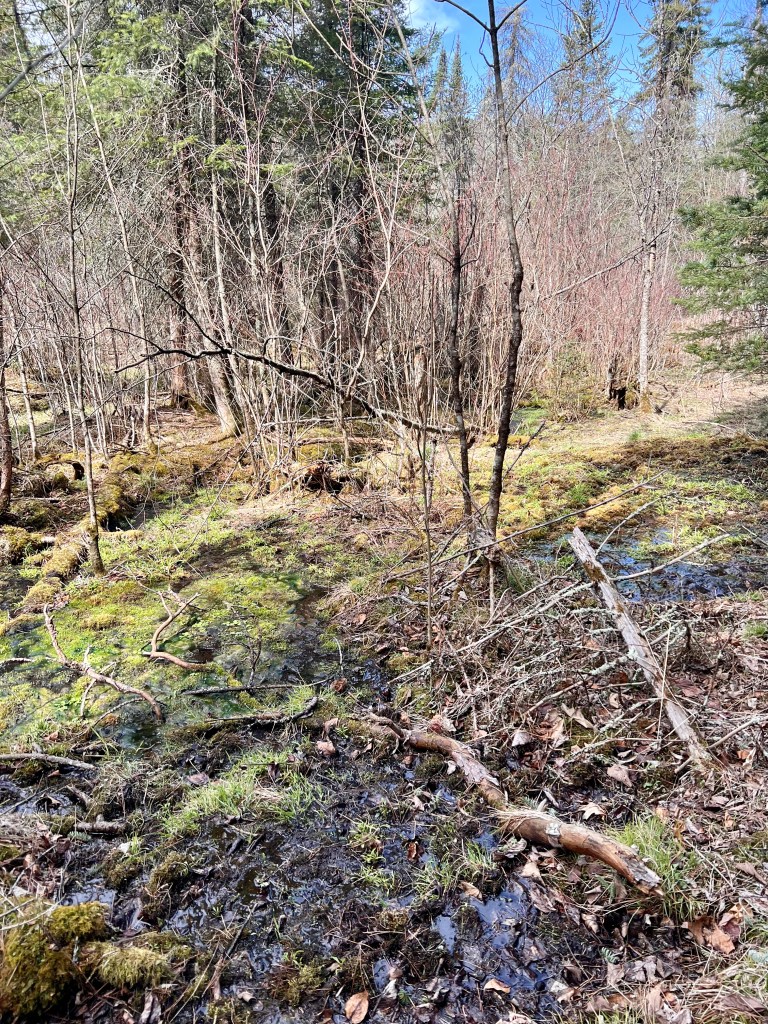
I wondered if this little moss-covered creek could really be the birthplace of the mighty Mississippi. But this begged a second, more philosophical question:
Does it make sense to think of rivers as having a single source?
I remember having a funny conversation with my maternal grandma Phyllis Smith when I was a boy. She was visiting our house in Syracuse, Indiana, and we were talking about family history. My grandma’s maiden name was Reiner, and I had said something to her like, “Well, I’m not really a Reiner. I’m a Rude.” And she questioned me on that. “Who are you more related to,” she asked, “Your mother or your father?”
That puzzled me. “Neither,” I replied. “I’m related to them equally.”
“Well then,” she said. “Who is your mother more related to — her mother or her father?”
Again, I had to admit that both branches were equal.
“So, why aren’t you just as much a Reiner as you are a Rude?”
She had me there.
And couldn’t the same be said of rivers and their sources? Isn’t the Mississippi’s source to be found in every lake and stream that comprises the watershed?
And thinking more broadly about the water trickling through Nicollet Creek on the southwest side of Lake Itasca, that water… it didn’t just appear there. That water may have flowed over from an underground aquifer or may have fallen as rain the day before. And maybe that rain started as clouds that formed in the North Pacific — an ocean, of course, fed by the rivers of British Columbia, Alaska, Russia and Japan. Those rivers, in turn, may have been fed by moisture picked up in the forests of Siberia and Inner Mongolia… and on and on it goes without end.
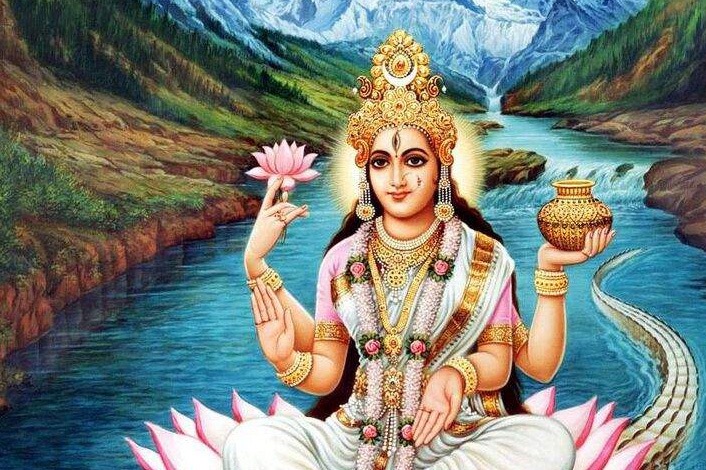
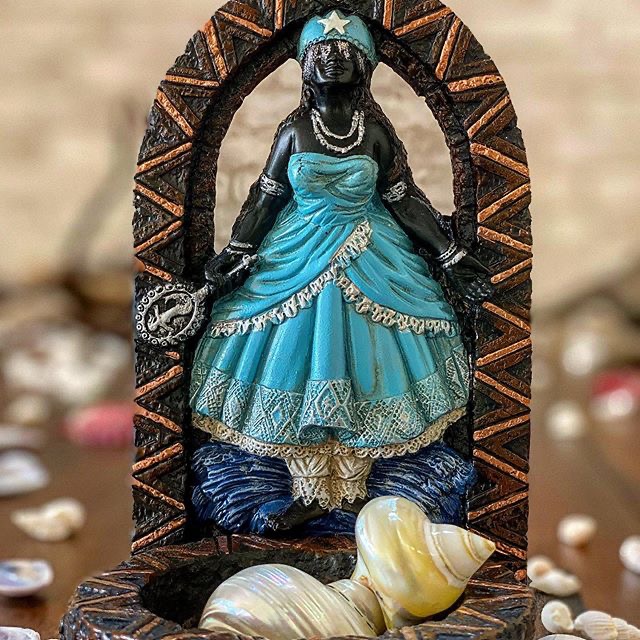
But, why do we like to imagine that rivers have a singular, ultimate source? I don’t know the answer to this question, but I think it must be hardwired into us. In cultures all over the world, rivers loom large in the collective imagination — they appear regularly in our dreams and myths as mysterious conduits and thresholds. They are routinely personified as gods or goddesses. Tracing rivers back to their sources leads us to unimaginable realms because they are power incarnate. They are made up of the very thing that gives us life and, on occasion, takes it away — water.
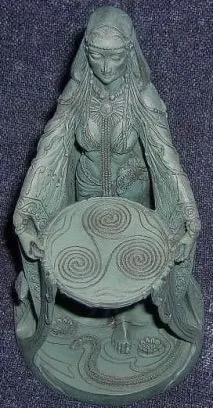
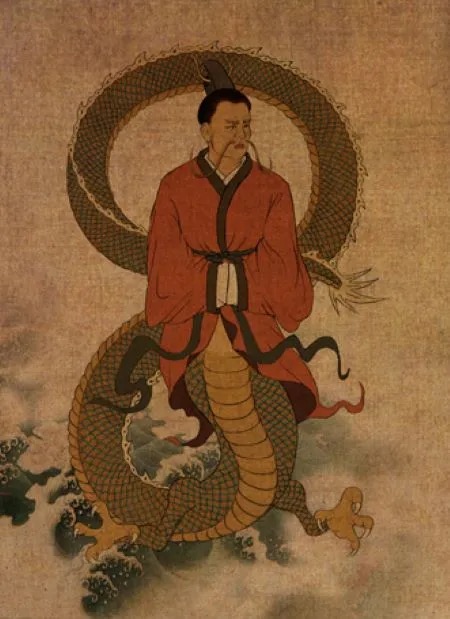
As explained in Mni Sota Makoce: The Land of the Dakota, “In the beginning, the water—Mni—was pure, part of the land, and therefore part of the people. It was the first medicine given to our people because water keeps everything alive. Water that comes from within the earth is pure and as such is considered wakan or sacred.”3
In New Mexico, the Taos Pueblo people locate the source of the Rio Pueblo de Taos and all creation itself in the mystical Blue Lake (Ba Whyea).4 In the Irish tradition, the River Shannon and six other rivers originate from Connla’s Well, the Well of Wisdom.5 Similarly, the Norse believed that all major rivers trace back to Hvergelmir. This was the primal spring of Niflheim, sitting below one of the roots of Yggdrasil, the World Tree.6
Collectively, these stories point us toward the idea that the river — like life itself — derives its power from an ultimate and unknowable Mystery.
* * *
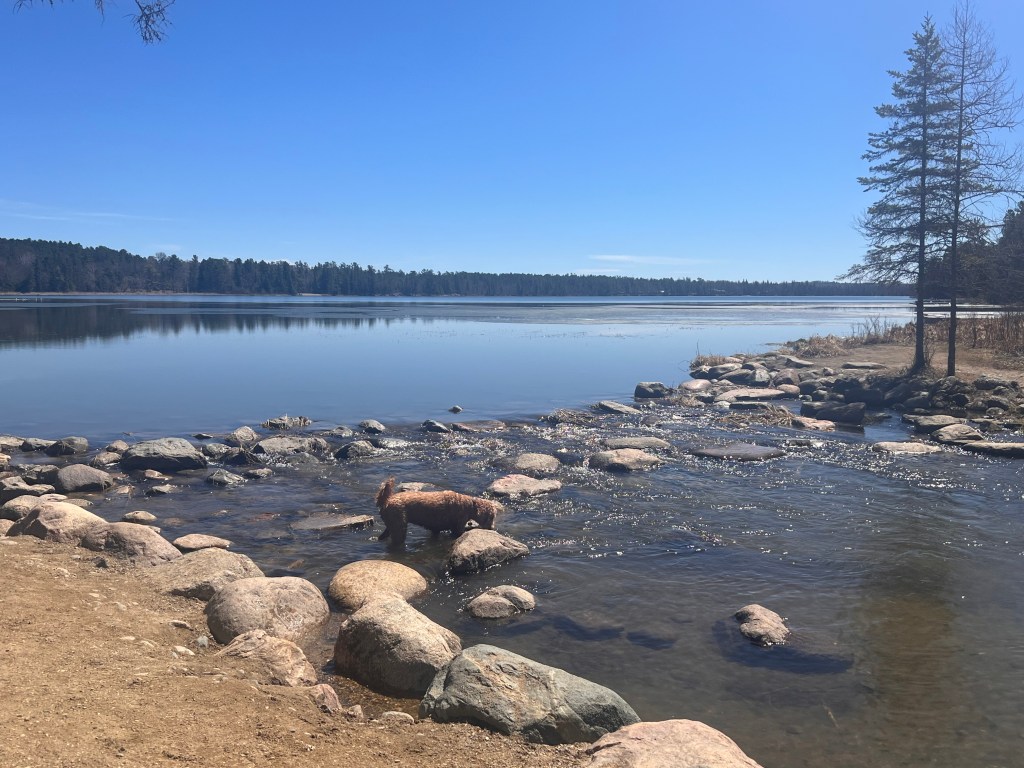
If Spence had opinions on any of the above, he didn’t share them with me. But after our second full day of hiking in Itasca State Park, he got warm and decided to have a soak in the lake. Unfortunately, he picked a muddy spot to do this. So, when we were heading out of the park, I drove us back to the officially designated headwaters site to wash him off. We had visited this spot the prior day, but now it was transformed. What had been a cold, windy and rather gloomy place was, on this afternoon, bathed in warm sunlight.
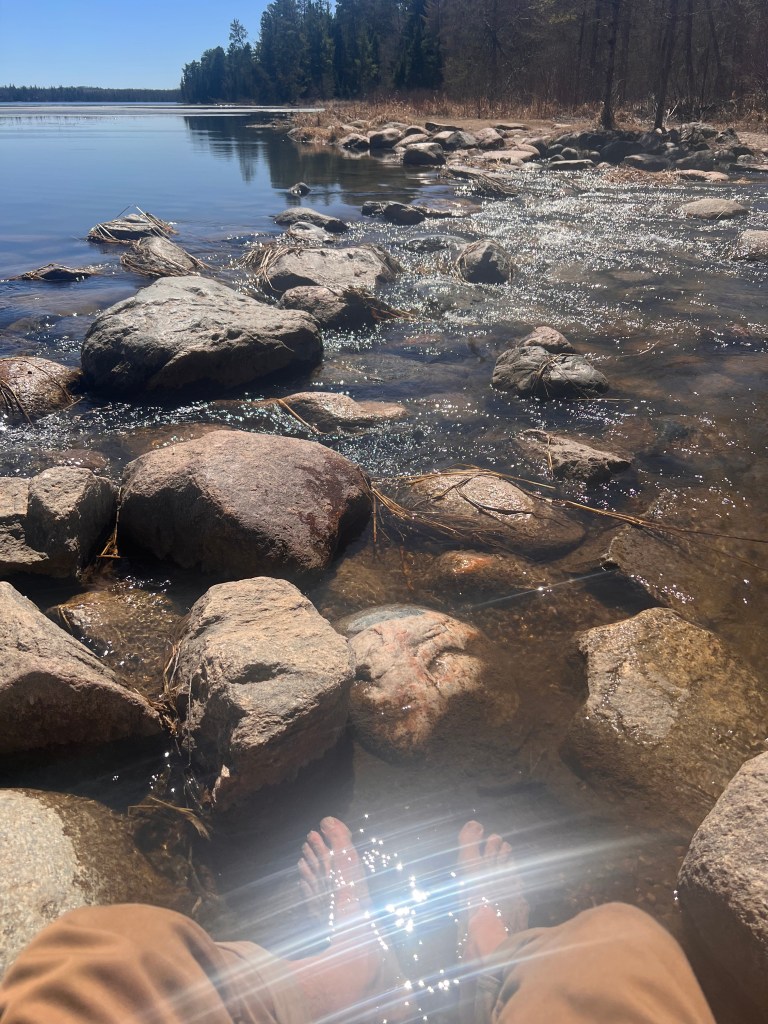
As there were no other visitors, I took Spence off the leash for a few minutes and let him splash around on the rocks where the Mississippi has its official start. He looked so happy that I decided I’d better take off my boots and put my toes in that icy water, too. As usual, Spence had the right idea.
- See https://en.wikipedia.org/wiki/River_source ↩︎
- See https://mississippivalleytraveler.com/searching-for-the-headwaters-of-the-mississippi-river/ ↩︎
- Westerman, Gwen and Bruce White (2012). Mni Sota Makoce: The Land of the Dakota. The Minnesota Historical Society. ↩︎
- Greely, June-Ann. (2017). “Water in Native American Spirituality: Liquid Life — Blood of the Earth and Life of the Community.” Green Humanities, vol. 2, pp. 156-179. ↩︎
- Gwynn, Edward, ed. (1913), “The Metrical Dindshenchas Part 3”, Royal Irish Academy Todd Lecture Series, vol. X, The University Press. ↩︎
- See https://www.britannica.com/topic/Niflheim#ref202774 ↩︎


Leave a comment