
The Mississippi River system covers most of the American interior. Its many tributaries fan out like the branches of an enormous tree across the Midwest and Great Plains, stretching from the Appalachian Mountains in the East to the Rockies in the West. The river system remains critical to American shipping and commerce, and its historical importance to Europeans in their quest for control of the continent’s interior can’t be overstated.
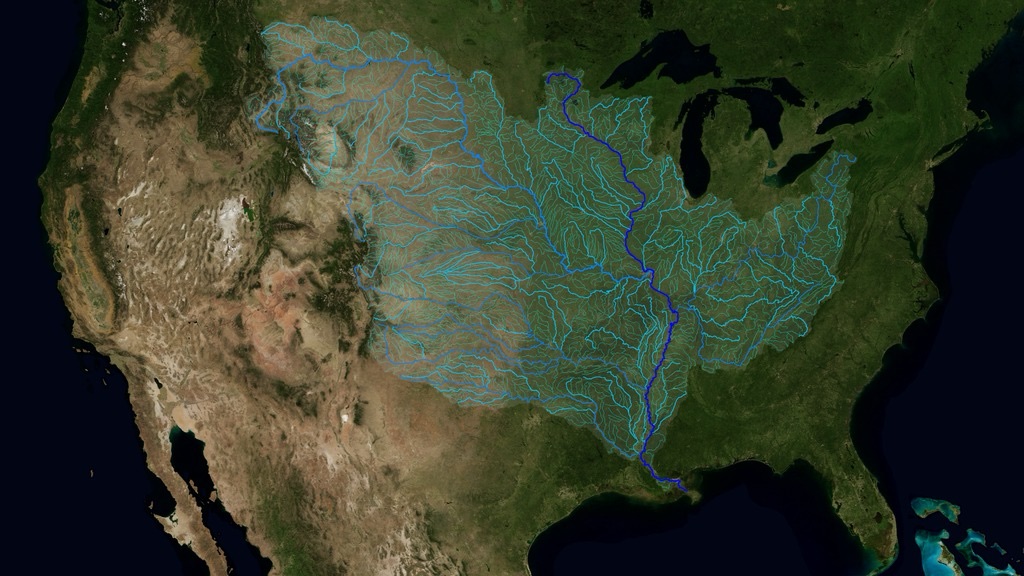
This past week, my trusty travel companion Spence and I made the journey to the Mississippi headwaters in northern Minnesota. Granted, this wasn’t a particularly intrepid mission — I drove and brought the trappings of civilization with me. But it was still an adventure. And it prompted me to ponder the significance and sublime nature of this mighty river.
Part 1 — A Little History
Anyone with some knowledge of colonial history might assume that Europeans first explored the Mississippi from the river’s delta at the Gulf of Mexico. After all, the Spanish set up colonies in and around the Gulf during the late 15th and early 16th centuries (Santo Domingo, San Juan, Cuba…). And other rivers around the globe (the Congo, the Nile, the Amazon…) were first explored by Europeans from where their waters meet the sea. Not so with the Mississippi. It was encountered by Europeans from the middle.
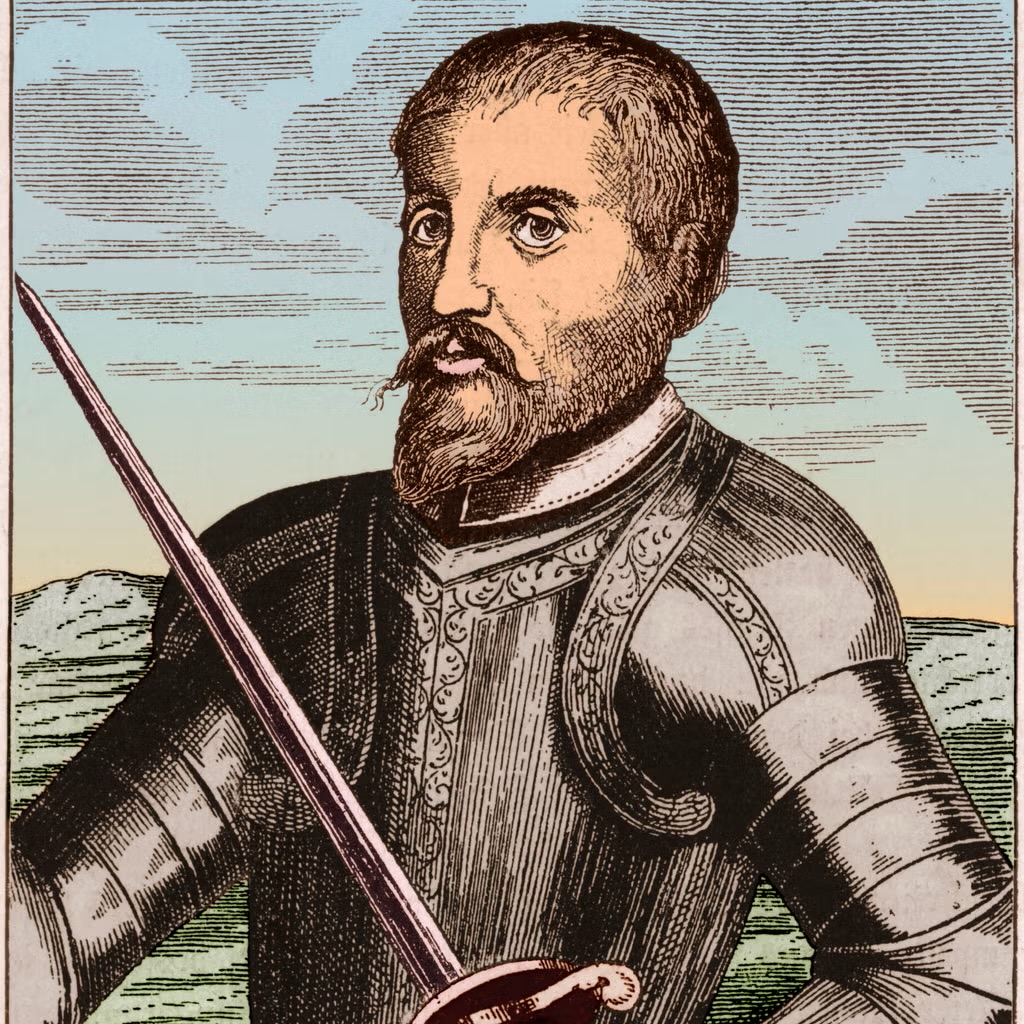
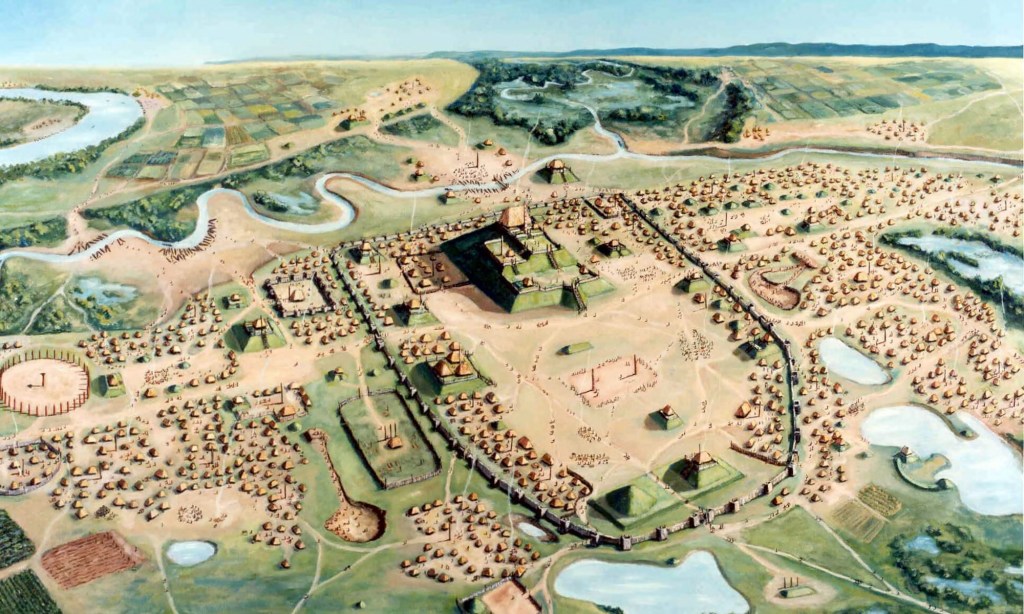
First came the Spanish conquistador Hernando de Soto, bushwhacking his way from Florida through what was later to become the American South. He reached the Mississippi on May 8, 1541, somewhere south of where Memphis stands today.[1] De Soto was on a quest for gold, and in that quest he failed miserably. Instead, he “discovered” the Mississippi. Those quotation marks are significant here, as of course Native Americans had traversed every inch of the great river, and over centuries they utilized its waterways to build vast networks of diplomacy and trade. A thousand years ago, these networks radiated out from the once populous city of Cahokia, near where St. Louis sits today.
De Soto never made it back to report on his findings. He died of a fever, somewhere in the wilds of what is now Louisiana or Arkansas. But don’t feel too sorry for de Soto. He made few friends on his mission. He and his soldiers massacred whole villages of natives, took slaves, and waged one of the most brutal battles on American soil — one in which over 200 Spaniards and between 2,000 and 6,000 Native Americans died.[2]
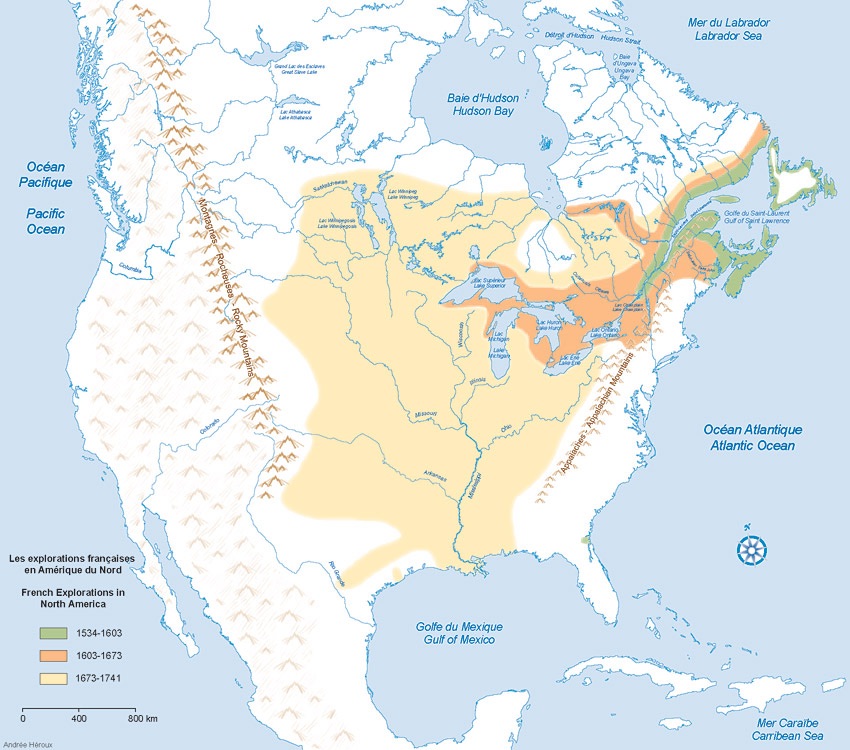
The French also first acquainted themselves with the Mississippi from the middle, but they did so with a different aim than the Spanish. Their goal in the interior was not so much conquest or even settlement per se; it was trade (and to a lesser degree, missionary work). In the mid-17th century, they sent explorers out from their bases in New France (i.e., Montréal and Québec City) to map the Great Lakes and establish trading posts in the Pay d’en Haut (high country). Like other European power players of that time, they hoped to find an easier route to Asia, as well as exploit the wealth of this mysterious continent. And they soon realized that one of its key sources of wealth was fur. The rugged purveyors of the fur trade, the voyageurs as they were known, worked hard to learn Native ways of surviving in the wild. In many cases they picked up Native languages and intermarried with Native families, and the descendants of these marriages occupied a “middle ground” between French and Native cultures.[3]
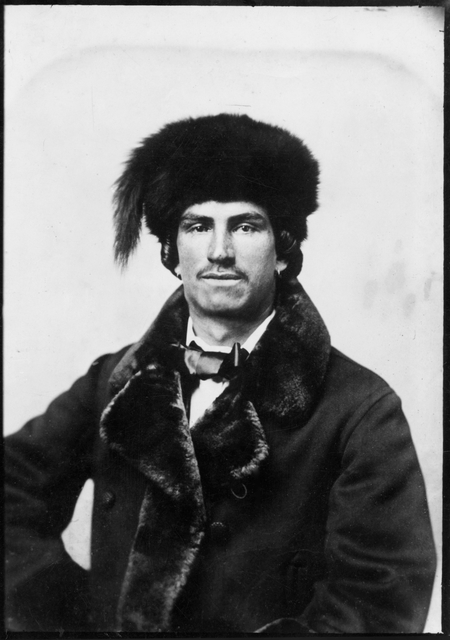
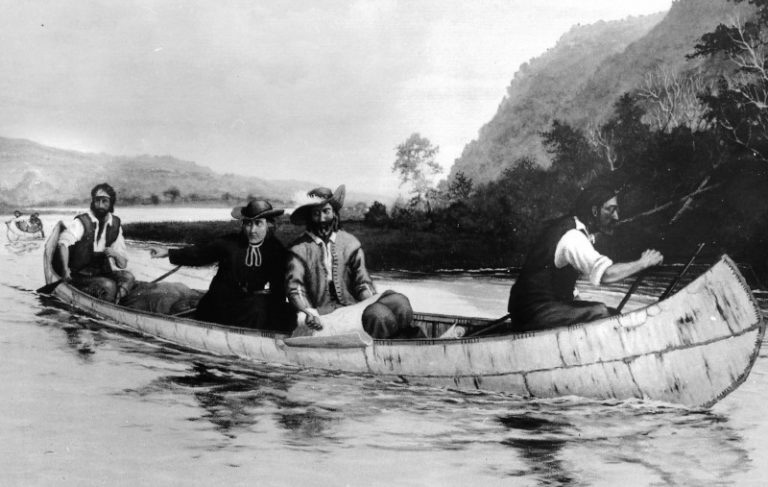
The first French explorers to reach the Mississippi were fur trader Louis Jolliet and Jesuit father Jacques Marquette. In 1673, they canoed to Green Bay and then upstream the Fox River to the point where the Wisconsin River can be reached via a mile-and-a-half portage (location of Portage, Wisconsin today). From here they paddled down the Wisconsin to where it meets the Mississippi, entering the river on June 17 of that year. They traveled the Mississippi as far south as the Arkansas River, but then concluding it led to the Gulf not the Pacific, they headed back. They returned to Lake Michigan via the Illinois River and a portage to the Chicago River. Later that decade, René-Robert Cavelier, Sieur de la Salle would be commissioned to explore the Mississippi more fully. La Salle took Jolliet and Marquette’s route through Illinois and traveled down the length of the Mississippi to its mouth. Here in 1682 he declared the river’s entire drainage basin for France, not knowing of course how vast those lands were. He named it Louisiane, in honor of his king.[4]
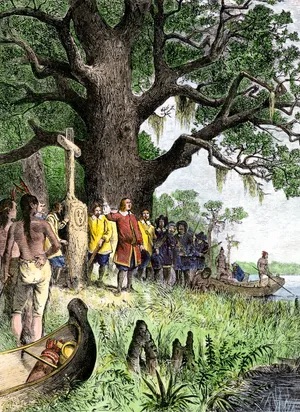
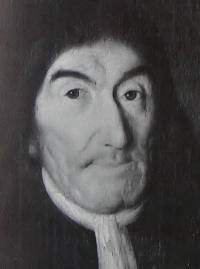
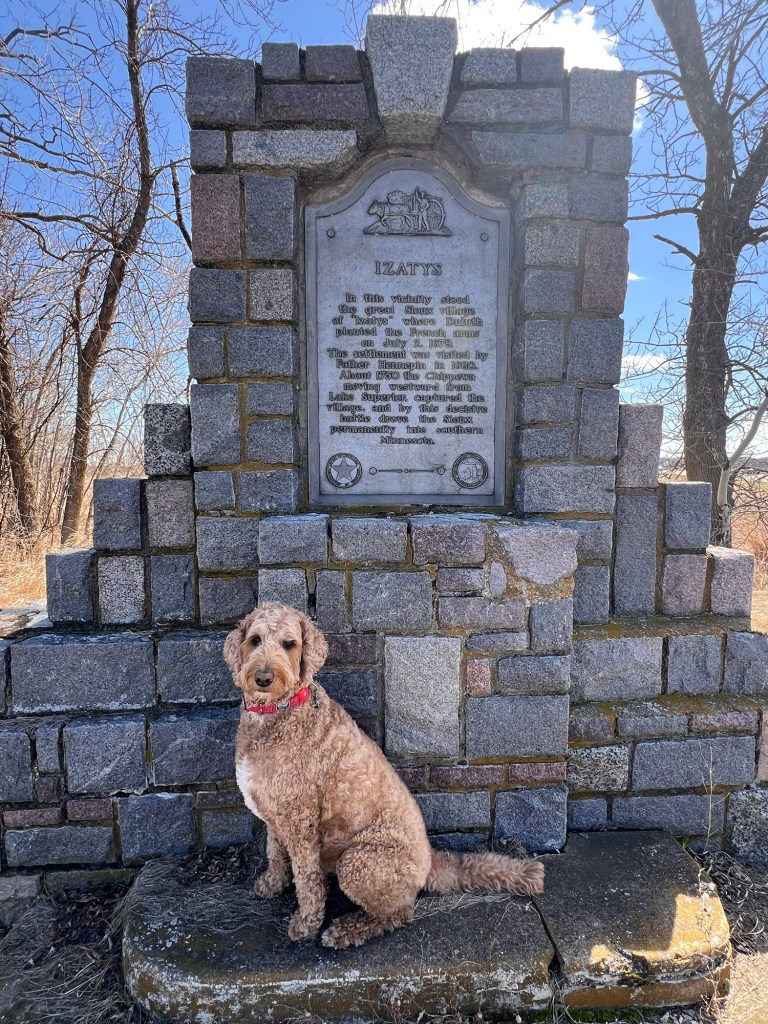
Before heading south from Illinois, La Salle sent three of his men north to search for the river’s headwaters: two voyageurs (Michel Accault and Antoine Auguelle) and a Franciscan priest named Louis Hennepin. On their journey, the men were taken captive by Dakota warriors, who decided to bring them to their home village of Izatys on what is now Lake Mille Lacs in central Minnesota. In the process, the three Europeans traveled the Upper Mississippi to where St. Paul sits today and journeyed overland from there to Izatys. While staying with the Dakota, Hennepin convinced his captors to let him and Auguelle explore the region. Accault stayed behind (perhaps as a hostage?), while Hennepin and Auguelle paddled down the Rum River to the Mississippi. They picked up additional supplies near the junction of the Mississippi and Wisconsin rivers (Prairie du Chien), and it was during this trip they encountered the only significant waterfalls along the river. Hennepin named the falls after his patron saint, St. Anthony, and they became the future site of Minneapolis.[5]
Within 125 years of this expedition, the Mississippi basin would change hands several times (at least on paper). In 1763, when the French lost the Seven Years War, their lands east of the river were ceded to Britain and their lands west of the river were ceded to Spain (in compensation for Britain taking Florida). The newest international player, the United States, would take up Britain’s claims in 1783 and push westward to the Mississippi, encroaching on Spanish Louisiana. At the turn of the 19th century, Spain ceded its claims back to France in the hope of having a buffer between New Spain and their obnoxious new neighbor. But in 1803, three weeks after the administration of Louisiana was officially handed back to France, France sold its claims — to that obnoxious new neighbor!
At the time the U.S. assumed possession of both banks of the Mississippi, the river’s drainage basin had never been clearly defined, and no one was entirely sure where the river originated. In 1804, President Jefferson sent Meriwether Louis and William Clark on mission to explore its largest western tributary, the Missouri River, and the next year Zebulon Pike was sent north to explore the headwaters.
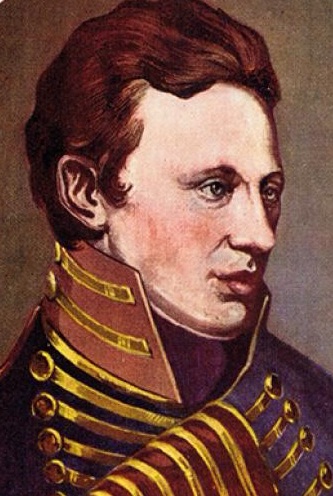
If you’ve read my earlier blog post about the confluence of the Minnesota and Mississippi rivers, then you’ve met Pike before. The bold young lieutenant negotiated with the Dakota to purchase two tracts of land in what would become Minnesota, and then he and his men headed north to harass British fur traders and find the Mississippi headwaters. After some poking around, Pike declared Leech Lake to be the river’s source.
But Pike was wrong, and in 1820 the territorial governor, Lewis Cass, set out on an expedition to clear things up. When the group reached Sandy Lake, Cass stayed behind and directed a detachment up the Mississippi. This smaller party found a good-sized lake, which they reported to Cass to be the source of the river. They named it Cass Lake. That party included mineralogist Henry R. Schoolcraft, who privately wasn’t too sure about the group’s conclusion. He noted in his journal that other streams appeared to feed Cass Lake, and this fact haunted him.[6]
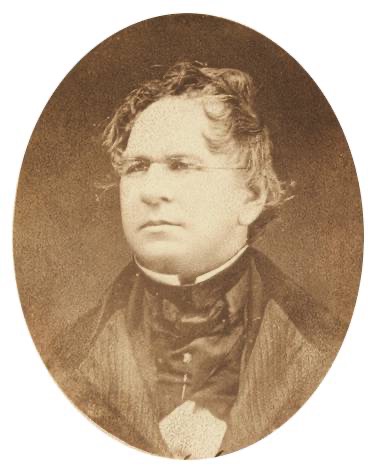
Twelve years later, Schoolcraft — then the Indian agent at Sault Ste. Marie — sought funding for another expedition in the region. He wrote to his old friend Cass, who was then the Secretary of War. His stated mission had nothing to do with the Mississippi headwaters, but that’s exactly what he focused on when he reached Minnesota in 1832. Recruiting the help of an Ojibwe guide named Ozawindib, Schoolcraft and his group traced the main feeder stream from Cass Lake through various twists and turns. Eventually, at the end of a long chain of lakes and streams, they arrived at a body of water the Ojibwe called Omushkos (Elk Lake). As this was the true head of the Mississippi, Schoolcraft wanted to give it a grander name. He asked Rev. Boutwell, the expedition’s minister, for suggestions rooted in the classics, “but all the poor man could think of were the Latin words for ‘true head’ — veritas and caput. From that Schoolcraft fashioned a name that was both classical in origin and Indianlike in sound. He struck out the first syllable in veritas and the last syllable of caput and announced that the name… would be ‘Lake Itasca’.”[7]
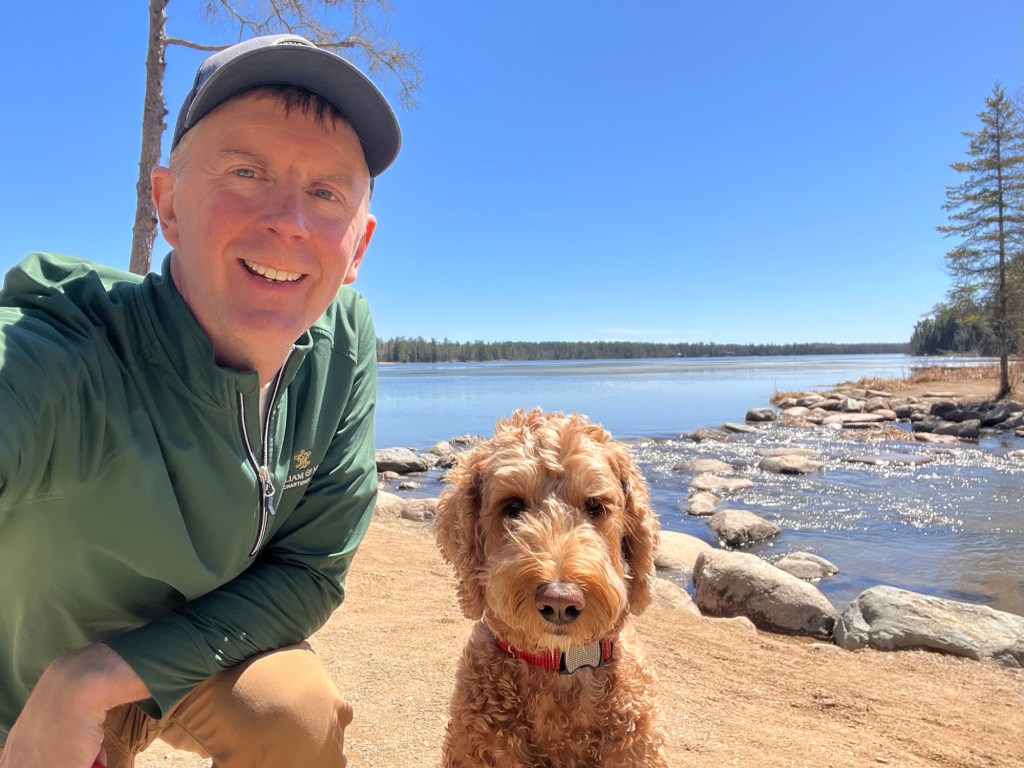
After Schoolcraft’s expedition there were several others who would claim to have found the “true source” – typically one of the little creeks flowing into Itasca. A kerfuffle ensued and was not fully resolved until 1888. This is when the Minnesota Historical Society stepped in and authorized Jacob V. Brower to settle the matter. Brower determined those other little creeks didn’t warrant river status, and thus Itasca retained its title.
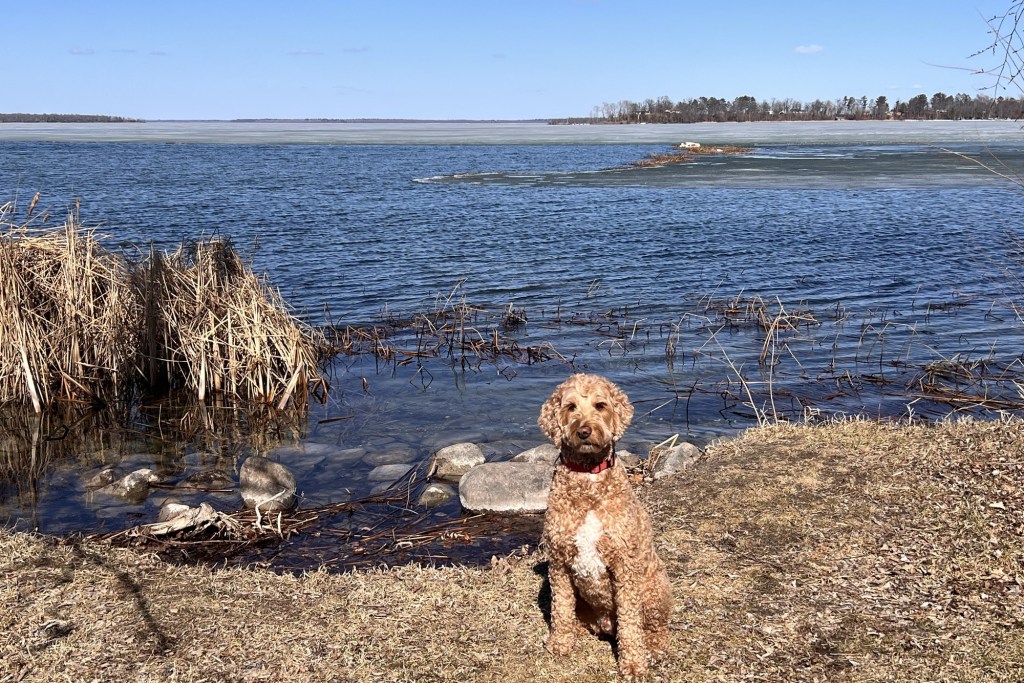
Over a couple days this past week, Spence and I conducted our own investigation into the source of the Mississippi. I shall report back our findings in my next installment. Stay tuned for Part 2!
[1] See pp. 115-116 in Fremling, Calvin R. (2005). Immortal River: The Upper Mississippi in Ancient and Modern Times. The University of Wisconsin Press.
[2] See https://www.nps.gov/liri/learn/historyculture/de-soto-expedition-1539-1542.htm
[3] White, Richard. (1991). The Middle Ground: Indians, empires, and republics in the Great Lakes region, 1650-1815. Cambridge University Press.
[4] See pp. 118-120 in in Fremling, Calvin R. (2005). Immortal River: The Upper Mississippi in Ancient and Modern Times. The University of Wisconsin Press.
[5] The release of the three men was negotiated by Daniel Greysolon, Sieur du Lhut (Duluth), who had been on his own expedition from Lake Superior. After his time in the wilderness, Hennepin sailed back to France and wrote three books about his adventures, taking some serious liberties with the truth. In one book he claimed to have discovered the mouth of the Mississippi before La Salle — a feat not physically possible. La Salle, meanwhile, also returned to France to secure more funding. He proposed founding a colony at the Mississippi’s mouth and capturing parts New Spain (i.e., Mexico). The king liked the sound of that, and so La Salle sailed off to the Gulf. The mission was doomed, however. They miscalculated the location of the river’s mouth by hundreds of miles and ended up in a bay near present-day Victoria, Texas. Within a couple years, their ships had sunk, most of the colonists had died or had been captured by Native tribes, and La Salle was himself murdered by one of his own men (see Fremling, p. 120).
[6] See pp. 41-49 in Risjord, Norman K. (2005). A Popular History of Minnesota. Minnesota Historical Society Press.
[7] See Risjord, p. 49.


Leave a comment